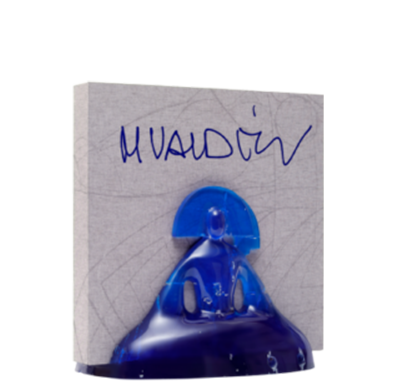


Valdés in public space: monumental sculptures across the world
Monumental sculpture is one of the most recognisable realms of Manolo Valdés’s creative universe. His colossal forms, recognised around the world, stem from a profound fascination with public space. “I now have this passion for large sculptures. I’m very drawn to seeing sculpture out in the street,” Valdés revealed in an exclusive interview with ARTIKA, expressing his drive to create works that breathe alongside the city.
Throughout his career, his creations have found a place in cities across the globe, projecting the uniqueness of his visual language onto the international stage. “The fact that a sculpture, in some way, absorbs what surrounds it and acquires that character is very stimulating. Of course, it’s not the same seeing it in Miami as seeing it covered in snow in New York,” he explained in an exclusive interview for the Damas y Caballeros edition. His sculptures also reflect his ongoing experimentation with a wide range of materials, allowing him to reinterpret great icons from the history of art through new textures, materials and scales, further enriching his artistic language.
For Valdés, one of the greatest pleasures is observing how his creations change with the seasons. Light, wind, rain and snow alter their appearance, revealing unexpected nuances and new dimensions. As a result, the same sculpture can invite different interpretations depending on the time of year in which it is viewed.
This article explores some of his most emblematic monumental sculptures, found across different parts of the world. It is a journey that reveals how each sculpture adapts to its surroundings, climate and cultural context, creating a dialogue that is as inspiring as it is surprising.
- Dama Ibérica, Valencia (2003)
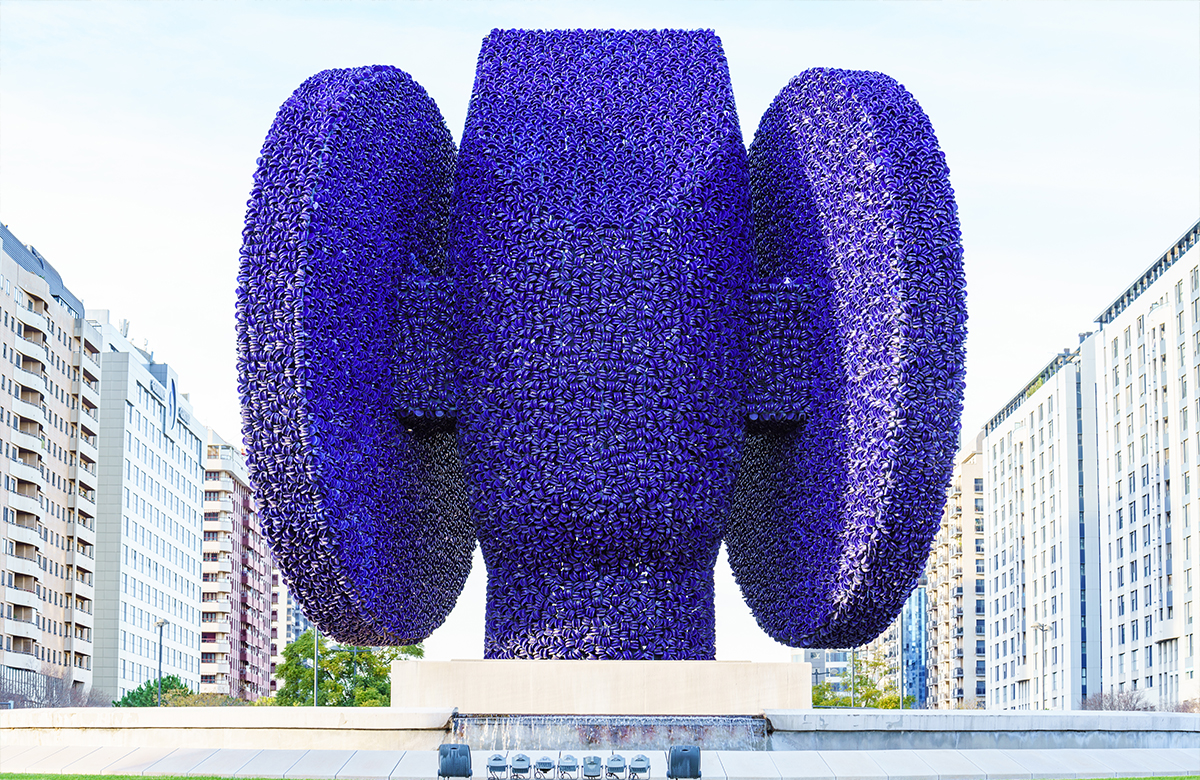
In Valencia, his hometown, stands this imposing 14-metre-high sculpture, conceived in 2003 and permanently installed in 2007 on Avenida de las Cortes Valencianas.
Made up of thousands of small blue ceramic figures that reinterpret the iconic Lady of Elche, the piece encapsulates two constants that run throughout Valdés’s career: the reinterpretation of great historical icons and the desire to project them into the present through new materials and scales. More than a monument, it is an offering—a gesture of gratitude to the city where he grew up and which he continues to remember with deep affection.
- Alhambra y Galatea, Nueva York (2012)
Valdés’s career was shaped from the outset by a vital need: to seek beyond Valencia the artistic stimuli that his city, at that time, could not provide. He travelled in search of inspiration, immersing himself in museums, studios and vibrant streets. Among all his destinations, one became both refuge and creative catalyst: New York, an internationally renowned artistic hub that soon became an inexhaustible source of inspiration.
In 1989, he decided to settle there permanently. He opened his own studio and found the ideal environment in which to develop his artistic universe without limitations. Since then, New York has been not only his place of work, but also his home.
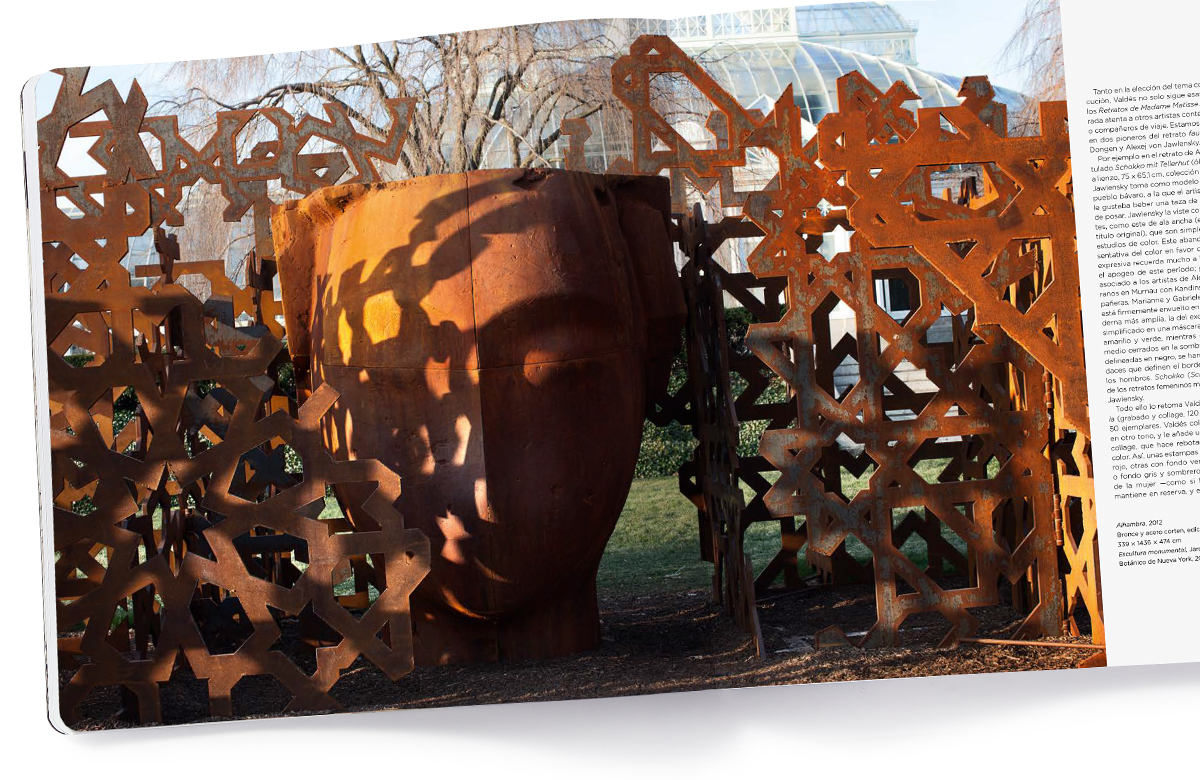
In 2012, two of his most emblematic figures, Alhambra and Galatea, were exhibited at the New York Botanical Garden until 26 May 2013, in collaboration with Marlborough Gallery. Created in aluminium, Galatea is composed of delicate fern branches that envelop the figure’s head, forming a remarkably subtle botanical headdress. Alhambra, meanwhile, is cast in bronze and corten steel, standing as a contemporary tribute to the Alhambra of Granada, reinterpreted through the monumentality and artistic language that define Valdés’s work.
- Blue Butterflies, París (2015)
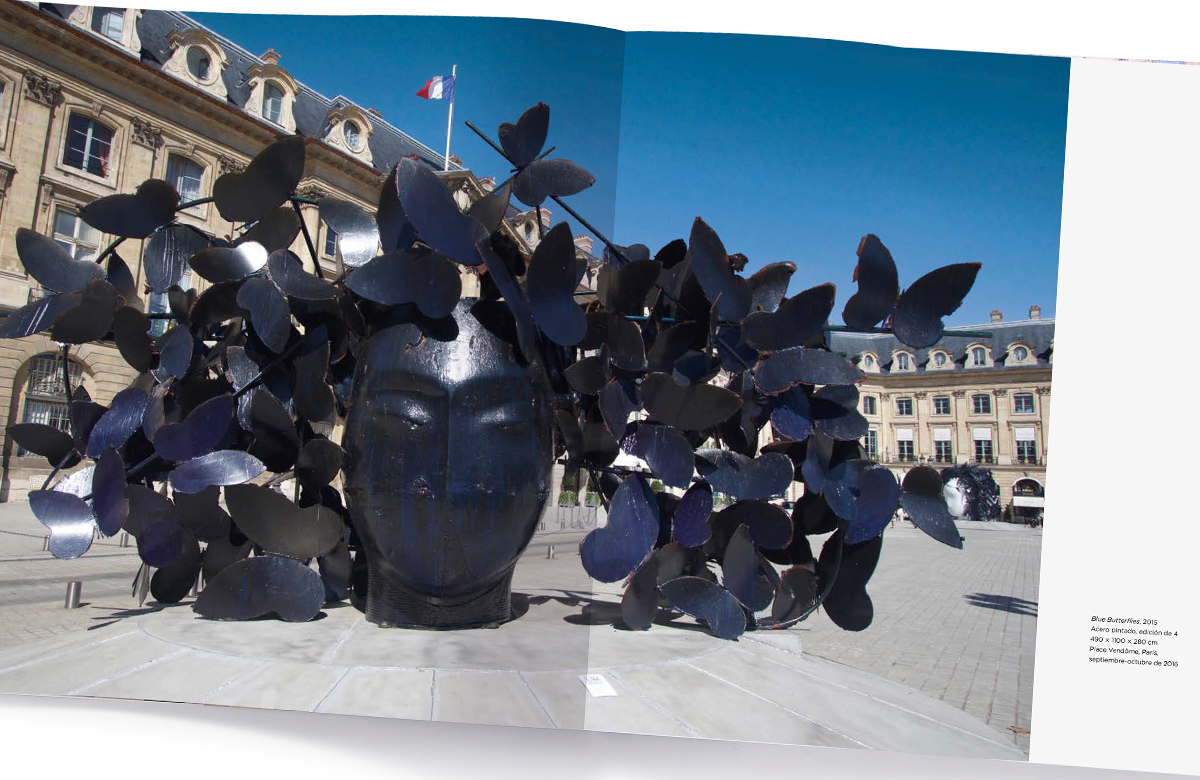
Presented at the iconic Place Vendôme in Paris between September and October 2016, Blue Butterflies introduced a contemporary note into the historic Parisian setting. Constructed in steel and painted a deep blue, it depicts a head crowned by a swirling cloud of butterflies, as though ideas themselves had taken shape and movement.
In this work, Valdés combines the solidity of metal with the symbolic lightness of butterflies, creating a contrast that imbues the sculpture with a vibrant, almost dreamlike energy capable of transforming the space around it.
- Infanta Margarita Violet e Infanta Margarita Blue, Londres (2020)
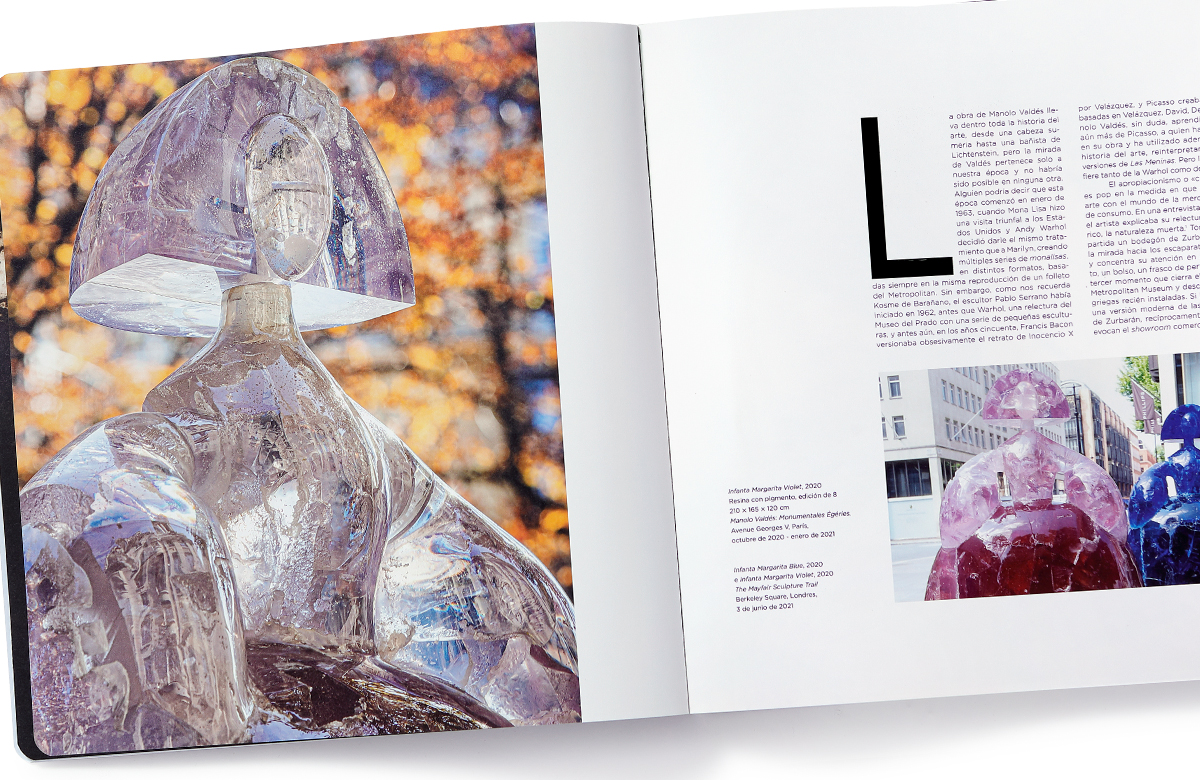
These two sculptures, made from pigmented resin—one in an intense blue and the other in a delicate violet—formed part of The Mayfair Sculpture Trail and were exhibited in Berkeley Square, in the heart of the British capital.
The choice of material is far from incidental. Resin allows light to interact with the surface of the sculptures, generating reflections, transparencies and subtle tonal variations that seem to animate them. As a result, each piece changes delicately according to the time of day, the weather and the viewer’s position, giving it an almost living presence.
- Grupo escultórico Las Meninas, Düsseldorf (2006)
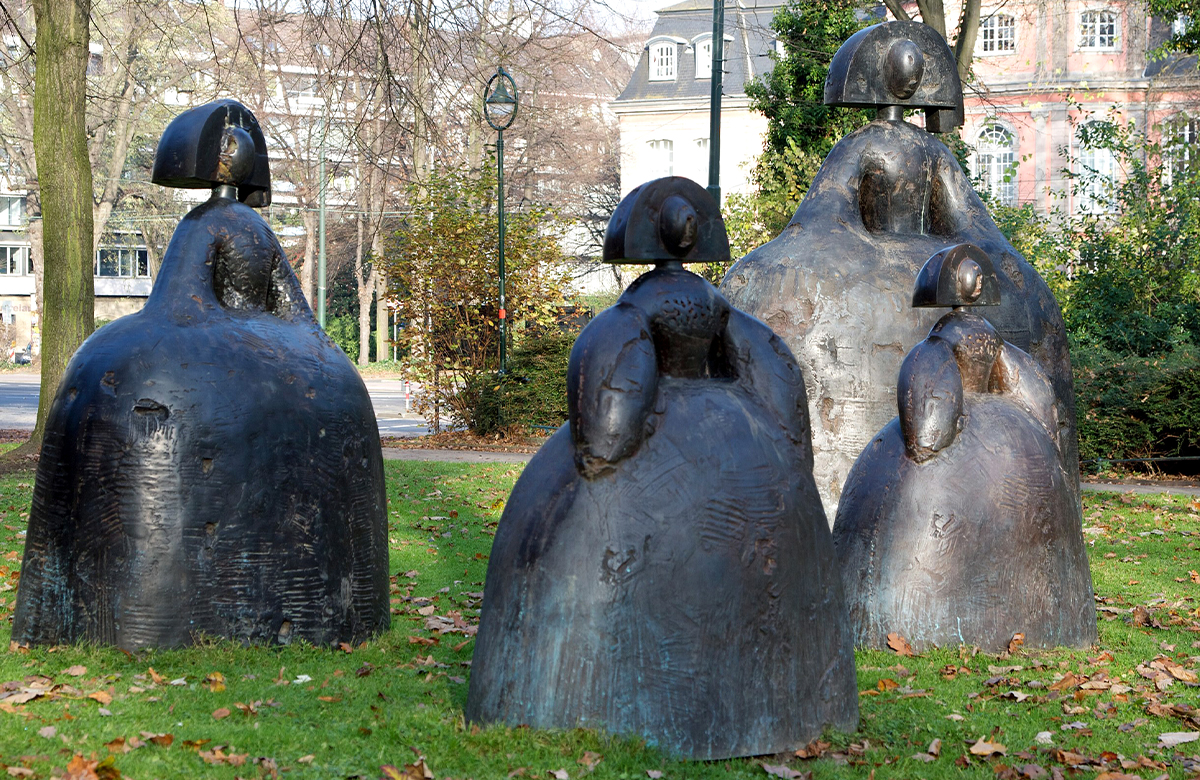
Since 2006, this sculptural group inspired by Las Meninas has occupied one of the most tranquil corners of the Hofgarten, a public garden in the heart of Düsseldorf. Surrounded by trees and nature, Valdés’s figures find a setting that enhances both their monumentality and their timeless character.
Cast in bronze, the sculptures bring volume and dimension to Velázquez’s celebrated Menina, an icon that Valdés has revisited throughout his career with complete creative freedom.
This figure, so deeply embedded in the artist’s visual imagination, has become a central element within his body of work created with ARTIKA. It is precisely the figure of La Menina that accompanies the case-sculpture of the Damas y Caballeros edition, consolidating its status as a symbol that transcends formats and scales while reaffirming its privileged place within Valdés’s artistic universe.
Damas y Caballeros: Reinterpreting the past in the present
 s
s
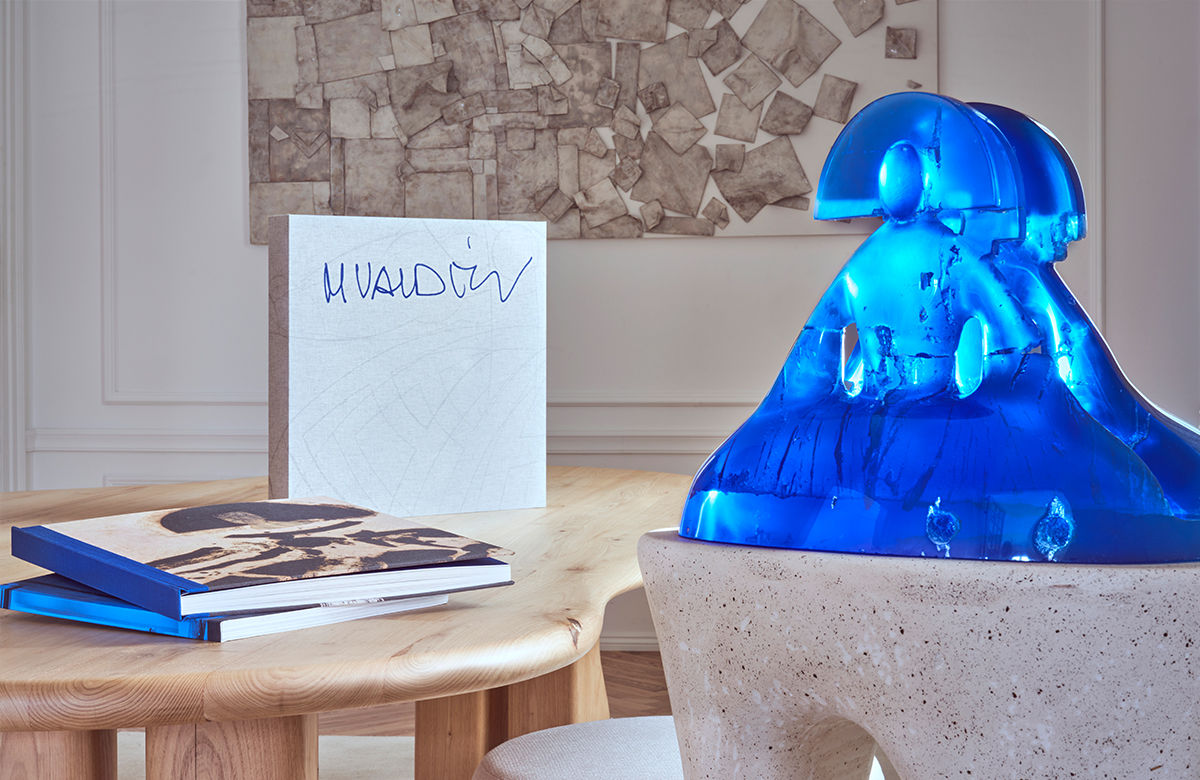
– A numbered, limited edition of 998 copies, each individually signed by the artist.
– This edition comprises two volumes and a sculptural case, conceived as a work of art in its own right. Featuring a handcrafted reinterpretation of Velázquez’s iconic Menina, it displays cracks and imperfections that make every copy a unique piece.
– The Art Book includes 53 paintings, prints and collages from the most representative periods of Valdés’s career, personally selected by the artist and reproduced to the highest standards of quality.
– The Study Book brings together reflections by leading experts across four chapters, exploring his career, artistic language and the influences that have shaped his work.