

Sorolla and the visual poetry of summer
Few artists have mastered light as Joaquín Sorolla did, capturing the very essence of summer through light. Through portraits of his wife and children on the beach, Sorolla captured on canvas the luminous joy of those summer days. He often travelled with his family to different seaside locations, where the clarity of the sky and the brightness of the water enveloped his scenes in a vibrant palette and an almost palpable sense of happiness.
It was in places such as Jávea, on the Alicante coast, and Biarritz, on the French coast, that he painted some of his most unforgettable works: intimate family scenes, radiant whites and a luminous intimacy that seems suspended in time. Clotilde and their children, recurring protagonists in his work, became universal symbols of light, life and the memory of summer.
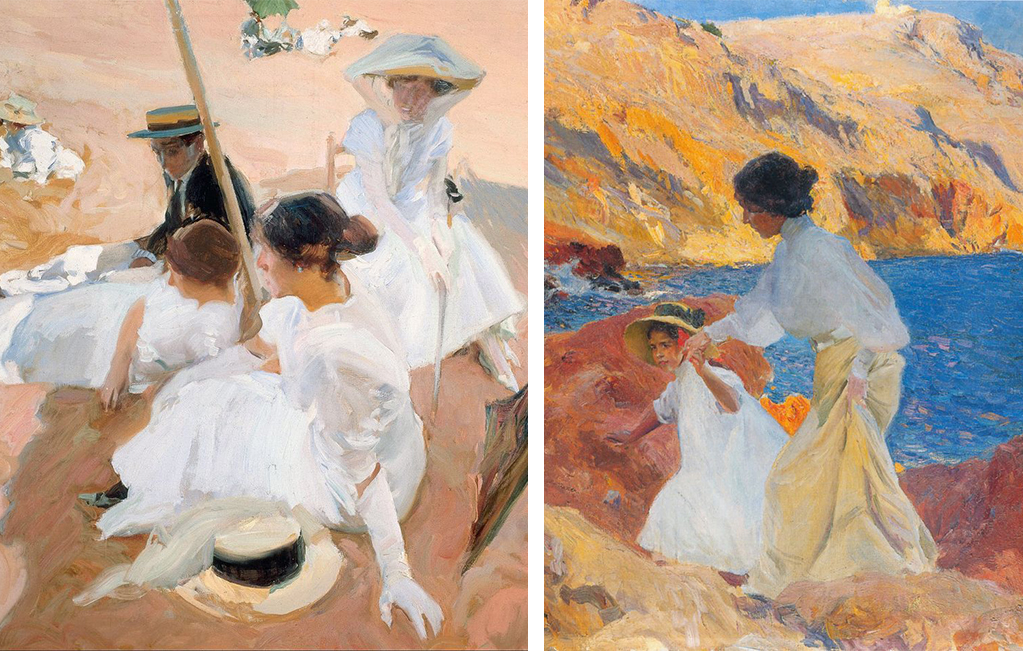
Left: Detail of Under the awning, Zarauz Beach, 1910. Right: Detail of Clotilde and Elena on the rocks, 1905.
In 1904, with works such as Clotilde en la playa, he began a decisive exploration of female portraiture under direct coastal light. In this composition, he depicts his wife seated by the shore, protecting herself from the sun with a parasol. That interplay of filtered light, shadow and reflection would reappear in numerous beach scenes. What is truly revealing in these portraits is the way he defines facial features and volumes under intense, shifting light.
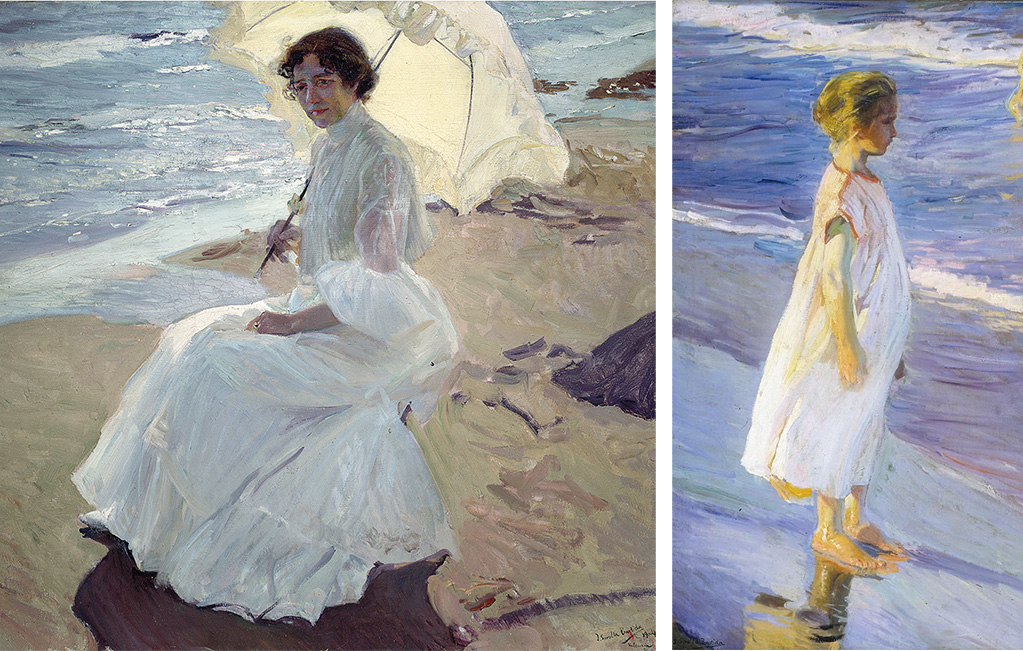
Left: Detail of Clotilde at the beach, 1904. Right: Detail of Girl on the beach (also known as Bath time), 1904.
Many Impressionists had explored the effects of fragmented light in portraits and figures painted beneath trees. Sorolla transferred that vibration to the open space of the beach, where sun, sand and sea multiply reflections and raise the scene’s luminous intensity.
In his artistic career, portraiture became an essential field of experimentation. Through it, Sorolla did not merely represent faces and bodies: he investigated how light could transform the presence of a figure. From this moment onwards, a new creative direction began to emerge, including his garden portraits, an artistic path that would lead him to some of his most memorable compositions. Among them is El rey Alfonso XIII con uniforme de húsares (1907), in which the figure is integrated into an atmosphere of vibrant light and vegetation.
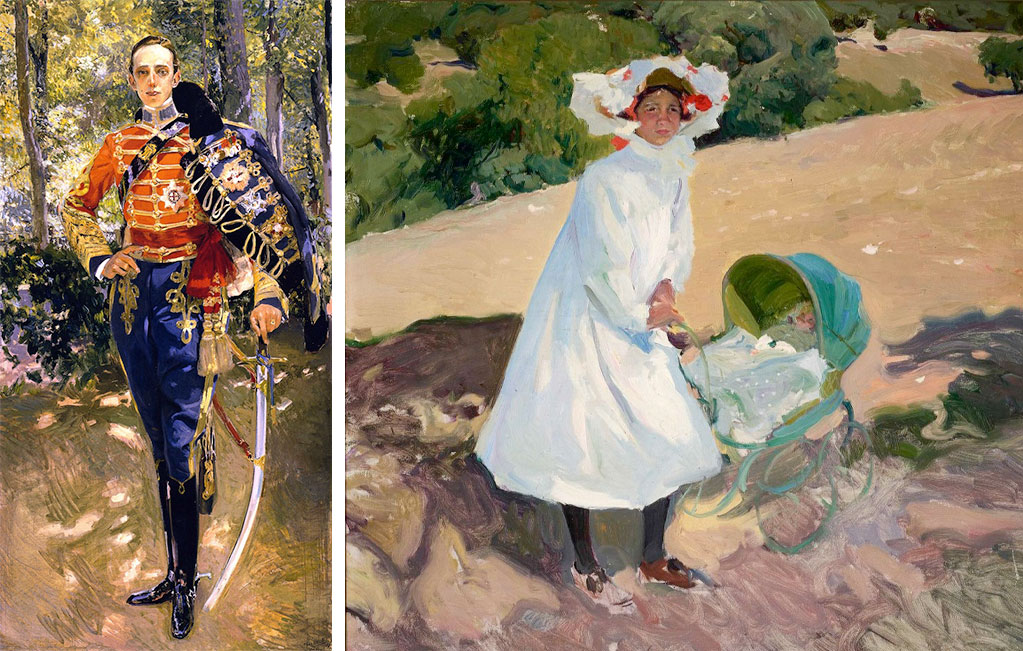
Left: King Alfonso XIII in Hussar uniform, 1907. Right: Elena at El Pardo, 1907.
Among the most formative summers in Sorolla’s creative life, 1906 stands out in particular. That year, the painter produced a series of works featuring the women of his family: scenes of serene elegance in which colour and light achieved a new freshness.
In July of that same year, Sorolla held his first solo exhibition at the Galerie Georges Petit, one of the most prestigious galleries in Paris. Following its great success, the painter spent a few days with his family in Biarritz. There, beneath a softer sun and in air cooler than that of Valencia, he painted portraits of Clotilde and their children that today seem to preserve the suspended memory of that summer.
Works such as María en la playa de Biarritz, Figura en blanco o Instantánea, all painted during the summer of 1906 in Biarritz, reveal the iconography of an elegant, modern summer: delicate white dresses, parasols, veils holding broad hats in place and, in the background, the sea as a luminous horizon. These are portraits of an apparently carefree life, of a modern form of leisure that Sorolla observed with fascination, even as he continued to work.
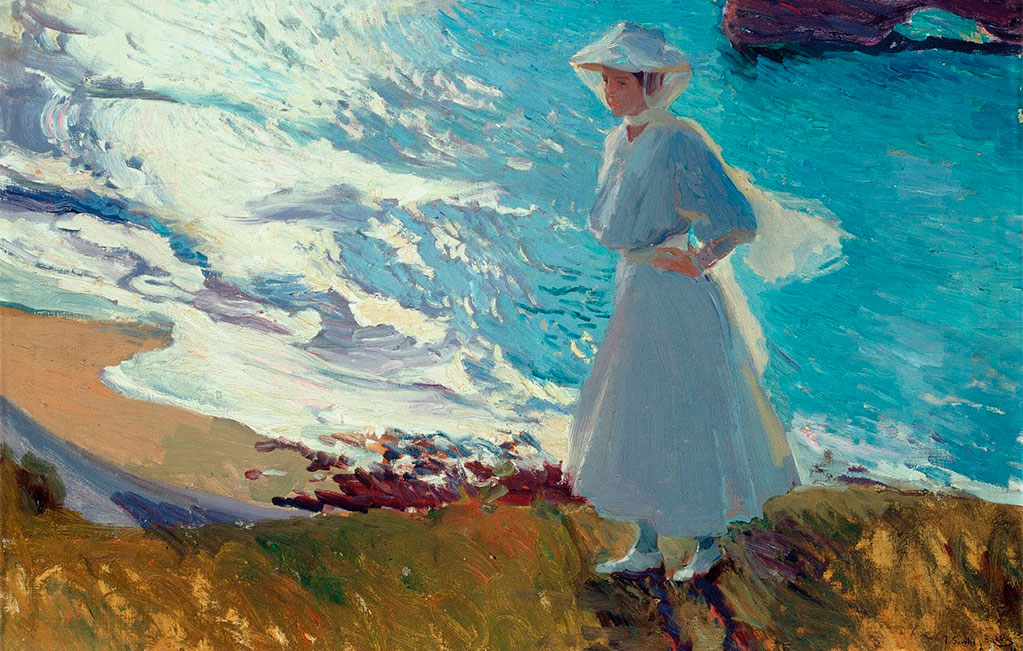
María on the Beach at Biarritz, 1906.
This is how, even today, we can perceive the essence of summer through Sorolla and his family: an intimate journey that turns each scene into a luminous celebration of outdoor life. To contemplate these images is to look into a world transformed by light, where the everyday becomes extraordinary and summer — that eternal summer of Sorolla’s — continues to shine with the same intensity more than a century later.
Sorolla Íntimo: the art of summer living
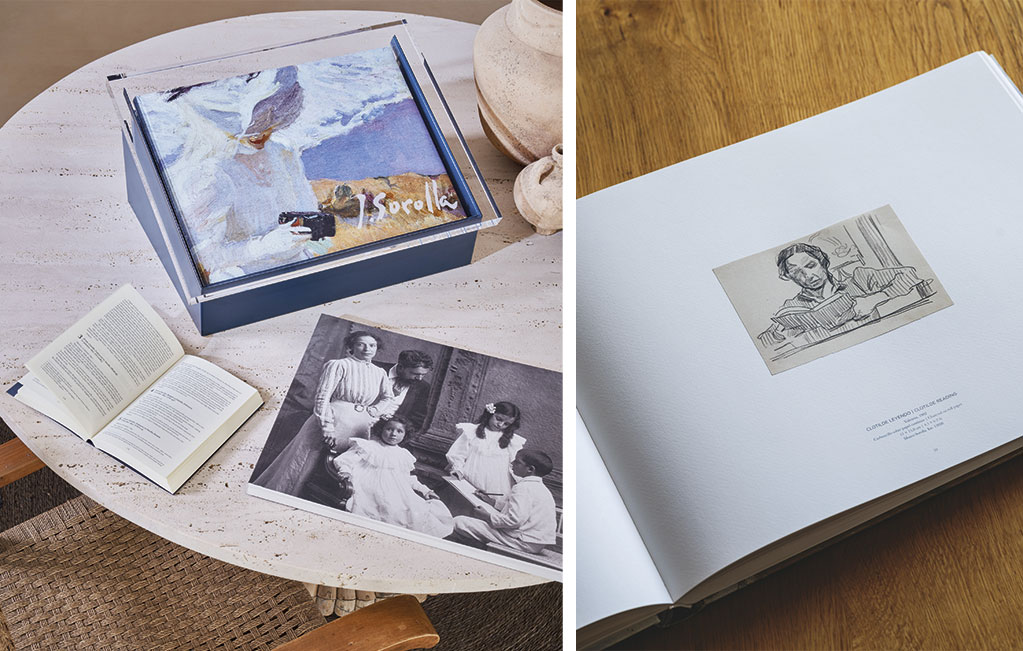
- A numbered edition limited to 2,998 copies, produced in collaboration with the Museo Sorolla and Blanca Pons-Sorolla, the painter’s great-granddaughter and a trustee of the Foundation.
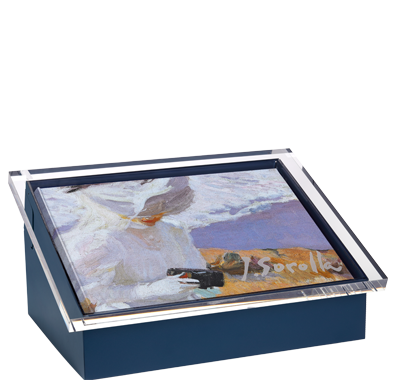
- Composed of two volumes, correspondence and an art print, all presented in a presentation case whose main image is a detail from the oil painting Snapshot, Biarritz, the cover image of the Art Book.
- The Art Book includes 71 drawings that bring Sorolla’s most personal experience into the domestic and family sphere.
- In the Study Book, experts Inés Abril and Mónica Rodríguez analyse the drawings included in the work, while Blanca Pons-Sorolla, Consuelo Luca de Tena, María López, Covadonga Pitarch, Eulalio Pozo and Pilar Pozo discuss the family and the conservation of the artist’s works on paper.
- The correspondence brings together three decades of love: 210 letters selected from the 2,000 that have been preserved. With a foreword by Isabel Justo, they offer a socioeconomic and political record of the period, while also reading as a story of passion and parental love.
- The edition includes the print Study from Life, c. 1905, a portrait of Clotilde in charcoal, white chalk and red oil paint that held pride of place in the couple’s bedroom for many years.