

The city that inspires: Madrid through the eyes of Antonio López
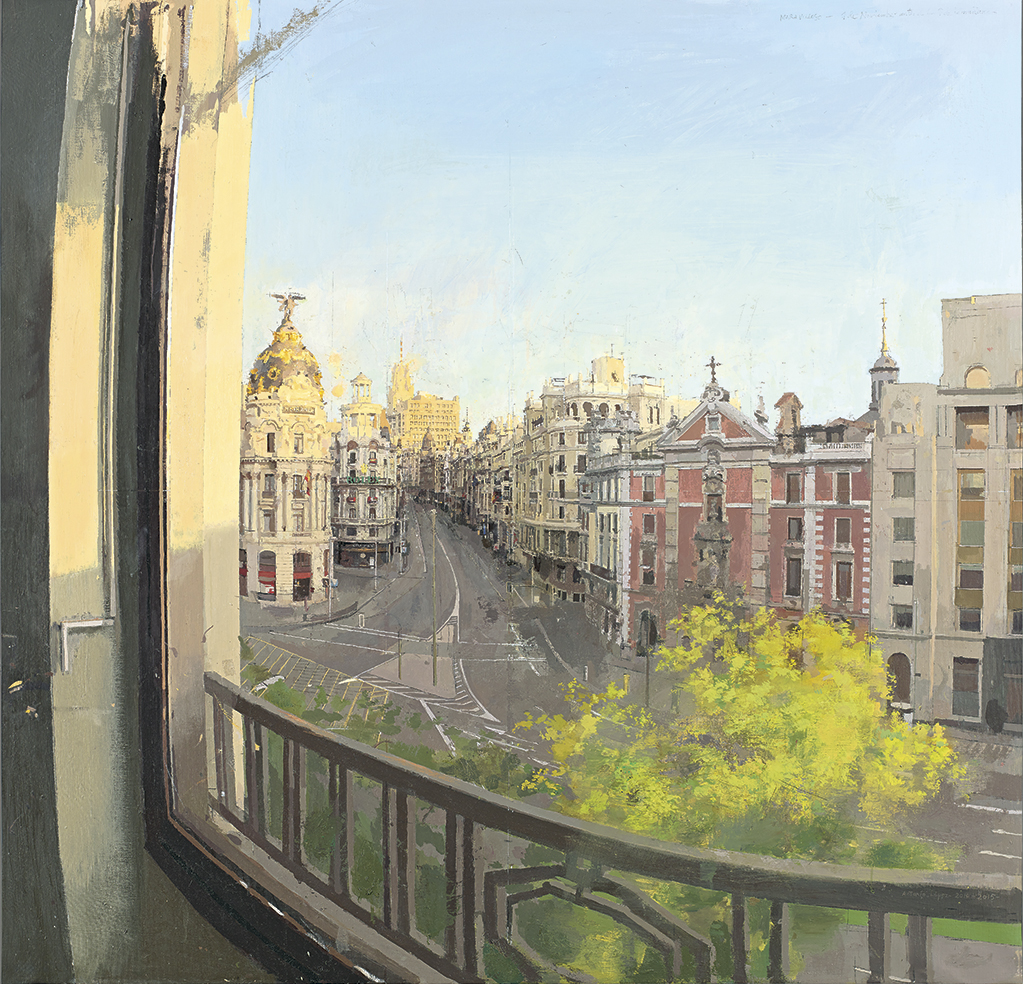
Antonio López has devoted his life to observing, with extraordinary attention, the most everyday and elemental aspects of our world: streets that seem to breathe, flowers unfolding in silence, fields that preserve the memory of time. In his work, the Spanish landscape becomes a pulse, a way of naming who we are. Yet among all these settings, one city stands as his true muse: an intimate territory to which he returns again and again on canvas. Madrid, with its unique balance of harmony and restraint, has been for him an inexhaustible source of inspiration.
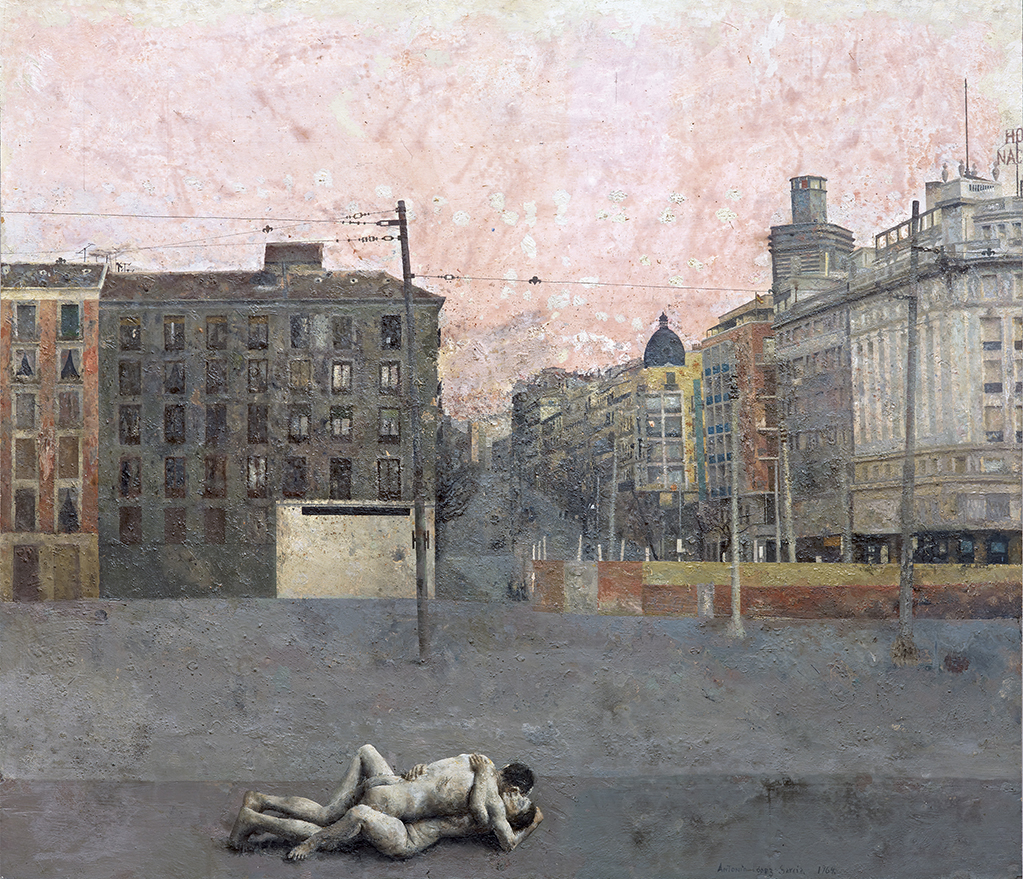
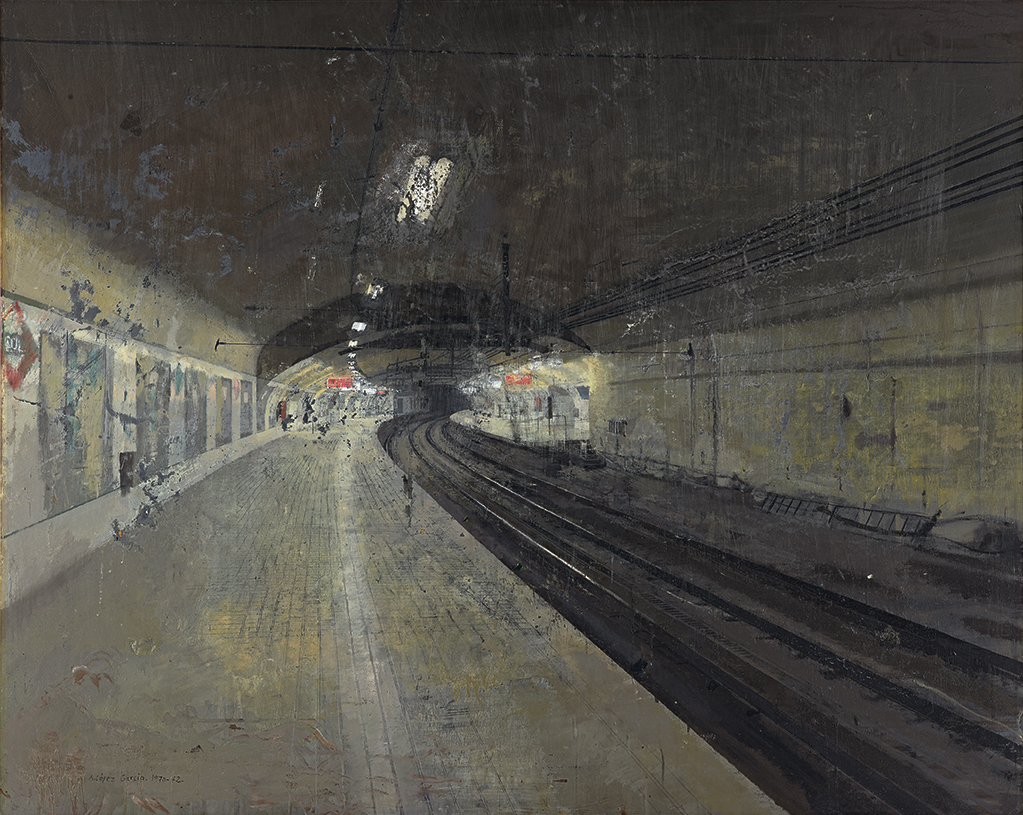
In his paintings, López captures the most varied corners of the capital, from its urban arteries to the edges where the city dissolves into open countryside. Each work seems to contain a glimmer of Madrid’s essence, that discreet magic revealed only to those who know how to look. As he himself confessed in an interview for the Paisajes edition: “A place that moves me, because I find an echo of my life there, is where Madrid ends and the countryside begins, on the outskirts. The borderlands of Madrid.”
- Madrid, 1960
This painting, titled simply with the name of the Spanish capital, is one of the first works in which Antonio López depicts the city from an elevated viewpoint, transforming its urban fabric into a pictorial subject. From above, the artist unfolds before the viewer a sea of buildings and rooftops stretching uninterruptedly into the distance, revealing the density and complexity of a capital in the midst of expansion.
The work marked the beginning of a path the artist from La Mancha would follow for decades: the exploration of Madrid from different heights, corners and atmospheres. Through his gaze, López reveals parts of the city that often pass unnoticed.
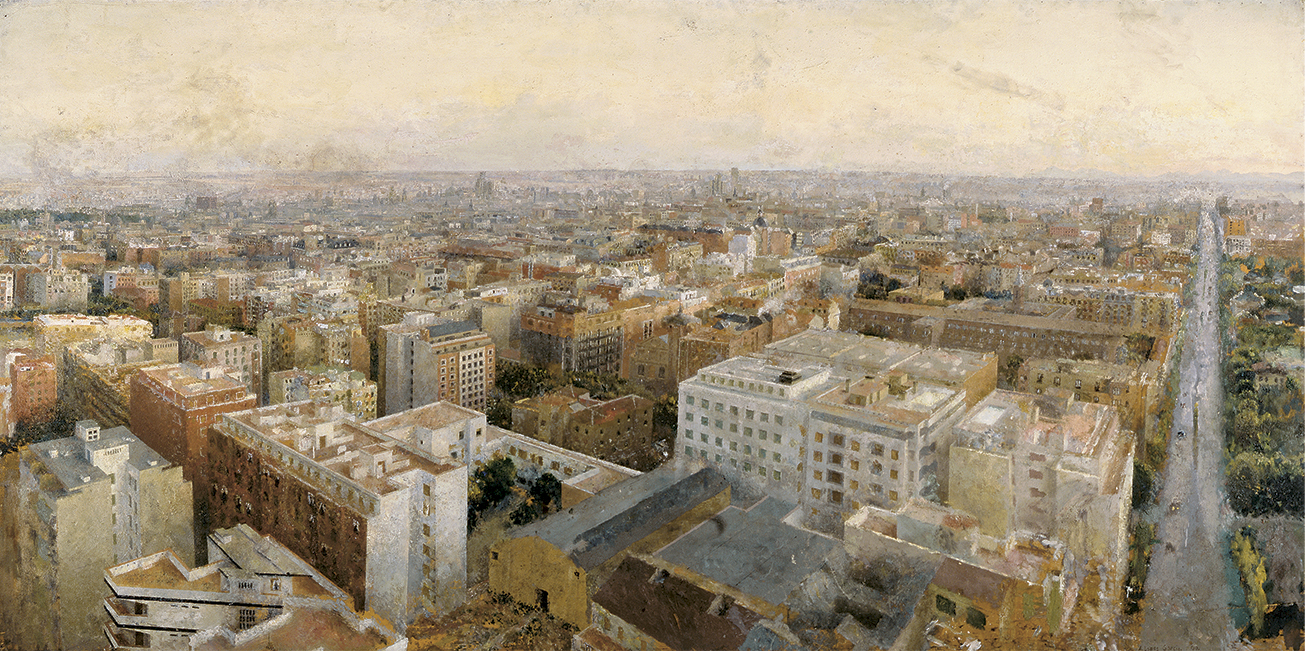
Madrid, 1960. Oil on panel, 122 × 244 cm. © Image of the works of Antonio López: Antonio López, VEGAP, Madrid, 2022.
- Terraza de Lucio, 1961-1992
Antonio López began this work with an initial intention that he was unable to bring fully onto the canvas. His aim was to portray Lucio and Amalia with their first child on the terrace of their home, a space filled with flowers planted by Amalia.
For years, the painter set the painting aside, unable to find the inspiration needed to continue it. Later, when his friends no longer lived there, he returned to the place by chance. Time had transformed the space, and that change awakened in him a new way of seeing the work. He decided to alter its format, enlarge it and shift the vanishing point, turning the gap of the street, the aged wall and the mute presence of matter into the new subject that would give the painting its meaning.
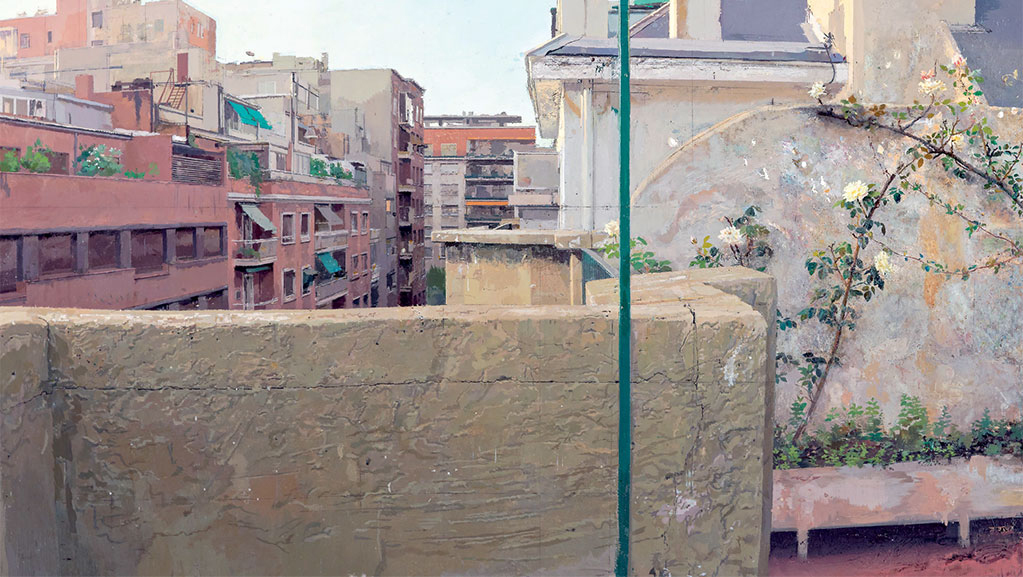
Lucio’s Terrace, 1961–1992. Oil on panel, 172 × 207 cm. © Antonio López, VEGAP, Madrid, 2022.
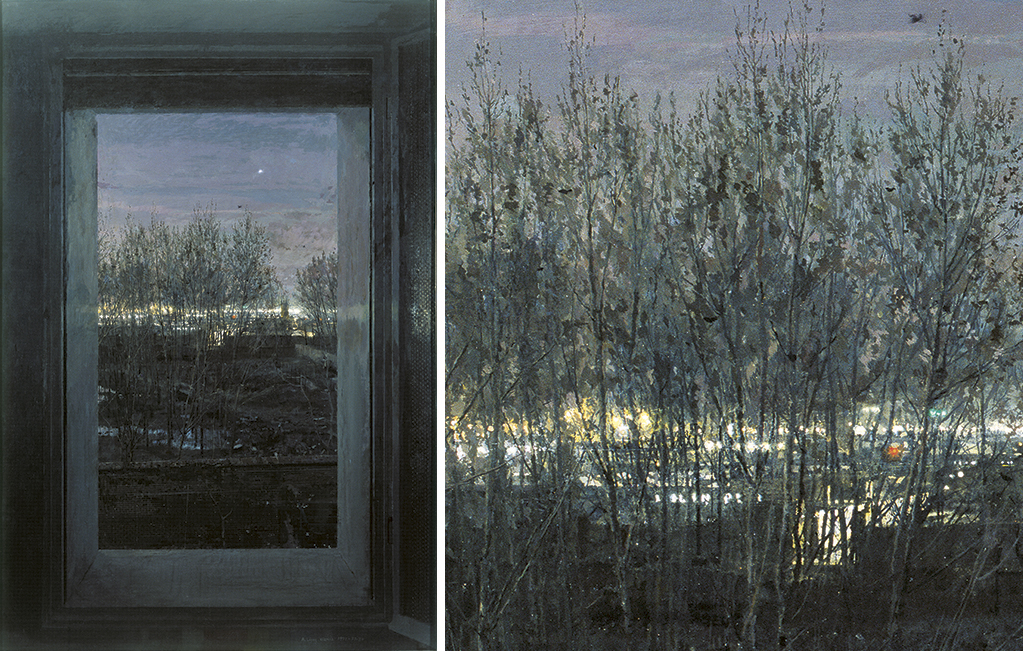
- Ventana de noche, 1971-1975
The window is one of the recurring motifs in Antonio López’s artistic career. He has painted it at different hours: at night, in spring, open and, at times, closed. Every variation has a purpose. Open windows symbolize the link between interior and exterior, while in closed windows the artist seeks to incorporate the room through the reflection on the glass.
For López, the window is not merely an architectural frame: it is a threshold where light, time and matter enter into dialogue. In his windows, the artist does not simply seek to represent what he sees, but to capture the way reality settles on the glass, reflects, distorts or conceals itself. That is why he returns to them again and again: they are laboratories of perception, territories where time becomes visible and where painting can explore its own limits.