

Sorolla beyond the canvas: intimate aspects of his life and art
Joaquín Sorolla is, undoubtedly, one of the great masters of Spanish art. His command of light, the vibrant energy of his brushwork and his almost magical ability to transform everyday scenes into timeless moments have made him a point of reference both in Spain and far beyond its borders.
Although his work is instantly recognisable, his biography remains, for many, largely unexplored. To know it is not merely an exercise in curiosity: it offers essential keys to understanding the origins, intentions and sensibility that run through his artistic production.
For this reason, this article offers a journey through eight significant aspects of the life of the master of light. Eight details which, once discovered, allow us to contemplate his work from a renewed perspective.
- His orphanhood at just two years old
Sorolla’s parents died during a cholera epidemic when he was barely two years old. From then on, he and his sister were placed in the care of their aunt and uncle, who raised them as their own. That new home seemed to point him towards the family trade: locksmithing. Yet it soon became clear that young Joaquín possessed a talent that could not be confined among tools and metal. His natural inclination for drawing and painting prevailed, opening the path that would lead him to become one of the great masters of light in the history of art.
- He began his training at an early age
From a very young age, Sorolla made it clear that his talent was no ordinary gift. At barely nine years old, he was already astonishing teachers and relatives with his skill for drawing. At fifteen, he entered the Academia de Bellas Artes de San Carlos in Valencia, a formative experience that would shape his artistic future. In 1884, he obtained a scholarship to continue his studies in Rome, a decisive journey that allowed him to absorb the light and harmony of classical and Renaissance art. Shortly afterwards, a stay in Paris opened up a new horizon before him: Impressionism, a pictorial language that would forever transform the way he saw and painted the world.
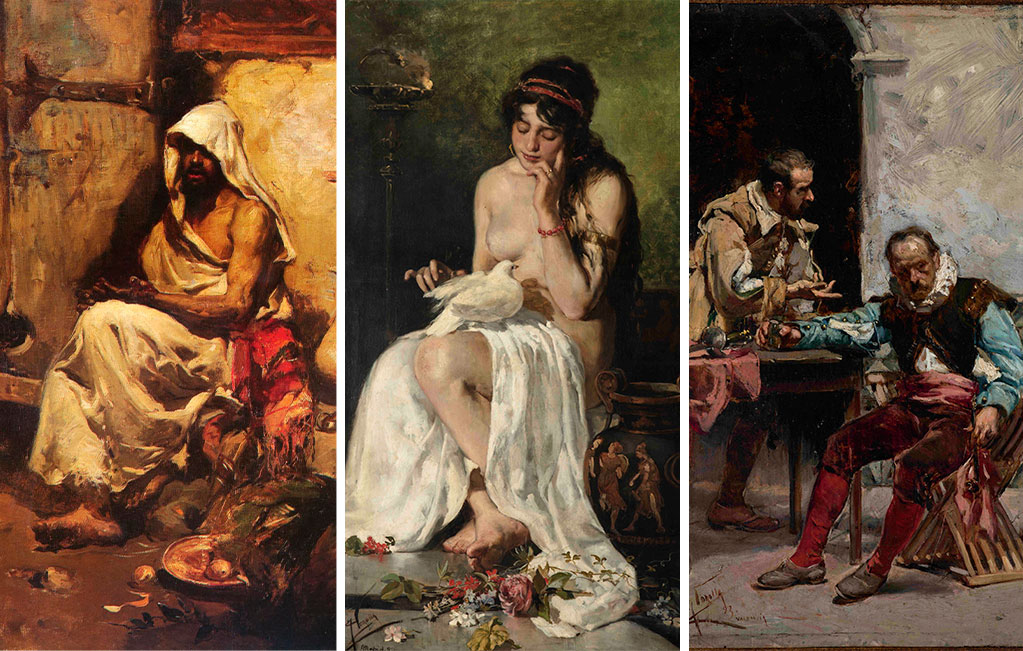
Left: An Arab Examining a Pistol, 1881. Center: The Slave and the Dove. Nude, 1883. Right: The Offerer, 1883.
- Social denunciation was a recurring theme in his early works
Sorolla began his career painting Impressionist-inspired scenes with a clear intention of social denunciation. Works such as Y aún dicen que el pescado es caro (1894) and Triste herencia (1899) reveal his sensitivity towards the harshest realities of his time: labour, illness, poverty and childhood vulnerability appear in them transformed into a denunciation as beautiful as it is moving.
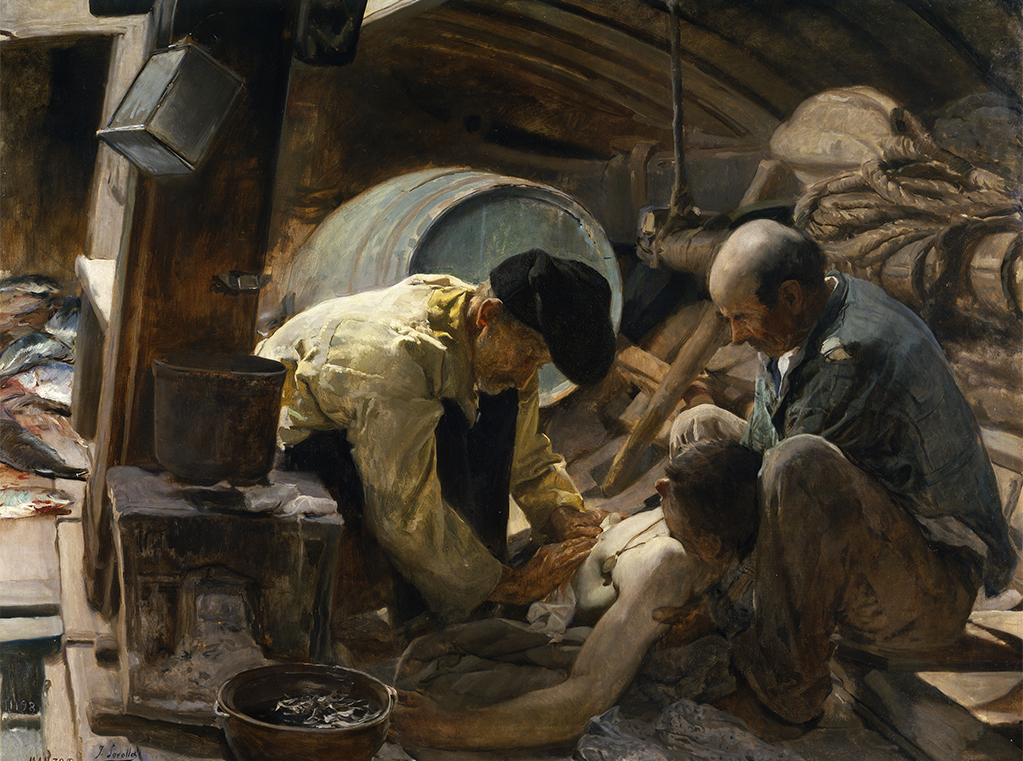
And They Still Say Fish Is Expensive!, 1894. Museo del Prado, Madrid.
- His family was the pillar of his life
His wife, Clotilde, and his children, María, Joaquín and Elena, were not only central to his life; they were also deeply present in his painting. He portrayed them on numerous occasions, both at home and during their holidays in Biarritz, in south-western France.
These portraits gave him a comfortable foundation for experimentation. Working with faces and figures so familiar and beloved made the painter’s task easier. In addition, both his wife and children were willing participants: they posed as he wished and even appeared as discreet, almost anonymous figures to enliven a landscape. This gave Sorolla the opportunity to practise as often as he desired, becoming yet another gesture of love from his family and opening the way for him to explore one of his finest artistic facets.
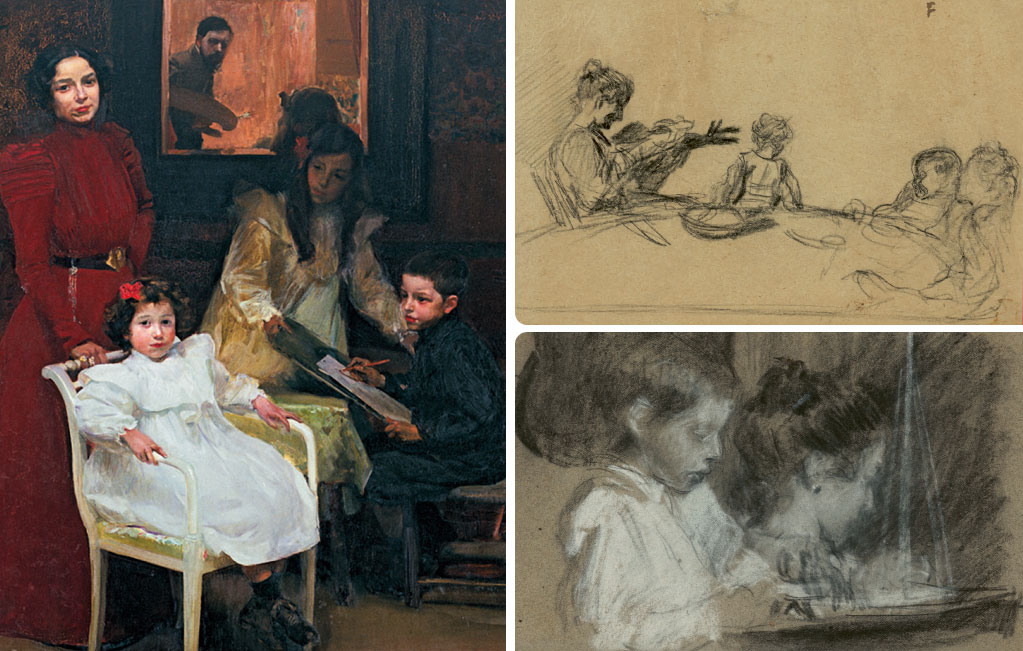
Left: The Family, 1901. Upper right: Chinese Shadows, 1896 (Fac. Inv. 15128a, ARTIKA BOOKS). Lower right: Joaquín and Elena Studying, 1905 (Fac. Inv. 15115).
- His success was international
Sorolla was one of those artists who witnessed the triumph of his art during his lifetime. As a consequence of this recognition, he was often travelling, far from his family. On many occasions, Clotilde became his confidante: the person who, despite the distance and through the letters they exchanged, encouraged him and gave him the strength to achieve all he set out to do.
He travelled widely across Europe, which allowed him to study and experiment with different artistic styles. He also held several exhibitions in France, Germany and England, and in 1909 his solo exhibition at the Hispanic Society in New York was met with great success.
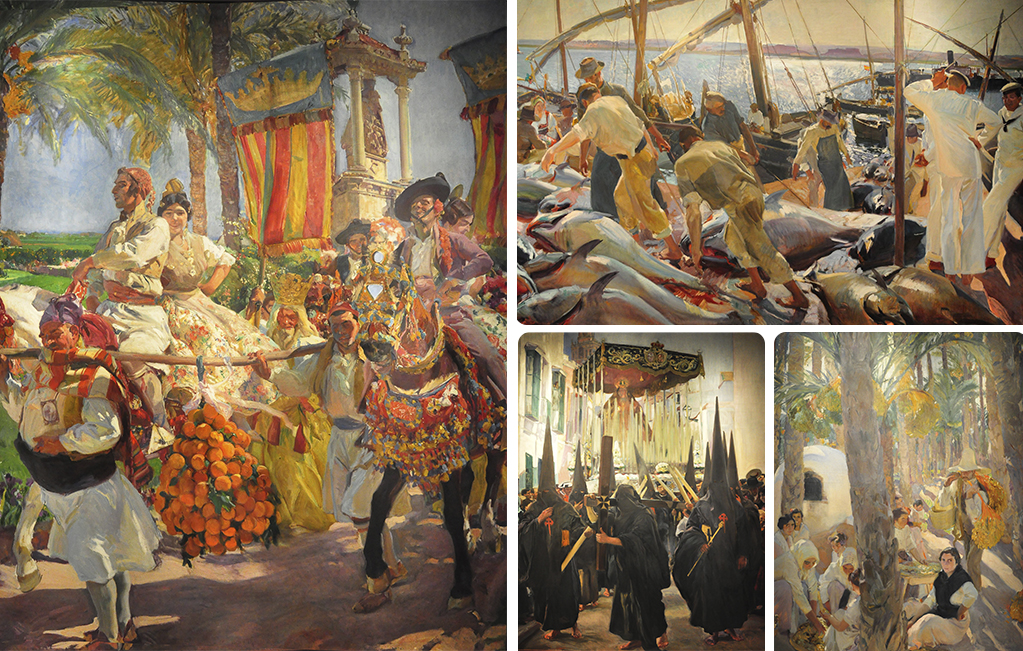
Various paintings from the 1909 exhibition at the Hispanic Society of New York.
- The backgrounds of his portraits are highly distinctive
In many of the portraits Sorolla painted of his children, they appear dressed in white, a colour he adored for its ability to reflect light. The background, far from competing with them, contributes personality, atmosphere and a touch of modernity to the composition. The contrast between the purity of the white and the decorative richness of the setting creates a visual tension highly characteristic of his style.
One example is María Clotilde (1900). In this portrait, his eldest daughter appears in a voluminous white dress, almost sculptural in presence, which captures the light with incomparable delicacy. Yet what truly defines the composition is the wall behind her: a decorative motif in bluish and golden tones that lends the work sophistication. Sorolla does not use it merely as a backdrop; he transforms it into a chromatic counterpoint that enhances his daughter’s figure and underlines her elegance. The perfect harmony created between the white of the dress and the colours of the background gives the portrait its exquisite balance.
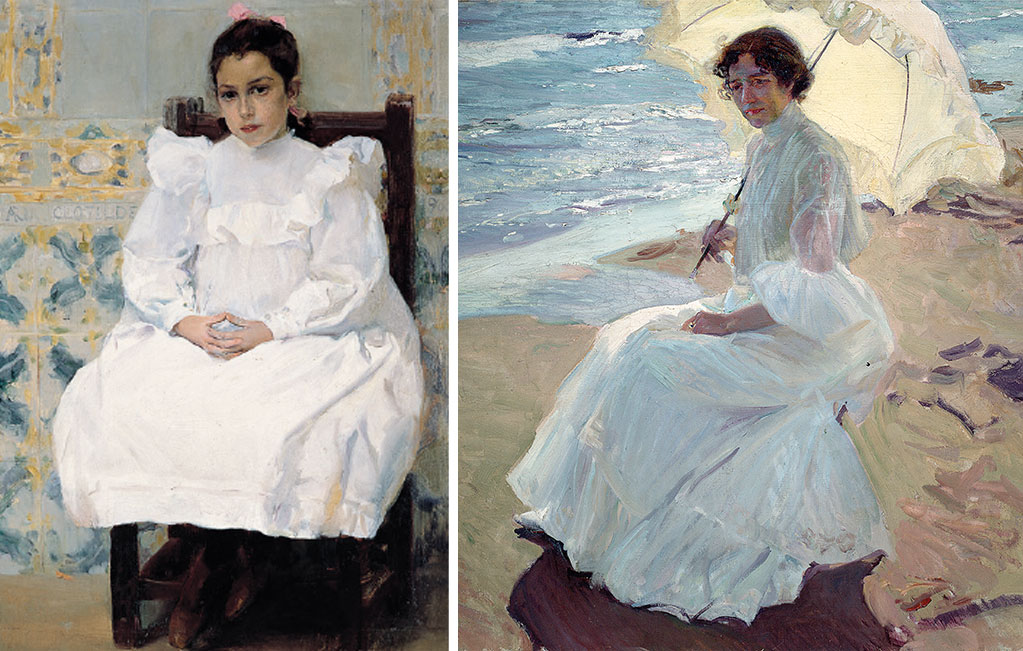
Left: María Clotilde, 1900. Right: Clotilde on the Beach, 1904.
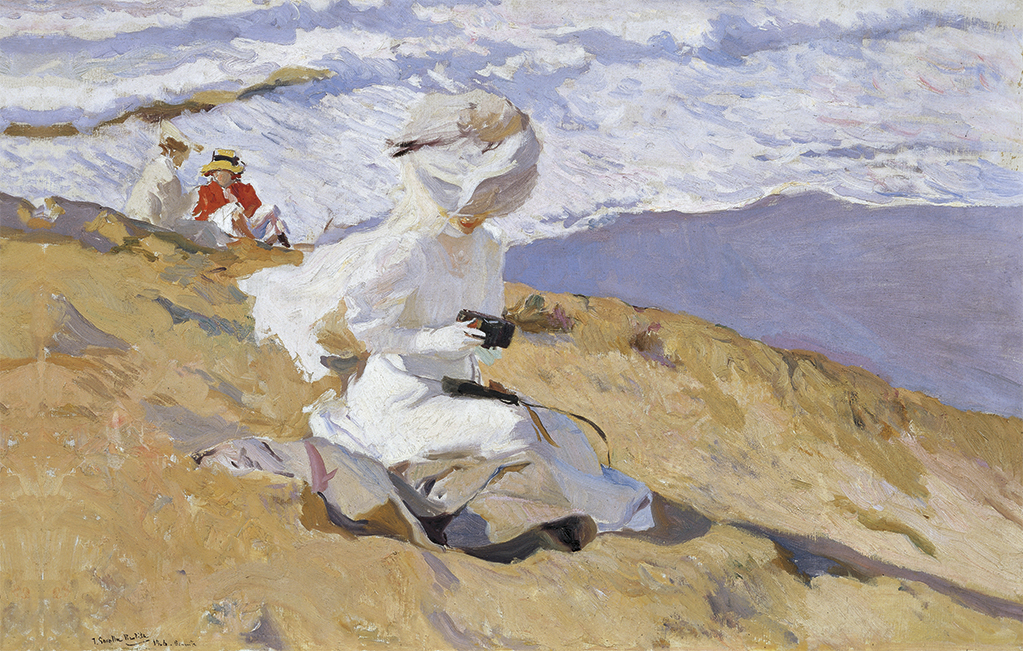
- Picture Instantánea: Biarritz (1909)
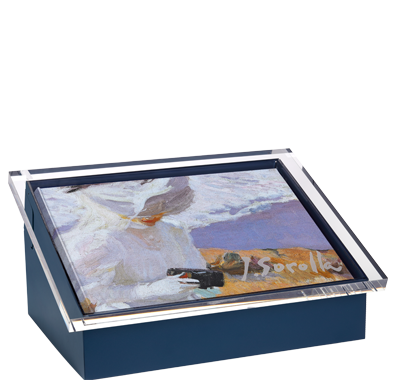
This oil on canvas was painted in Biarritz, a place Sorolla often visited with his family. Executed in a Post-Impressionist style, with swift, luminous brushstrokes, the work contains an element that makes it even more exceptional.
The woman portrayed holds a Kodak camera, a novel and luxurious object available to very few at the time. This is evidence of the success Sorolla’s art enjoyed in his own day, achieving major international and commercial recognition, which allowed him and his family access to objects of considerable economic value.
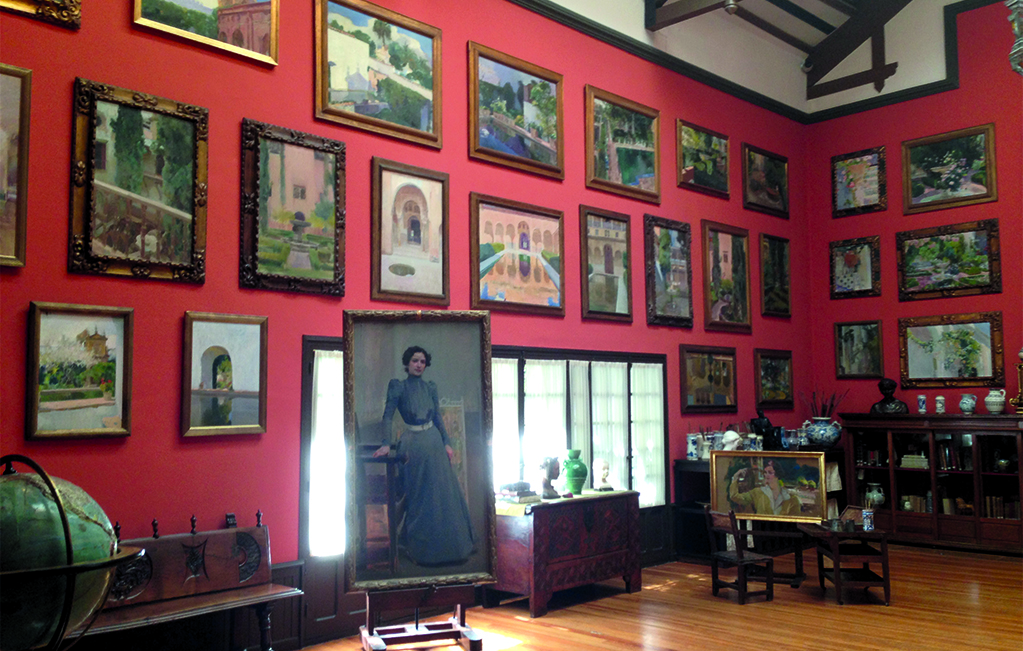
- His family home in Madrid is today a museum
Located in the Chamberí district, the painter’s former home and studio has been preserved and now houses the most extensive collection of his work. Sorolla himself also designed its garden, which today has become a unique natural enclave within the capital.
The museum was born from the wish of his wife, Clotilde García del Castillo, who in 1925 donated all her possessions to the Spanish State in order to establish a museum in Sorolla’s memory, paying tribute to the artistic legacy and life of this Spanish artist.
Sorolla in Private, art as memory
– A numbered edition limited to 2,998 copies, created in collaboration with the Museum Sorolla and Blanca Pons-Sorolla, the painter’s great-granddaughter and a trustee of the Foundation.
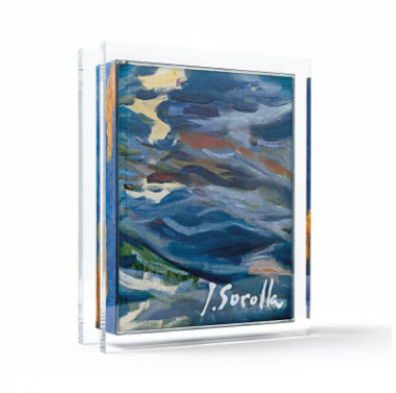
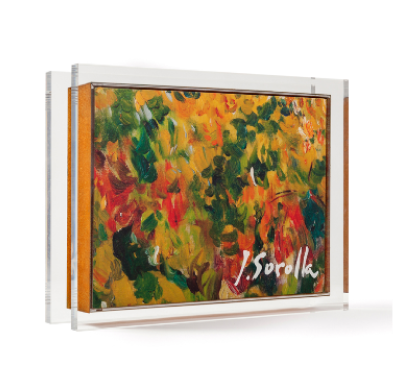
– The edition comprises two volumes, a collection of letters and an art print, all presented in a case-exhibitor whose principal image is a detail from the oil painting Instantánea, Biarritz, which also appears on the cover of the Art Book.
– The Art Book includes 71 drawings that bring Sorolla’s most personal experience into the domestic and family sphere.
– In the Study Book, experts Inés Abril and Mónica Rodríguez analyse the drawings included in the work, while Blanca Pons-Sorolla, Consuelo Luca de Tena, María López, Covadonga Pitarch and Eulalio and Pilar Pozo discuss the family and the conservation of the artist’s graphic work.
– The Correspondence: three decades of love, brings together 210 letters from the 2,000 that have been preserved. Introduced by Isabel Justo, the letters offer a socioeconomic and political testimony of their time, while also reading as a story of conjugal and family love.
– The edition includes the print Estudio del natural, c.1905, a portrait of Clotilde in charcoal, chalk and red oil that presided over the couple’s bedroom for years.