

The art of recognising art: the story of Antonio López
In Landscape, Antonio López brings together two figures who were essential to his life and artistic development: his paternal uncle, Antonio López Torres, and his wife, María Moreno.
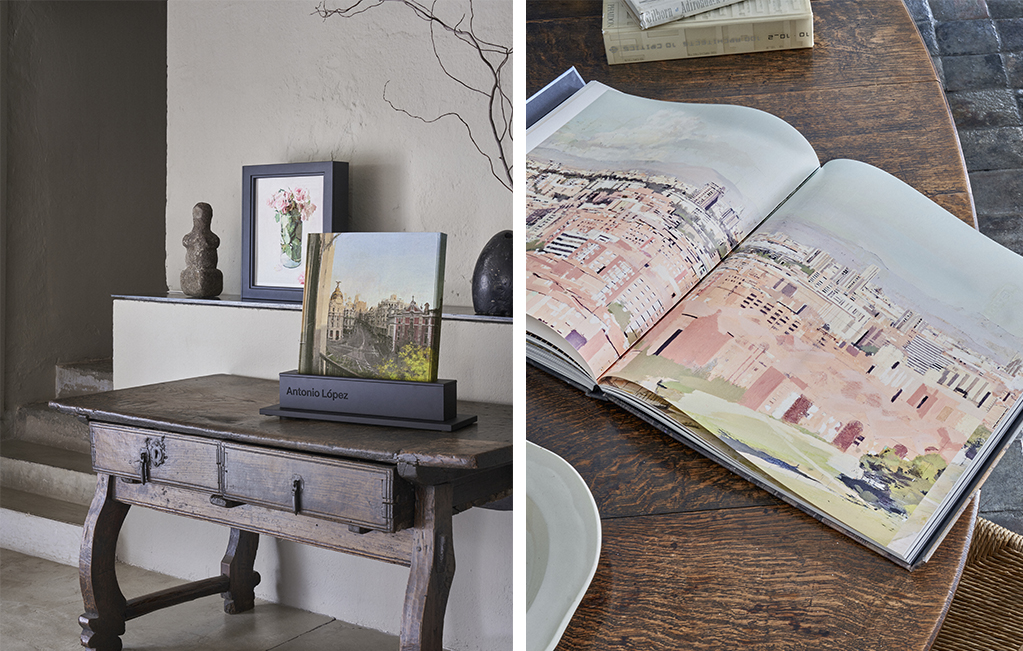
In this work, the painter opens a window onto his creative world with uncommon candour. Landscape not only brings together some of his most emblematic paintings, but also reconstructs the relationships that shaped his vision: the uncle who recognised his talent, the influences that guided his earliest steps in art, and the companion who shared so many working days with him, offering a different reading of each painting. The result is a comprehensive and intimate piece that reveals how the gaze of one of Spain’s greatest contemporary painters was formed—and transformed.
Antonio López Torres: the beginnings of a vocation
“I noticed that I did it with ease, that I knew how to do it. It was something that caught my attention: I could capture perspective, I could convey volume, I knew how to apply colour and get the proportions right. I had a natural ability for what is known as copying reality. My uncle interpreted all of this as evidence that I possessed the qualities needed to become a painter, and he convinced my father that I should begin studying painting,” Antonio López recalled in the exclusive interview included in the edition of Landscape.
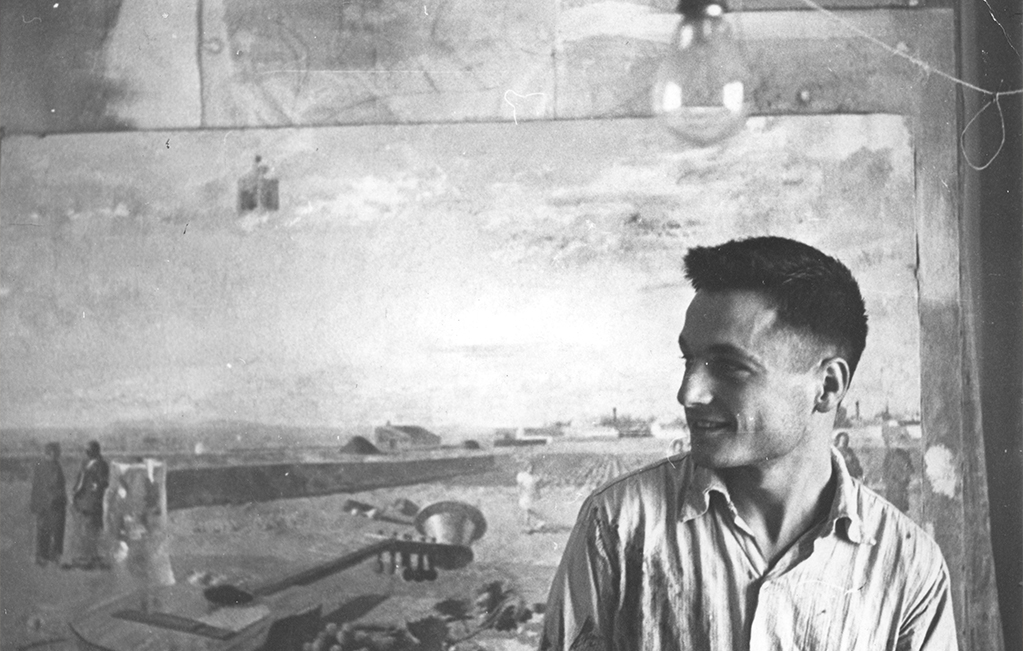
From an early age, he drew intuitively, as though beginning to discover the world through lines. But it was in 1949 that his uncle saw those first works, produced spontaneously by copying printed illustrations. He recognised in them a distinctive sensitivity, a way of seeing that deserved to be nurtured and guided. He was the first to recognise his potential and, from that moment onwards, introduced him to the world of art, steering him towards a vocation that would define his entire life.
Thanks to this support, Antonio López Torres managed to persuade the young artist’s parents that, at just thirteen years old, he should study at the Escuela de Bellas Artes de San Fernando in Madrid. That decisive and generous gesture made his paternal uncle his principal mentor and the figure who opened the door to a world the artist had already sensed since childhood.
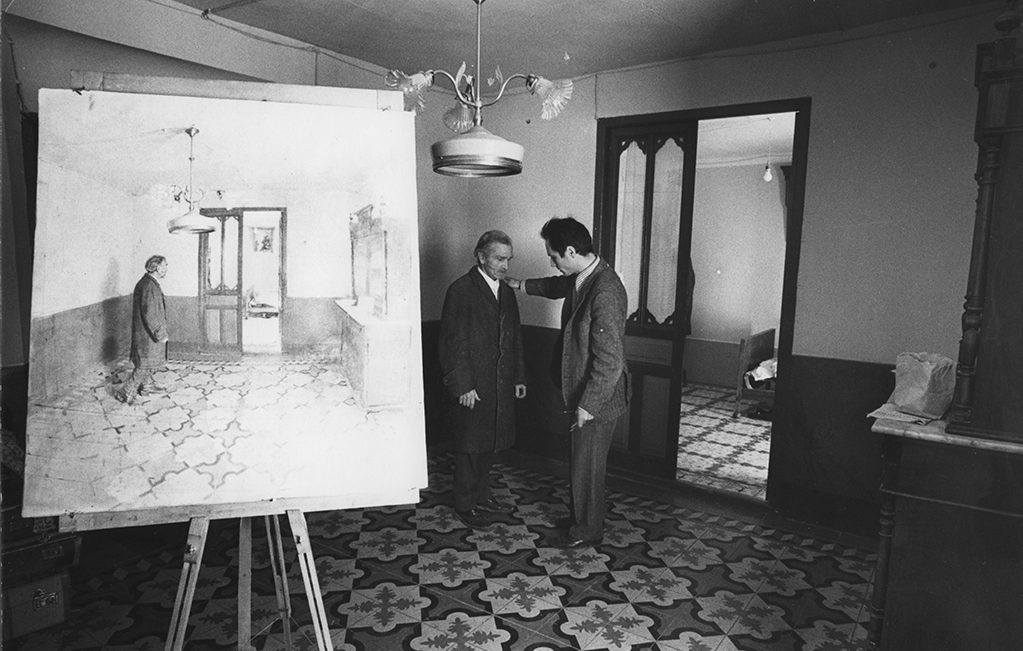
Antonio López painting his uncle Antonio López Torres in 1973, photo by E. Moses.
Antonio López retains a vivid memory of the everyday sight of his uncle coming and going from the house with his easel, paint box and a canvas beneath his arm. He described him with a mixture of tenderness and precision: “The painter, unmarried, short, nervous, sensitive, apprehensive and sometimes possessed of a great sense of humour, stood out from everyone else without meaning to.” He also stated that “he was the greatest example of talent for painting I have ever known”.
It is through this memory that we can understand Antonio López’s enduring dedication to the work of Antonio López Torres. In him, he saw not merely the example of an artist, but living proof that painting could be a way of life. It was this legacy that awakened the vocation that would remain with him for ever.
This edition brings together an essential selection of his uncle’s works, revealing the restraint, clarity and delicacy that defined his painting. Canvases such as El Corral (1917), La galería de Dña. Rita (1926) and Los borricos (1932) reveal his serene gaze upon everyday life and offer a deeper understanding of the origins of Antonio López’s visual sensibility.
María Moreno: a companion in life and painting
He met her in 1954, when he was completing his fifth and final year at the Escuela de Bellas Artes and she had just begun her first. After graduating, Antonio returned to Tomelloso and, shortly afterwards, began his military service in 1956. During this period, they saw one another sporadically at gatherings and dances, where he became captivated by the charm of María Moreno—Mari, as Antonio called her—although distance and circumstance meant that their relationship developed slowly.
Even so, they continued to meet whenever they could, until they decided to marry in 1961. In ARTIKA’s exclusive interview, Antonio summed up the depth of their bond: “For me, she was the best person in the world. I have never known anyone better. She loved me very much, and I loved her very much. We helped each other as much as we could, and it was a very good relationship.”
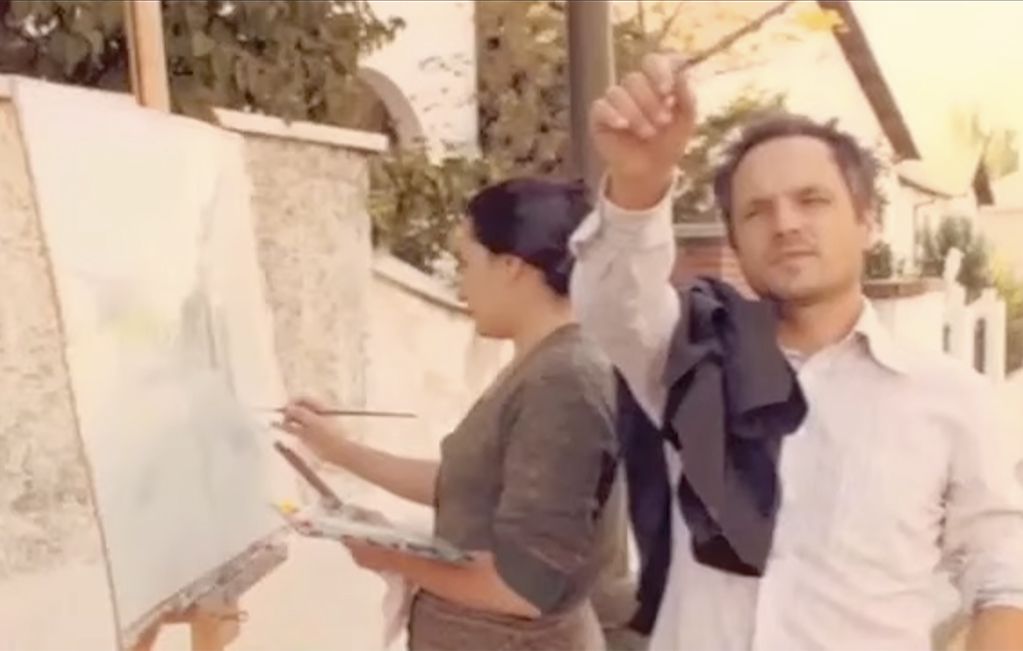
María Moreno was also a painter, and this shared vocation transformed their everyday life into a space for artistic dialogue. On some occasions, they worked in the same place, beneath the same light and during the same season of the year, although each developed a language of their own. One example is the view of Madrid from the Cerro del Tío Pío, which Antonio, Mari and Isabel Quintanilla—a friend of the couple—approached with different sensibilities. All three worked from the same landscape, yet each interpreted it through their own individual gaze.
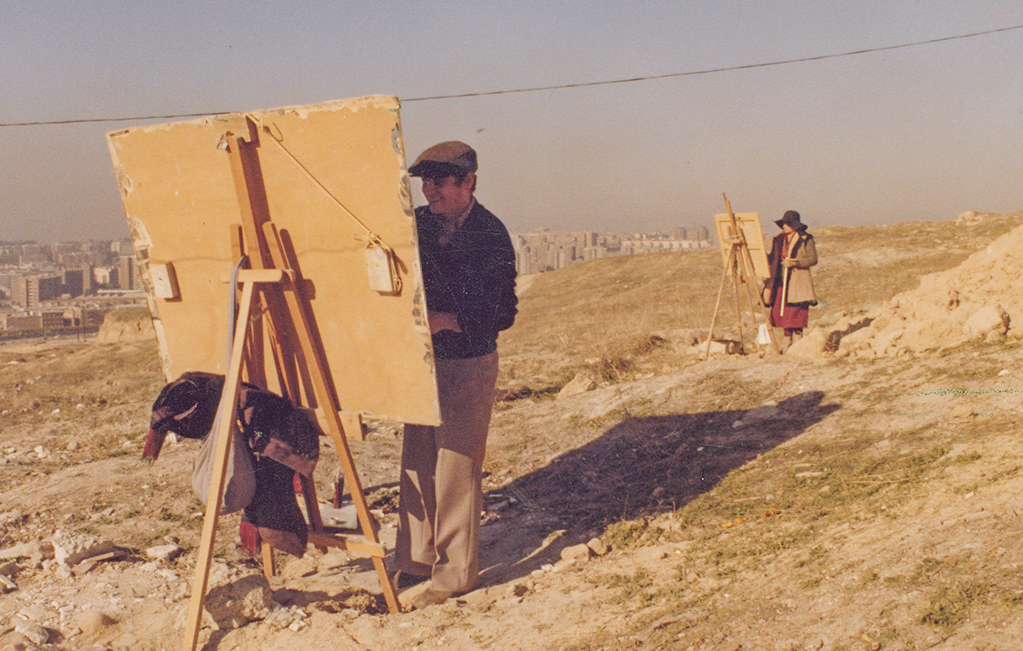
Antonio and Mari painting at Cerro del Tío Pío in 1978.
Antonio explained it clearly: “Mari was a gentler, more balanced person. She had a way of being that was reflected in her painting.” Each followed their own path, but they always supported one another. “We were constantly part of a group of friends who had an extraordinary professional relationship. It helped us enormously, and that is not common.”
Landscape also includes a selection of her paintings. Works such as La Terraza, calle Embajadores (1962) and Guardamar del Segura (1961) reveal Mari’s sensitivity and her refined pictorial instinct for painting horizons and the everyday corners we inhabit without pausing to look at them.
Landscape: a story that goes beyond the painting
– A limited edition of 2,998 copies, each individually numbered and hand-signed by Antonio López.
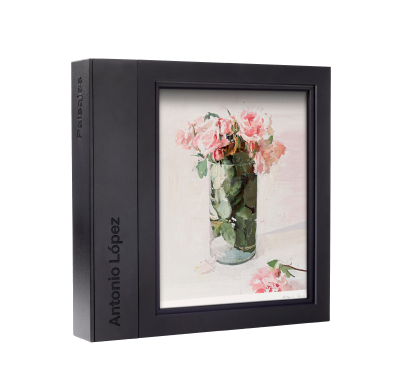
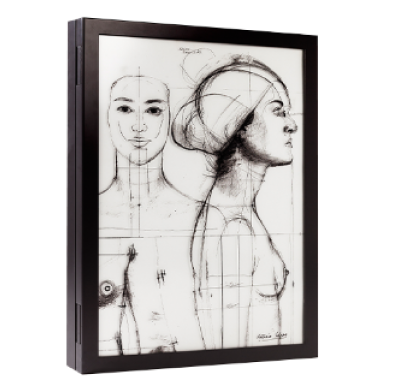
– The piece contains an Art Book and a giclée print, both protected and displayed within an elegant case designed exclusively for this edition.
– The Art Book presents a journey that begins with the paintings of his uncle, Antonio López Torres, before turning to his wife, María Moreno, and Antonio López himself, who take centre stage in the painter’s most intimate and personal work.
– The giclée print, Rosas (2021–2022), has been printed on cotton paper and bears the artist’s digital signature.