Five key works to understanding Manolo Valdés
To celebrate the launch of Manolo Valdés’s new piece, Damas y caballeros, we’d like to take this opportunity to look back at some of his most iconic works.
Manolo Valdés’s work maintains a constant dialogue with the history of art. He does not copy or reproduce: he decontextualizes, reinterprets and reactivates. He takes iconic images as his starting point and transforms them into contemporary art, revealing his way of thinking through collage, matter, texture, and volume. These five historical references, which Valdés makes entirely his own, offer a key to understanding the foundations of his artistic language.
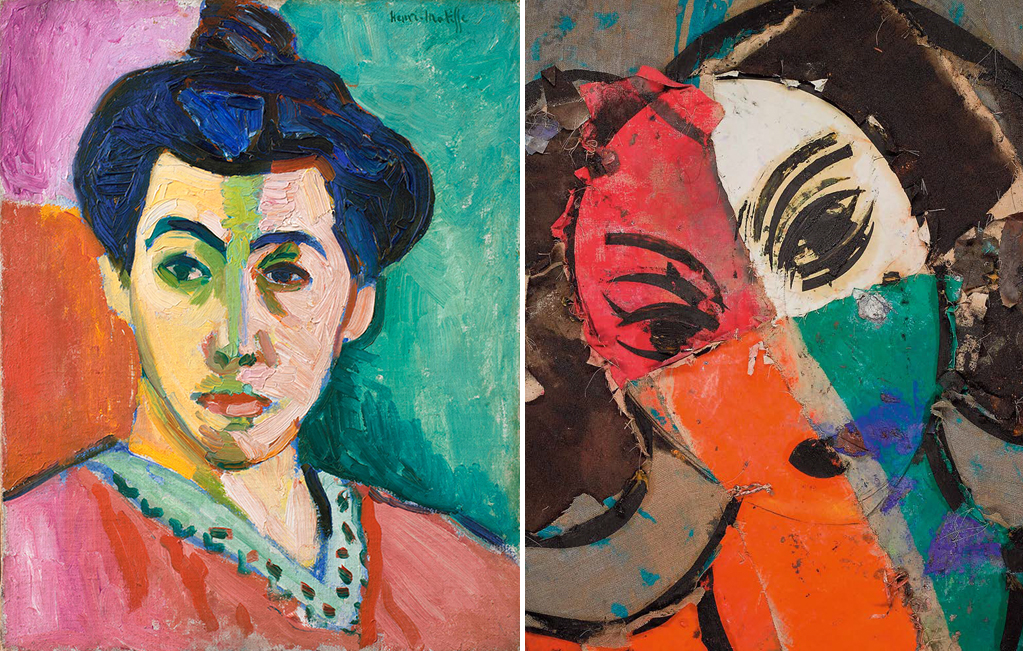
1. Madame Matisse
The fauvist portrait of Amélie Matisse (1905) is the starting point for one of Valdés’s earliest major explorations. In his versions, the face becomes a mask, a plane, a structure. The artist deconstructs the original image and rebuilds it through planes of colour, overlapping fragments, and a composition that transforms the face into visual architecture.
Here one of his key principles emerges: taking an icon and exploring it through multiple variations, as if each work were a different facet of the same figure. With Madame Matisse, one of the foundations of his method is already visible: to reinterpret in order to discover.
2. Les Demoiselles d’Avignon
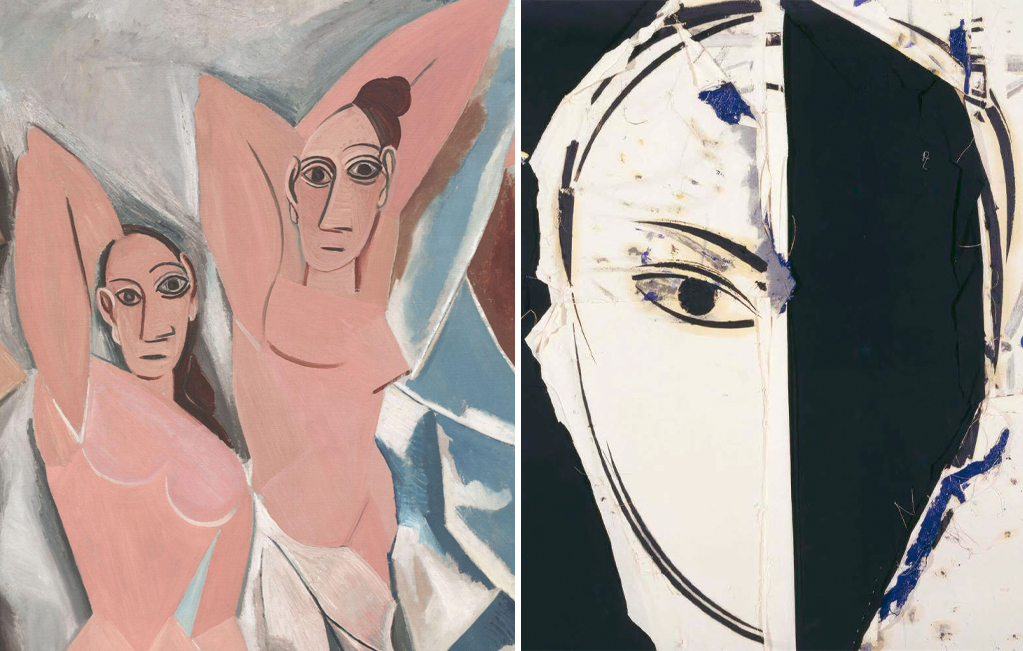
For Valdés, cubism becomes a point of departure: a structure from which to fragment, isolate and monumentalise the image. Picasso provides a source of inspiration that Valdés breaks apart and enlarges. In his series Cubism as a Pretext, the five figures from Les Demoiselles appear isolated and magnified, transformed into protagonists of a new visual narrative.
Valdés does not reproduce the painting: he rewrites it. He takes secondary elements and turns them into central motifs, revealing his interest in form and the physical presence of the image.
3. Reina Mariana
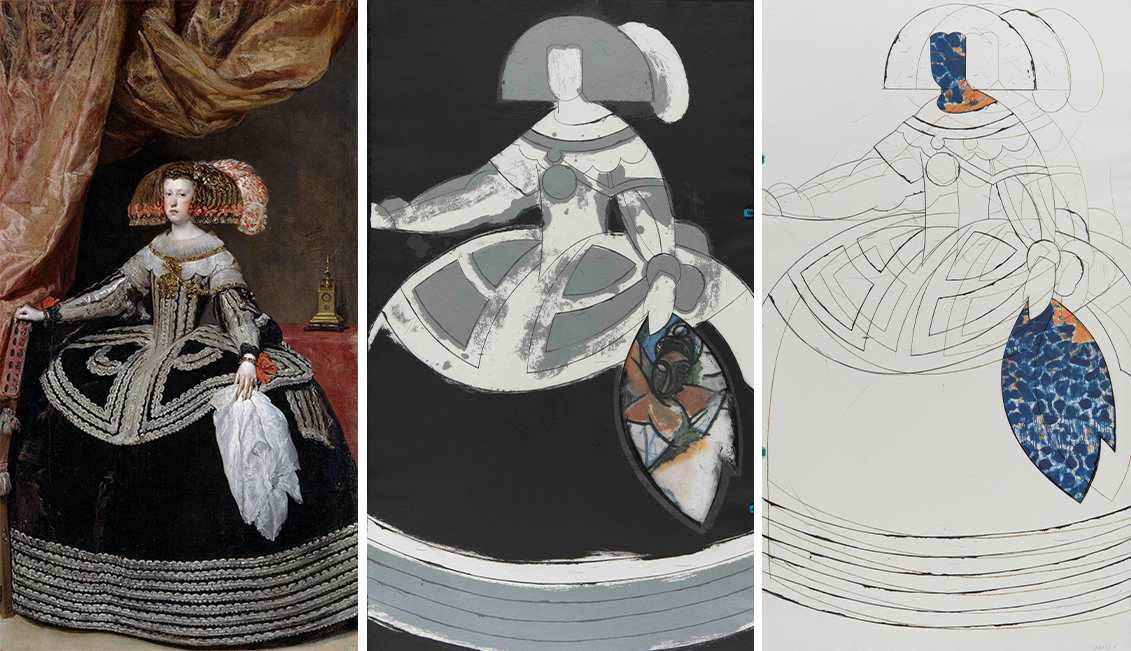
Velázquez became one of Valdés’s greatest sources of inspiration throughout his career. Reina Mariana is a recurring figure whom he reinterprets over the years. The artist preserves the structure of the original portrait, while reimagining the figure through collage, etching, and variations in material.
In his monumental sculptures, the queen’s silhouette becomes a powerful, almost architectural volume. It is a perfect example of how Valdés translates Baroque painting into a contemporary language rooted in materiality and presence.
4. Hélène
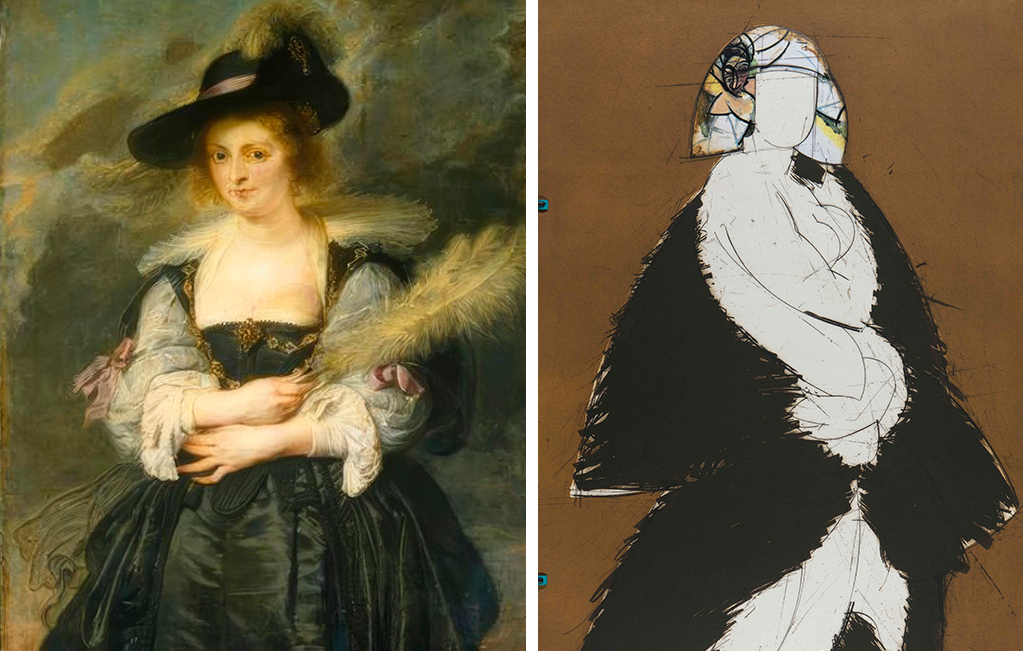
Rubens offers Valdés a different route through which to explore the sensuality of the body, light, and texture. In La Piel (1636–1638), the portrait of Hélène Fourment in which she appears partially wrapped in a fur coat, Valdés offers a new interpretation through materiality: burlap, collage, and printmaking.
The figure becomes more graphic, more direct, and more contemporary. Here, another defining aspect of his work is revealed: the artwork as a living surface.
5. The Menina
The Menina is perhaps the most recognizable emblem of Valdés’s universe. Drawing on Velázquez, the artist has created an endless repertoire of print, paintings, and monumental sculptures in which its unmistakable silhouette has become a symbol of his art.
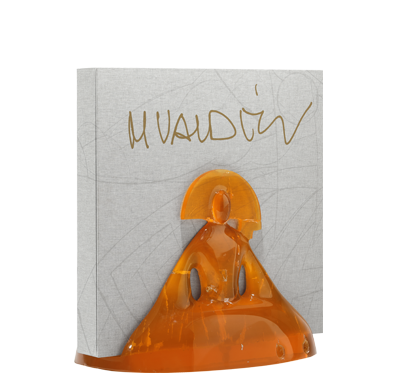
The Menina reveals the essence of his method: an idea that expands and transforms without losing its identity. It is also the figure that connects most directly with Damas y caballeros, the ARTIKA edition in which book and sculpture are conceived as a single entity.
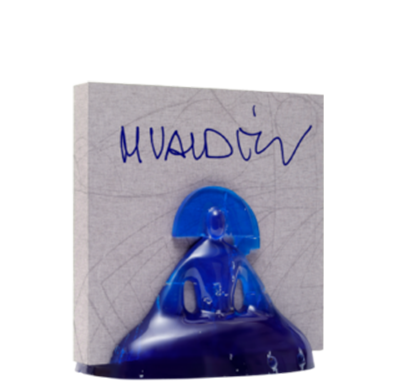
ARTIKA now presents Damas y caballeros with a Menina in amber-colored resin, conceived as a sculptural piece integrated into the case. The amber brings a new warm and vibrant light that renews the presence of one of his great emblems and turns the piece into a luminous presence within the artist’s universe.
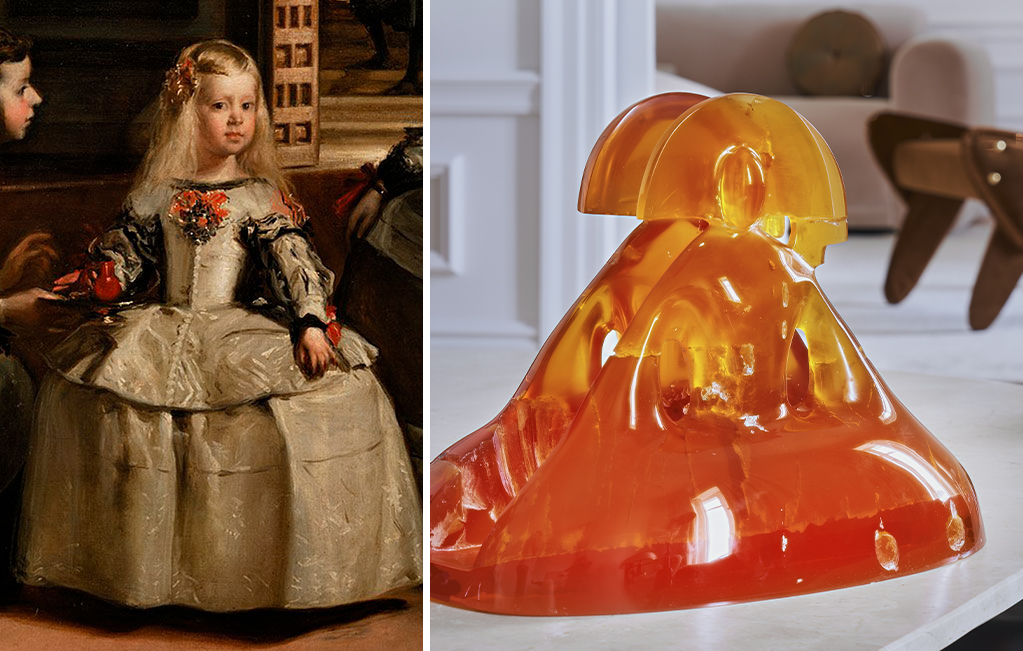
I Left: detail of Las Meninas by Velázquez, 1656. Right: Damas y caballeros. ARTIKA BOOKS, 2026.
Damas y Caballeros: an edition that embodies the Valdés style
– A numbered edition limited to 998 copies, each individually signed by the artist.
– The edition comprises two volumes and a case featuring an amber Menina reinterpreted by Valdés and produced through a meticulous artisanal process. Its cracks, textures and irregularities recreate the handcrafted character of the artist’s monumental works, making each copy a unique piece.
– The Art Book includes 53 works — paintings, prints and collages — from his most representative periods, personally selected by the artist and reproduced in the highest quality.
– The Study Book brings together reflections by leading experts across four chapters, analyzing the artist’s career, work, and influences.