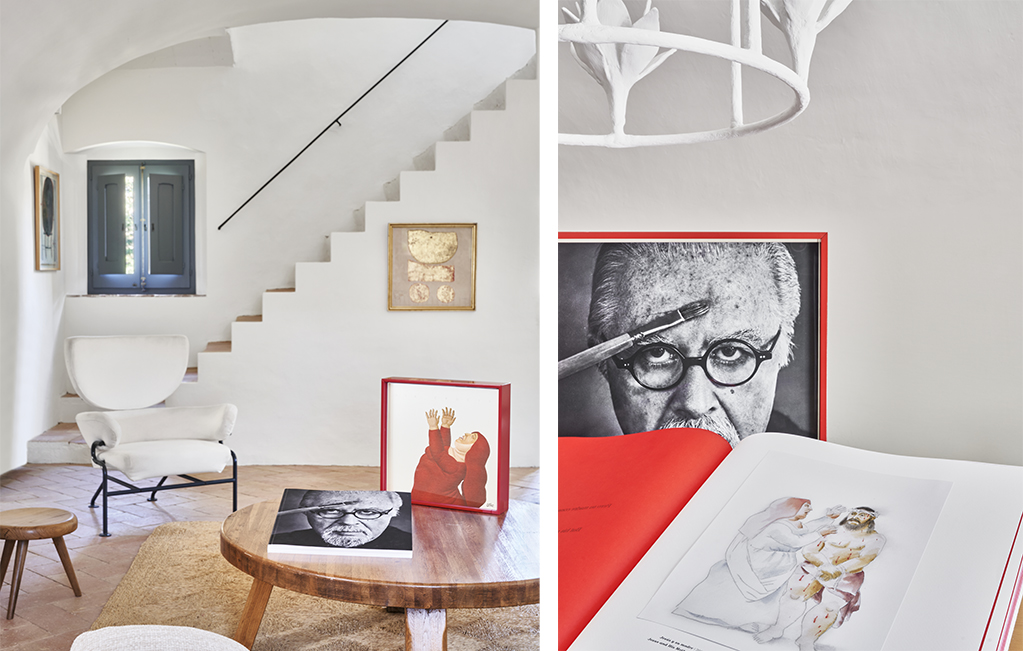
The most intimate Botero in Via Crucis
Some works allow us to discover not only an artist’s talent, but also the depth of his sensitivity. In Vía Crucis, Fernando Botero approaches human suffering from a particularly intimate and committed perspective. Far from resorting to grandiosity, he transforms suffering into images of intense emotional force, treating it with respect, sensitivity and compassion.
Volume as a refuge
In Vía Crucis, Botero’s characteristic use of volume takes on an emotional dimension that goes beyond its formal qualities. The rounded, restrained figures create an apparent serenity amid suffering. Volume acts as a visual counterpoint to the harshness of the scenes: it does not conceal pain but presents it through a deeply personal sensibility.
As David Ebony, art critic and editor of Art in America, notes in the Study Book: “Botero discovered that he could translate the entire history of art into this newly adopted visual language of tremendously exaggerated figuration designed to provoke an emotional impact.”
Botero’s committed gaze
Botero does not simply depict the harshness of violence: he transforms it into a reflection on the human condition. Each scene from the Passion depicted in Vía Crucis takes on a universal dimension, placing suffering and human dignity at the heart of each scene.
The composition, the gestures of the figures and the choice of colour transcend the depiction of the biblical episodes. Botero uses his visual language to make suffering visible without turning it into a spectacle, transforming it instead into a reflection on memory and the human condition.
For Botero, painting was also a way of questioning reality. In Vía Crucis, this dimension reaches a particular intensity: the depiction of the Passion becomes a reflection on pain, dignity and the vulnerability of the individual.
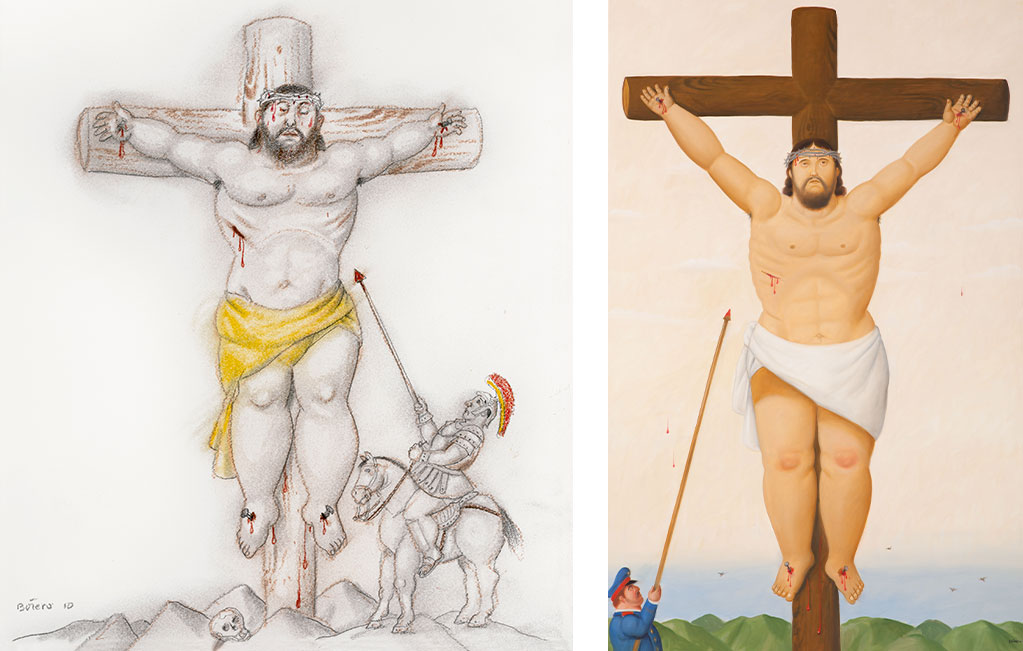
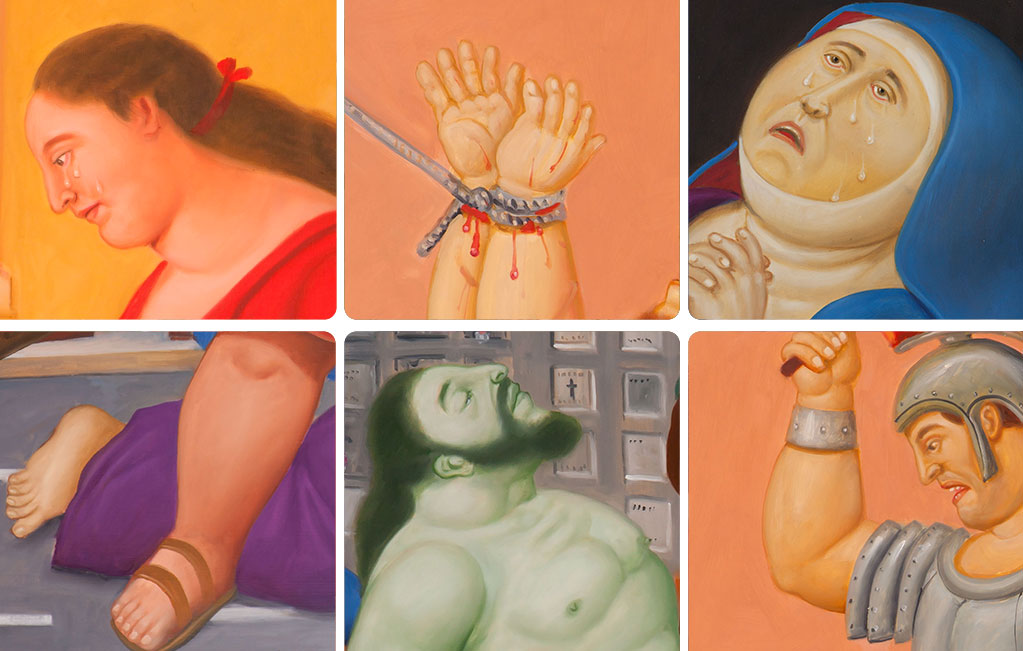
Left: Crucifixion, 2010. Watercolor and pencil on paper, 40 × 30 cm. Museo de Antioquia, Medellín, Colombia
Right.: Crucifixion with Soldier, 2010. Oil on canvas, 201 × 127 cm. Museo de Antioquia, Medellín, Colombia
A more intimate experience of Vía Crucis
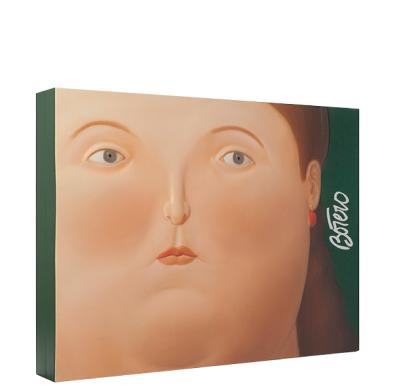
The ARTIKA edition offers a new way to experience the series. The Art Book brings together all 34 original drawings in reproductions that faithfully preserve the original linework and materiality, inviting the viewer to linger over each scene.
Vía Crucis reveals a Botero who uses painting to reflect on emotion, suffering and compassion.
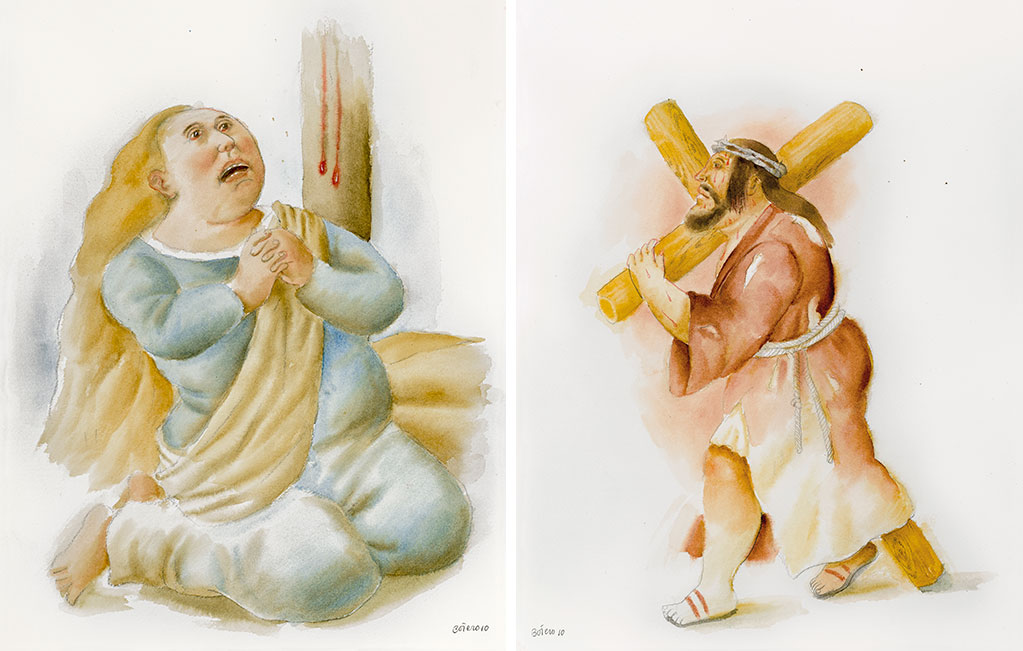
Izq.: Near the Cross, 2010. Watercolor, pencil, and colored pencil on paper, 40 × 30 cm. Museo de Antioquia, Medellín, Colombia.
Right: Jesus Carries the Cross, 2010. Watercolor and pencil on paper, 40 × 30 cm. Museo de Antioquia, Medellín.
Vía Crucis: compassion as a form of art
– A numbered edition limited to 2,998 copies, produced in collaboration with Fernando Botero and the Antioquia Museum.
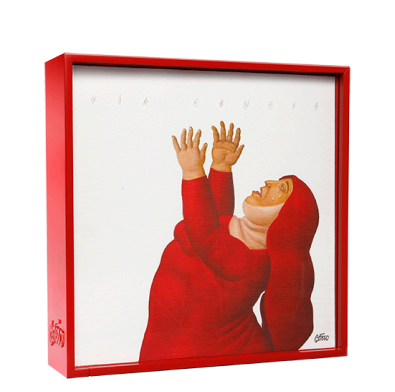
– The edition comprises two volumes presented in an exclusively designed display case. The cover of the Art Book features a previously unpublished image reproduced on canvas, with a silhouetted detail from the oil painting Cerca de la Cruz (2010).
– The Art Book brings together the 34 drawings from the series, in which Botero reinterprets the Passion of Christ through his characteristic artistic language. Each plate is accompanied by a biblical quotation.
– The Study Book features contributions from specialists including Federico Mayor Zaragoza, David Ebony and María del Rosario Escobar, who explore Botero’s career, influences and social and cultural dimension, while also examining the key aspects of Vía Crucis.