Sorolla’s triumph in the United States: the impact of an artistic phenomenon
By the beginning of the twentieth century, Joaquín Sorolla was already widely recognised across Europe. Yet it was his arrival in the United States that turned his artistic reputation into a genuine cultural phenomenon. His exhibitions in cities such as New York, Boston, Chicago and St Louis marked one of the great milestones in the international recognition of Spanish art.
American audiences, accustomed to local painting traditions or European academicism, were dazzled by the energy of his compositions, the movement of his figures and, above all, by his unmistakable ability to capture the sun on canvas.
The arrival of Mediterranean light
The decisive moment in this journey came in 1909 with his first major solo exhibition at the Hispanic Society of America in New York. For the occasion, Sorolla presented 356 works. The public response exceeded all expectations: almost 160,000 people visited the exhibition in little more than a month, making it one of the most significant events of his international career.
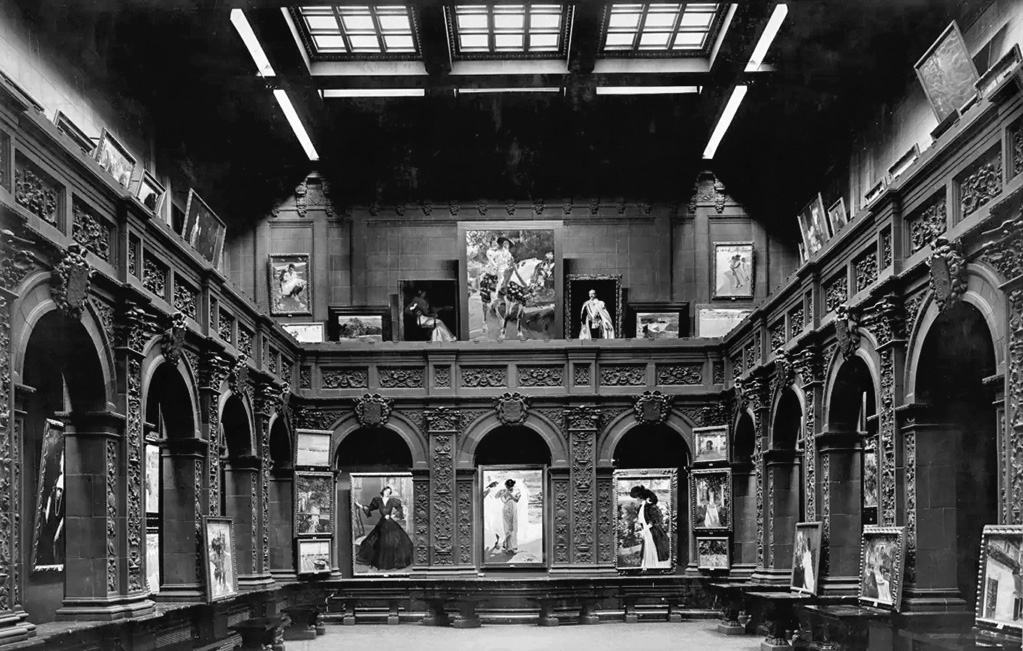
The Hispanic Society of America in New York in 1909, during the Sorolla exhibition.
Among the works displayed in this first New York exhibition were paintings such as Clotilde con mantilla española (1902), Clotilde con traje negro (1906)—acquired during the exhibition by the Metropolitan Museum of Art for its permanent collection—or Niños en el mar, Playa de Valencia (1908).
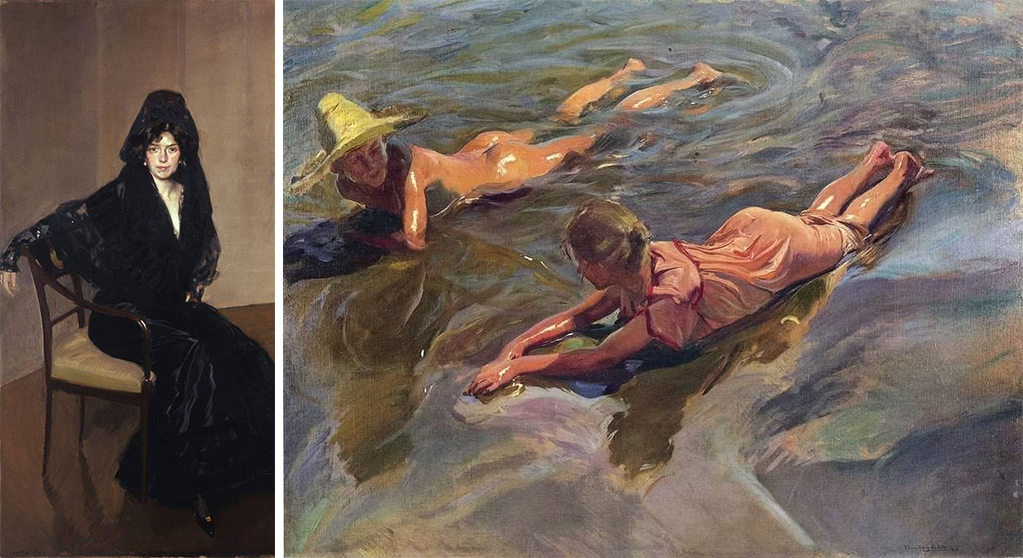
Left: Clotilde con mantilla española (Clotilde with a Spanish Mantilla), 1902. Hispanic Society of America.
Right: Idilio marino (Sea Idyll), 1908. Hispanic Society of America.
An unprecedented impact on American society
The success of 1909 opened the doors of American high society and led to important commissions. During his stay, President William Howard Taft himself invited him to the White House to paint his official portrait. On his next visit, in 1911, he portrayed the artist and designer Louis Comfort Tiffany at his home, Laurelton Hall, on Long Island.
That same year, with the support of patron Archer Milton Huntington, his work embarked on a second American tour that took his paintings to cities such as Chicago and St Louis, further consolidating his international reputation.
The commercial impact of these visits was considerable: more than 300 works were sold in the United States, 187 of them depicting beach scenes, a subject that particularly captivated the public. Today, the Hispanic Society holds a permanent collection of 243 works by the artist.
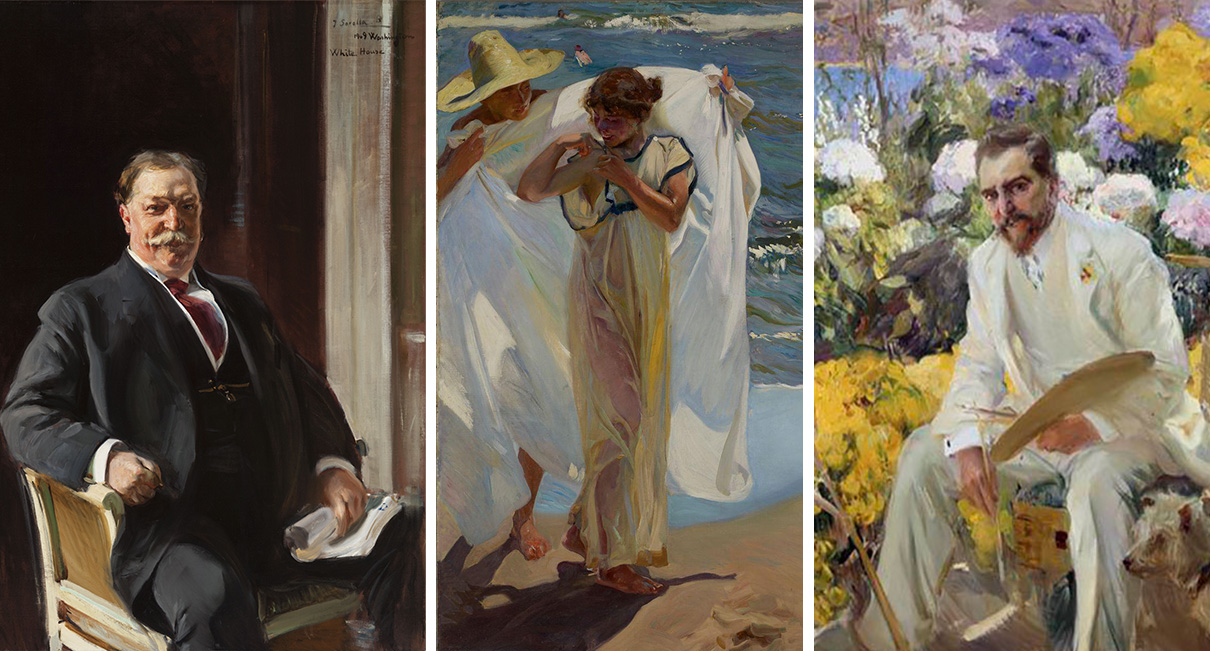
Left: Retrato del Sr. Taft, Presidente de los Estados Unidos (Portrait of Mr. Taft, President of the United States), 1909. Hispanic Society of America.
Center: Después del baño (After the Bath), 1908. Hispanic Society of America.
Right: detail from the portrait of Louis Comfort Tiffany, 1911. Hispanic Society of America.
Beyond prestige, his success in the United States strengthened his financial independence and expanded his creative possibilities. Sorolla was able to undertake more ambitious projects and develop new compositions with greater freedom.
The legacy of his American success
Upon returning to Spain, Sorolla continued to explore the light of the Valencian coast in settings such as Malvarrosa and El Cabañal. Works such as Paseo a orillas del mar (1909), El baño del caballo (1909) and Chicos en la playa (1910) reveal the freedom of his brushwork and his extraordinary ability to capture the reflections of light on water and sand.
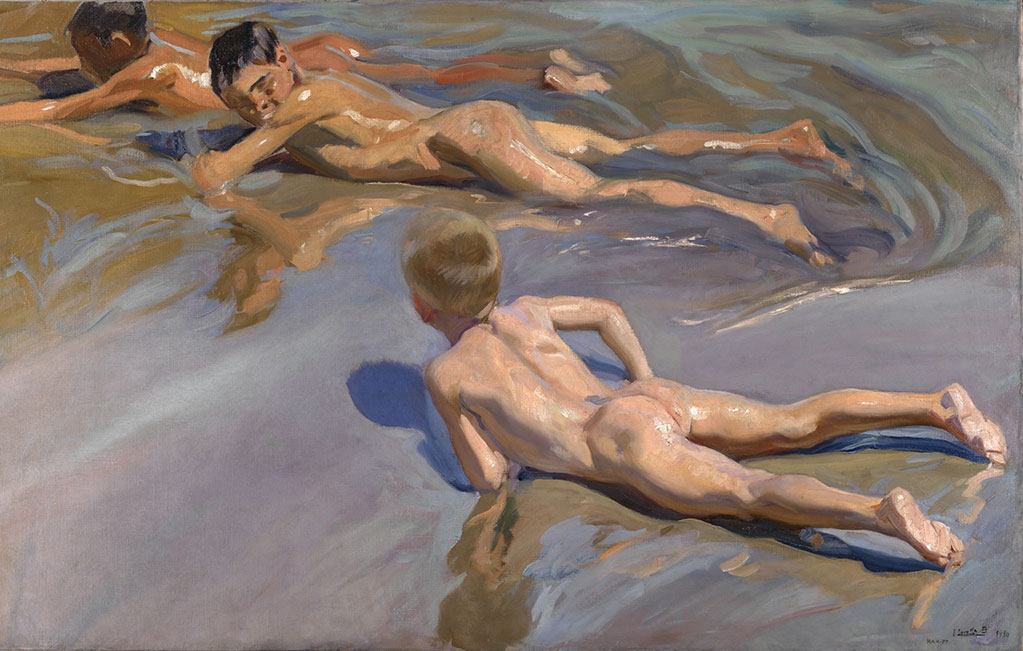
Chicos en la playa (Boys on the Beach), 1910. Museo del Prado.
He was also able to devote more time to personal projects, such as the creation of the gardens of his Madrid residence, now the Museo Sorolla, between 1916 and 1920, which he later translated into different painted compositions.
The greatest recognition of his American career came with a commission from Archer Milton Huntington for the library of the Hispanic Society of America: the monumental series Visión de España. Between 1912 and 1919, Sorolla travelled across different regions of the Iberian Peninsula to create the 14 monumental panels that make up the series, conceived as a vast portrait of Spain’s landscapes, customs and traditions.
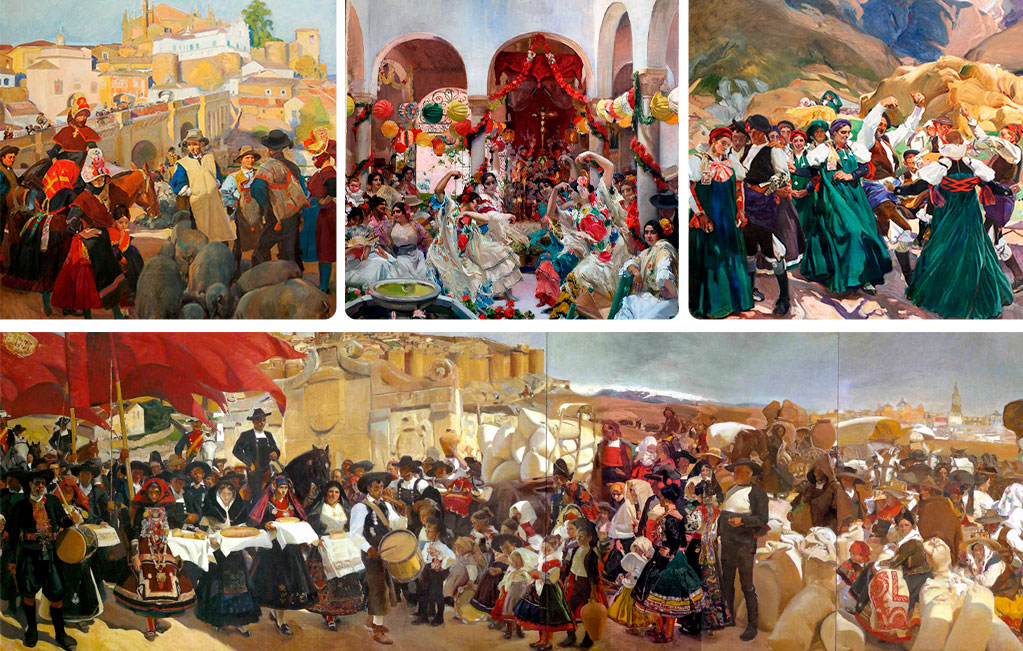
Various paintings from the 1909 exhibition at the Hispanic Society of New York.
His time in the United States not only consolidated his international reputation but also expanded the creative possibilities of an artist who found in American acclaim the impetus to undertake some of the most ambitious projects of his career.
Yet behind the internationally acclaimed artist there was also a Sorolla in private, attentive to the quiet moments of family life. Away from major commissions and crowded exhibitions, his drawings and letters reveal this more personal side: the husband, the father and the man who found another source of inspiration in those closest to him.
Sorolla in private, a window onto the artist’s private life
– A numbered edition limited to 2,998 copies, produced in collaboration with the Sorolla Museum and Blanca Pons-Sorolla, the painter’s great-granddaughter and a trustee of the Foundation.
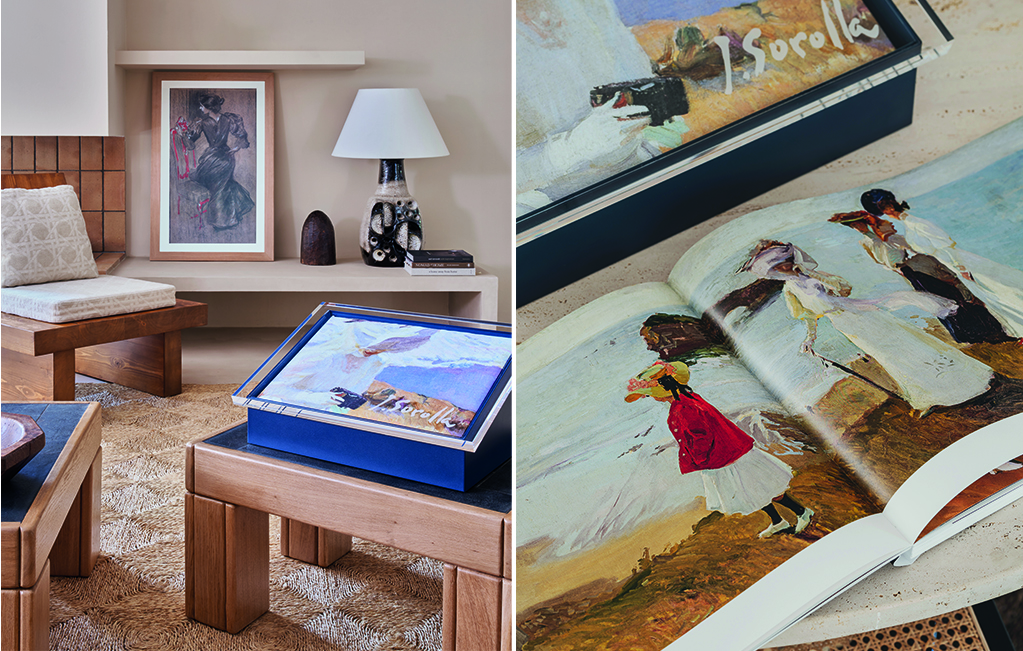
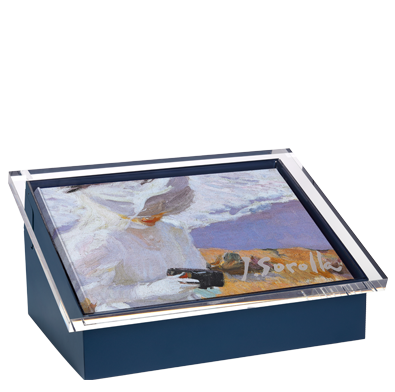
– The edition comprises two volumes, a collection of letters and an art print, all presented in a display case whose principal image is a detail from the oil painting Instantánea, Biarritz, featured on the cover of the Art Book.
– The Art Book includes 71 drawings that bring his most personal experiences into the domestic and family sphere.
– In the Study Book, experts Inés Abril and Mónica Rodríguez analyse the drawings included in the work, while Blanca Pons-Sorolla, Consuelo Luca de Tena, María López, Covadonga Pitarch, and Eulalio and Pilar Pozo explore the artist’s family and the preservation of his graphic work.
– The Correspondence: Three Decades of Love brings together 210 letters from the 2,000 that have been preserved. With a foreword by Isabel Justo, it offers a valuable testimony to the social, economic and political context of his time, while also revealing a story of love, complicity and family life.
– The edition includes the art print Study from Life, c. 1905, a portrait of Clotilde executed in charcoal, white chalk and red oil paint, which hung in the couple’s bedroom for many years.