

The visual lyricism of Joan Miró: Canticle of the Sun, his most personal work
Joan Miró (1893–1983) is one of the most influential figures in twentieth-century art and an undisputed reference point in modern creativity. His restless and insatiable spirit led him to develop one of the most original aesthetics in the history of art. Although painting was the central axis of his career, he also explored sculpture, printmaking and ceramics in depth, expanding the boundaries of his expression while experimenting with new techniques and materials.
It is often said that he “assassinated painting”, not as an act of destruction but as a radical way of reinventing it. Over many years of dedication and experimentation, he gradually built a language of his own that culminated in a mature aesthetic based on synthesis and formal purification. By reducing colours and elements to essential signs, he created a form of communication that appears simple yet carries profound poetic and symbolic meaning. Within this economy of means lies the true strength of his creation: a unique ability to convey emotions, ideas and inner worlds with an intensity that continues to resonate in contemporary art.
The formation of the Mironian language
To understand how Miró came to develop such a personal and recognizable language, it is necessary to look back to his early years, particularly the 1920s. During this decade he moved to Paris, the epicenter of the artistic avant-gardes. There he came into contact with the Surrealist circle and figures such as Pablo Picasso, while also engaging with poets and creators who broadened his artistic horizons.
Despite settling in the French capital, the painter continued to spend time in Mont-roig, the village of his father where his family owned a farmhouse. This place became a retreat and a space for an intimate connection with nature. The Farm (1921–22) was the first painting in which he began to experiment with what would become his distinctive style. His deep relationship with the landscape helped him to create a rich imaginative universe that would later be reflected in works such as Canticle of the Sun.
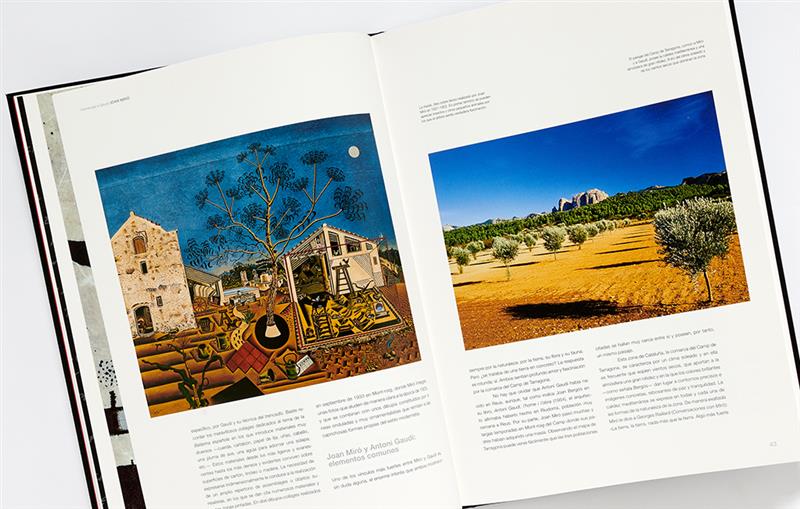
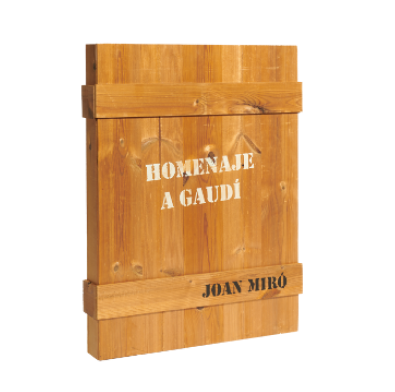
La Masía, 1921–22, Study Book Tribute to Gaudí (2013) by ARTIKA BOOKS
The contrast between the intellectual and artistic agitation of Paris and the earthy serenity of Mont-roig proved fundamental in shaping his style. From the city he absorbed the innovative impulse and dialogue with the avant-gardes; from the rural landscape came the symbolic roots, the attentive observation of nature and a poetic sensitivity towards the earthly world.
His travels to cities such as New York and Tokyo, and his eventual settlement in Palma de Mallorca after fleeing the Second World War, further enriched his artistic vision. Each place offered new influences and experiences, allowing him to experiment with techniques and approaches that gradually helped him define a unique artistic universe.
The reflection of his cosmic and spiritual fulfilment
In 1975 Joan Miró published what would become one of the most representative works of his creative cosmos and mature language. Canticle of the Sun was inspired by the poem written by Saint Francis of Assisi in 1225, The Canticle of the Creatures.
The original poem is a hymn praising God for creation and expressing gratitude for the elements of nature. Seven hundred and fifty years later, the painter found in these verses a profound connection with his own way of perceiving and understanding the natural world. Unlike Saint Francis’s clearly religious text, Miró transformed it into a visual hymn with a new meaning. Through his engravings he brings together the spiritual, the cosmic, the mystical and the essential in order to express his own vision of his surroundings and of the universe.
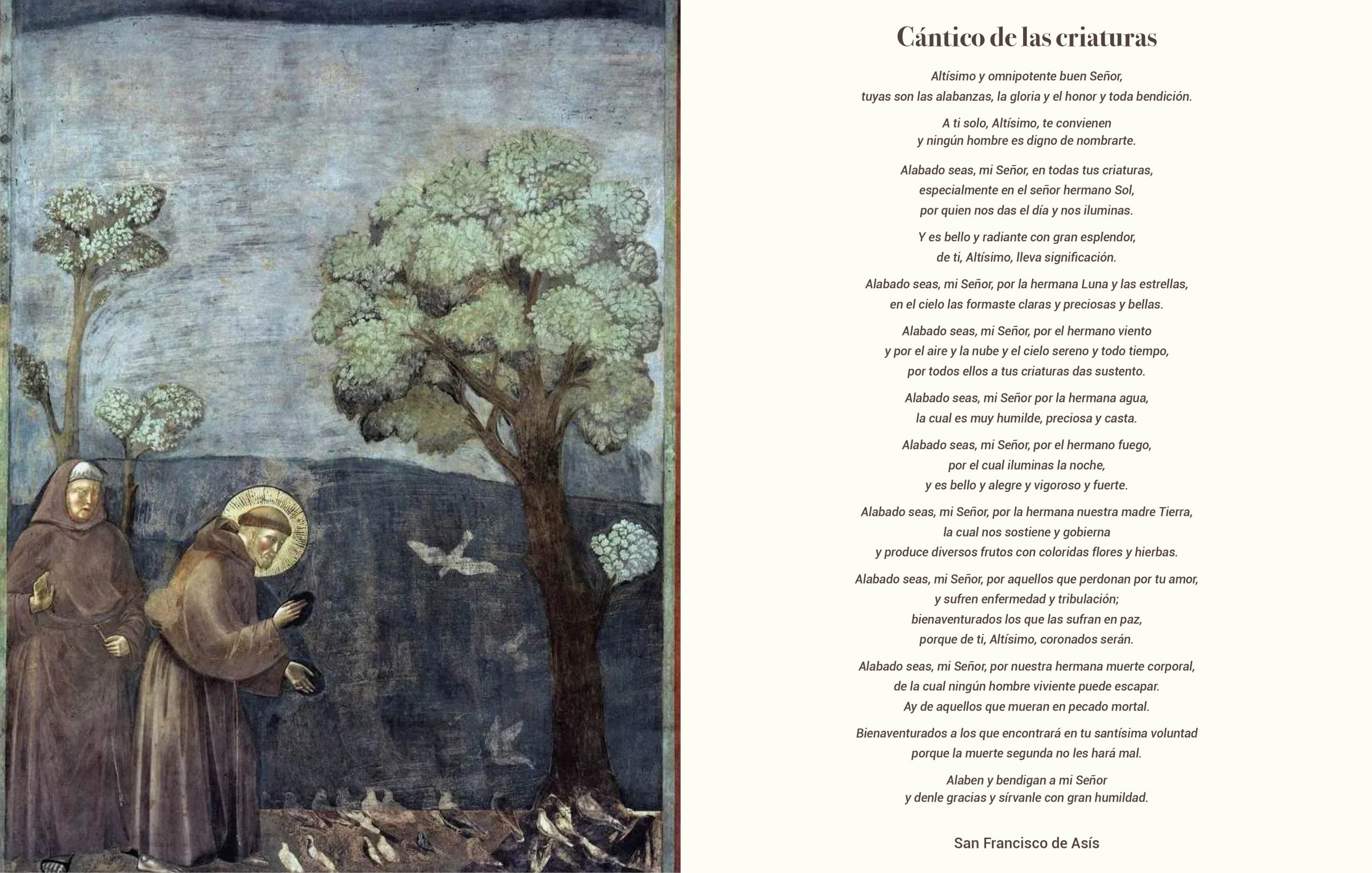
Fresco in the Basilica of Saint Francis in Assisi: Saint Francis of Assisi Preaching to the Birds, c. 1296, by Giotto (1267–1337).
The piece offers a modern interpretation that also pays tribute to his roots in Mont-roig, the place that profoundly shaped his life and work. In this series he expresses gratitude to Mother Earth for the elements that sustain and surround us every day. It is a gesture of appreciation in which even the smallest details are elevated.
Canticle of the Sun was not only the culmination of nearly five decades of technical experience and personal development; it was also the first time Miró conceived his illustrations as a direct response to a literary text. His style had reached its peak, where expressive simplicity becomes poetic magnitude and where he pays homage to the earthly world, its vital force and its presence in our everyday lives.
Forms and colours: the core elements of the work
Miró’s mature language is characterized by a highly defined chromatic palette based on four fundamental colours that became distinctive signs of his artistic imagination. Through these tones and a repertoire of simple forms, he constructed a deeply symbolic style.
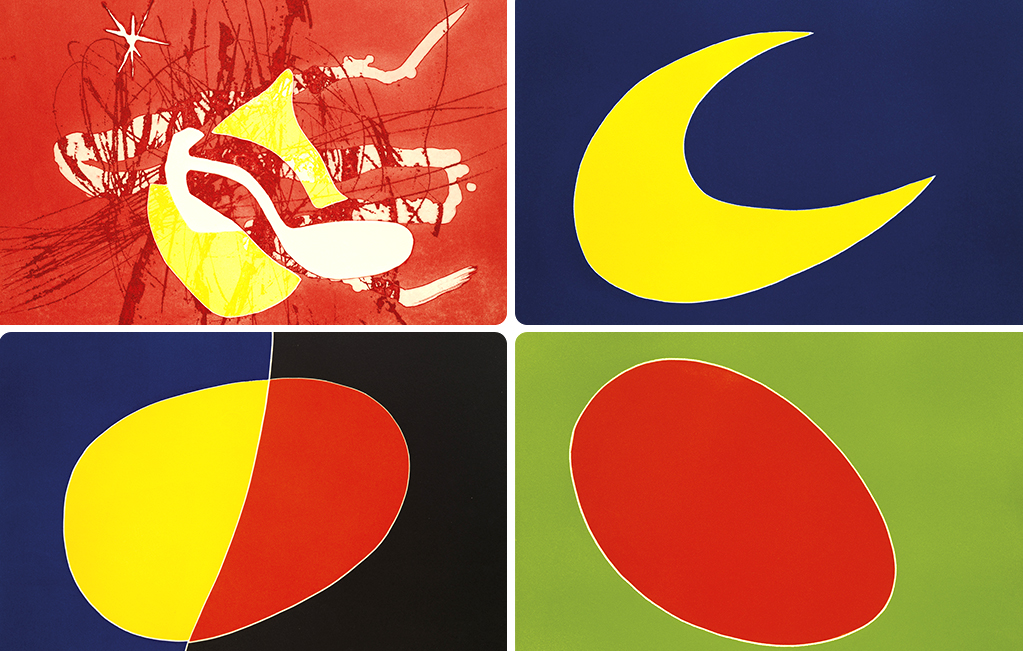
Engravings from Canticle of the Sun, from left to right: Engraving No. 24, Engraving No. 11, Engraving No. 2, and Engraving No. 7. © Fundació Joan Miró.
Throughout the series one perceives a deliberately limited use of colour, in which each tone acquires a precise meaning. Red is associated with motifs of great intensity such as the sun or fire; its vividness draws the viewer’s gaze and brings powerful energy to the composition. Yellow, by contrast, is linked to light and the celestial bodies, creating a sense of luminosity and balance.
Green evokes the earth, the organic and the natural world. Blue occupies a particularly significant place: its unmistakably Mironian tone suggests space, the sky and the dreamlike realm, becoming one of the most recognizable features of his creations. Although black functions as a structural element that outlines forms and ideas, and secondary colours such as purple or brown appear occasionally, the work as a whole is organized around these four tones, which operate as the symbolic pillars of his visual code.
Beyond the chromatic range, however, the forms and symbols that appear in this visual canticle are the true protagonists of the narrative. Through them Miró constructs a visual story that articulates meanings, emotions and references to his own imaginative universe.
The motif that opens the series of prints is the Sun. Beyond governing our daily cycle, it also sets in motion the narrative that unfolds throughout the series. For Miró, it is both material presence and spiritual force.
The Moon and the stars follow as the next symbolic elements. The Moon is shown in its various phases, while the stars appear as celestial bodies accompanying it through its different states.
From this point onward, figures drawn from Saint Francis’s poem are introduced. The wind embodies pure movement and sensation: invisible yet palpable, unstable and unpredictable. It has no fixed form or substance; it stretches through time and space. Ultimately, wind is conditioned by weather and climate, yet it also influences everything it touches, acting as a visual bridge towards the next protagonist of the work.
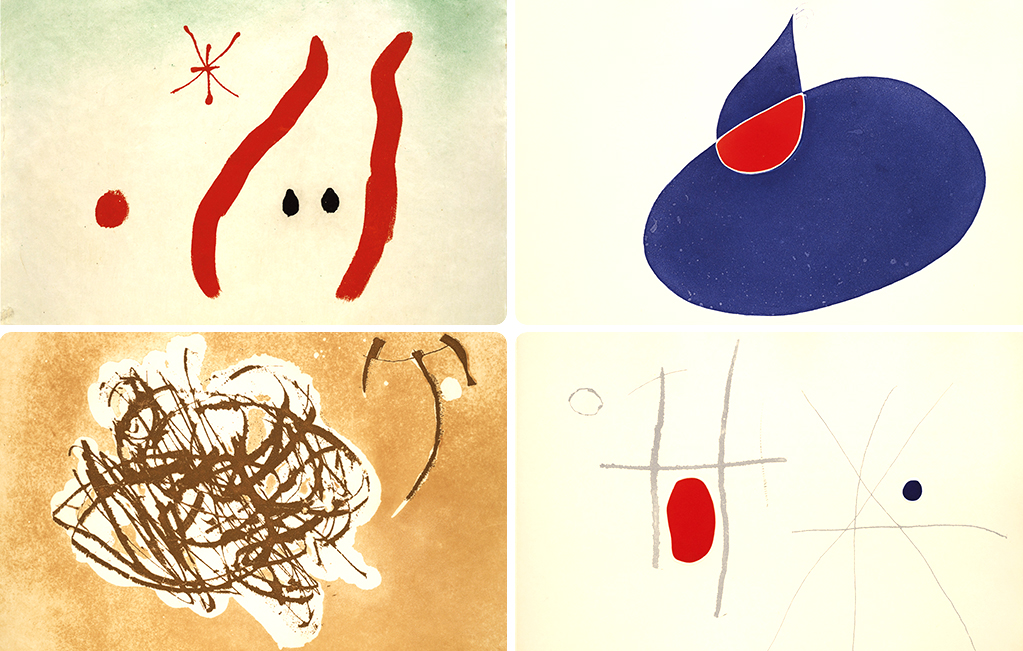
Engravings from Canticle of the Sun, from left to right: Engraving No. 35, Engraving No. 23, Engraving No. 16, and Engraving No. 33. © Fundació Joan Miró.
Water sustains life. It is rain and sea; without it, many things would not exist. Miró devoted six plates to it, making it the most frequently represented symbol in the series.
In contrast to water appears fire. This symbol is depicted as a cosmic explosion, almost like the Big Bang, from which matter and life emerge. Miró understood the power of fire not only as a cosmic force but also as a tangible physical energy.
The final element that concludes Canticle of the Sun is the earth. As an ode to “our sister Mother Earth, who sustains and governs us and produces various fruits with coloured flowers and herbs” (from the Spanish translation of The Canticle of the Creatures), Miró presents the earth both as a physical object and as the symbolic ground from which life emerges and reaches its fullest potential. To complete the prints dedicated to Sister Earth, the series concludes with the image of a simple blade of grass enlarged until it fills the entire page, reminding us that the smallest elements of creation are no less significant than the most majestic.
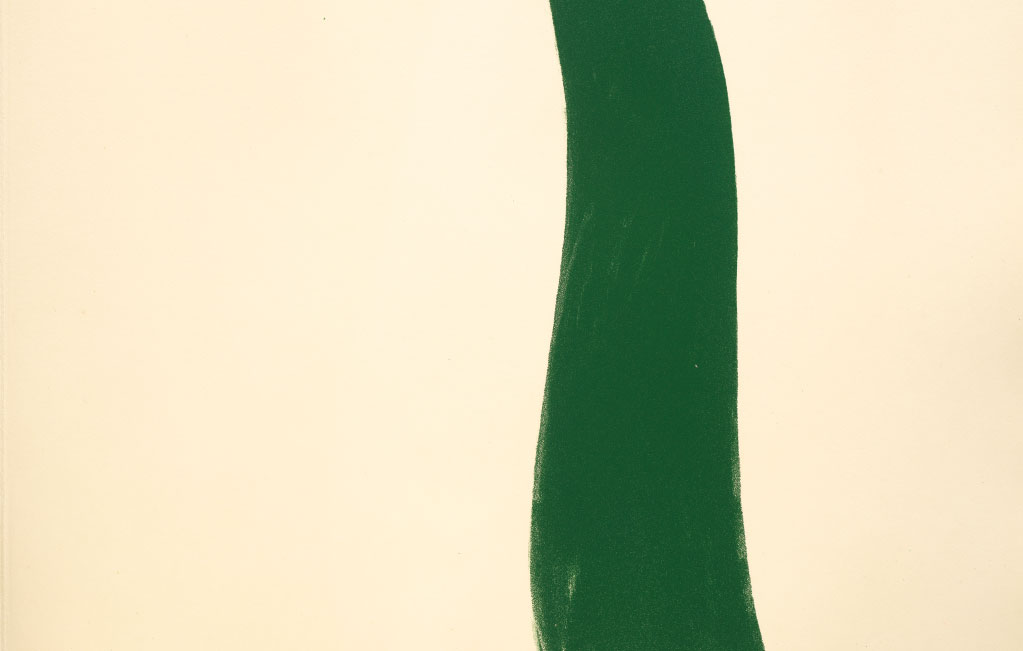
Engraving No. 32, from Canticle of the Sun. © Fundació Joan Miró.
Canticle of the Sun: a journey through Miró’s universe
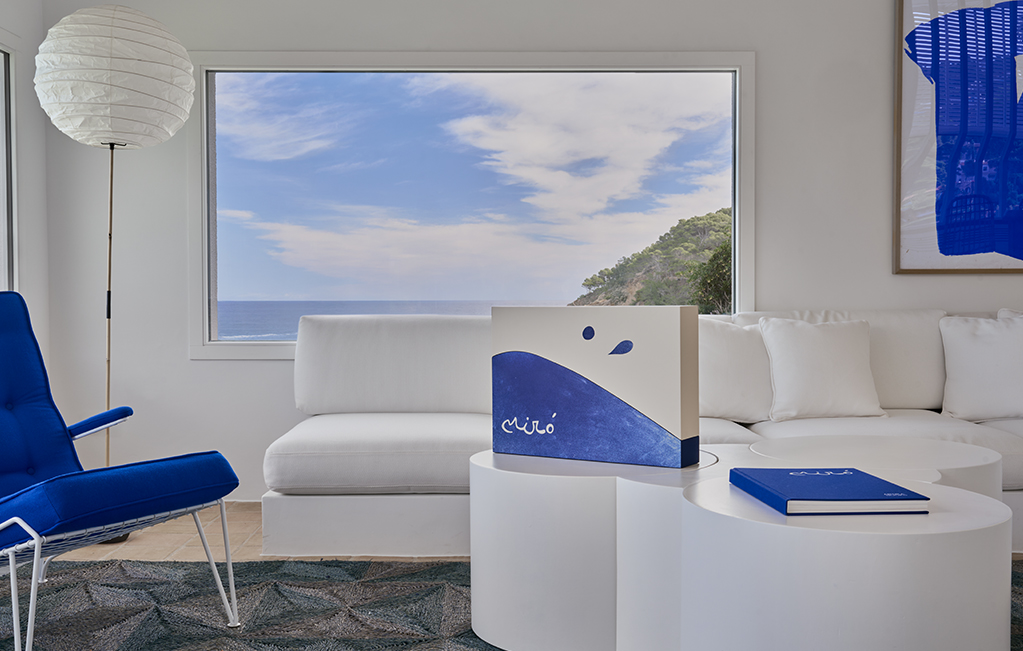
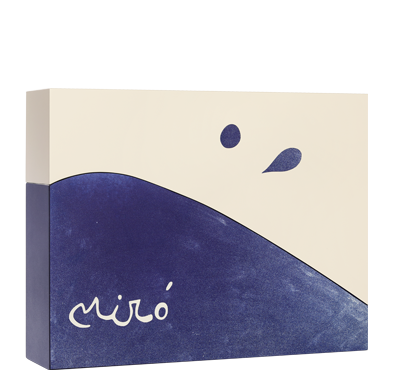
– The piece consists of two volumes and a symbolic case that pays tribute to print number 20 of Miró’s most emblematic series.
– The Art Book contains 33 plates reproduced at 75% of their original size.
– The Study Book traces Miró’s entire career—from his early years in Mont-roig to his period of artistic maturity, culminating in this great work—through the contributions of experts Robert Lubar Messeri, Mercedes Durban Monreal and Jacques Dalarun.