

Valdés’ meninas: a dialogue between city and sculpture
When Diego Velázquez painted Las Meninas (1656), he forever captured a mystery of gazes and hierarchies on canvas, one that modernity has never stopped questioning. For Manolo Valdés, that painting became an unlimited testing ground: he first explored its history through drawing, and later through materials —wood, bronze, resin— until finding his emblematic reinterpretations. Thanks to his reading of tradition, these figures step out of the museum to beautify urban landscapes —from city squares to botanical gardens and avenues around the world.
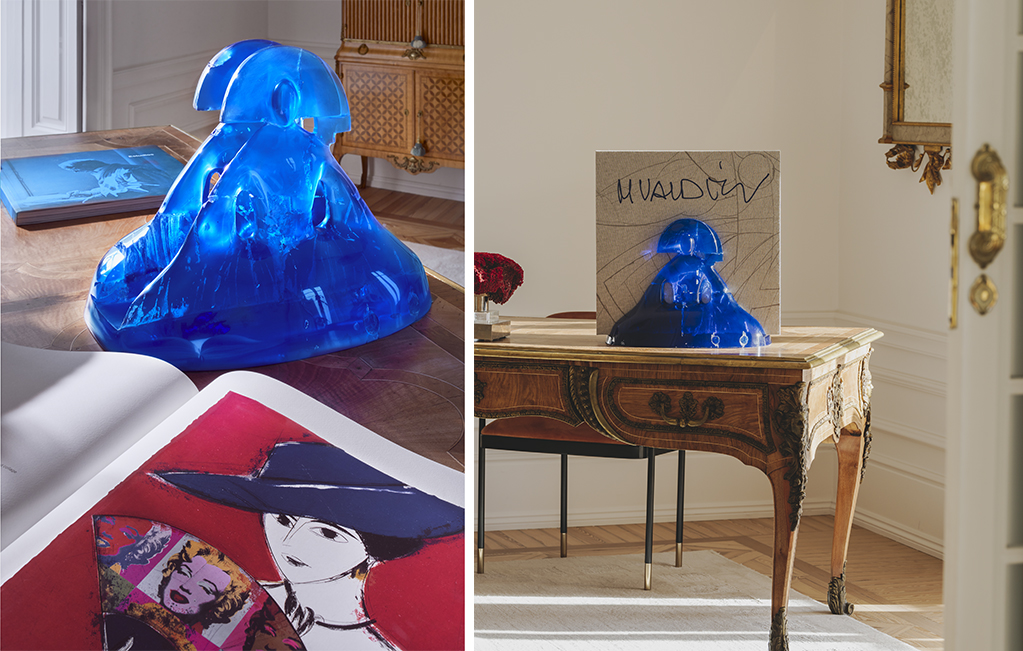
Valdés’ commitment to Velázquez’s masterpiece enriches every memory of his own experiences in front of the original painting in the Prado: “I never choose something that doesn’t obsess me.” For the artist, taking an external detail and submitting it to authorial processes of enlargement, fragmentation, or material change is a way to create a “new contemporaneity.” Thus, the menina travels from sketch to bronze, or from oil to crystal resin —and with ARTIKA, also from book to sculpture.
Studying the past: between books and sketches
Valdés’ work is not about claiming the fame of the menina, but using her silhouette as a starting point. Leaving Velázquez’s legacy intact —and even stretching its memory into new times, generations, and spaces— Valdés writes the History of Contemporary Art through a personal and innovative reinterpretation of the past. Beyond Velázquez, he also learned from Warhol, Bacon, and especially Picasso, for his tendency and ability to connect classical art with contemporary consumer culture.
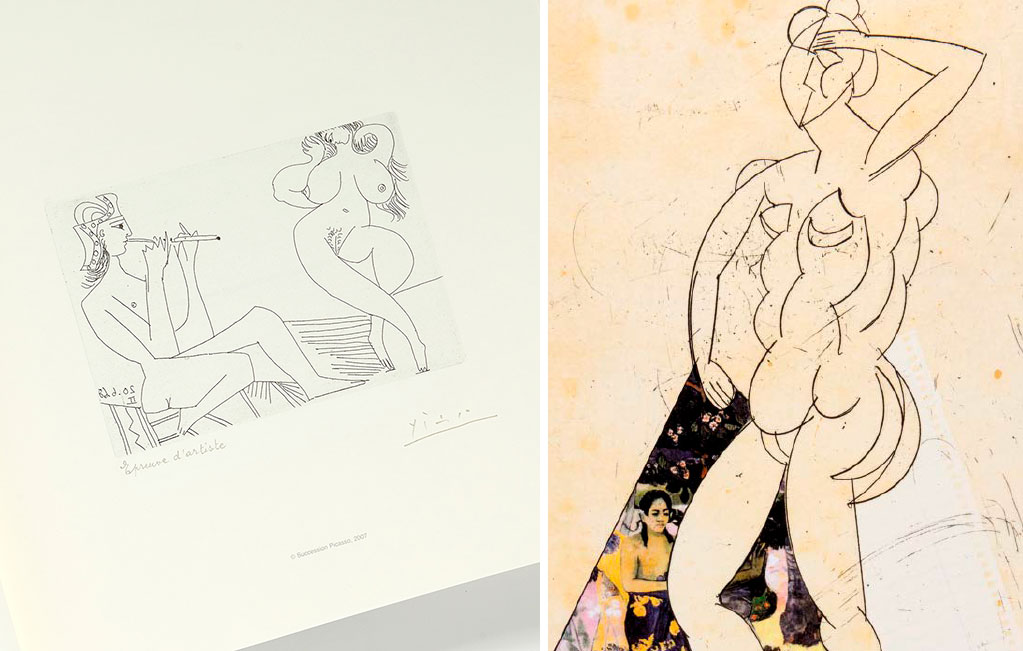
Left: Art Book of the piece Picasso’s La Celestina by ARTIKA.
Right: Study Book of Damas y Caballeros: Manolo Valdés by ARTIKA.
In this process of reading and recreating, the studio becomes a kind of archive and library, as for Valdés, books are the best allies —the physical witnesses of eras he couldn’t experience firsthand. Before using any pigment or material, his first artistic stage involves observing and studying silhouettes and empty forms.
The union of two worlds: techniques, materials, and color
Once the imagery is reinterpreted, Manolo Valdés reconstructs these figures with creative freedom, using various materials, techniques, and colors. While maintaining the essence of the original, he distances himself from the notion of appropriation or copying. Under his production, the meninas shed their Baroque solemnity to be reborn through mixed media, rich textures, and a palette that embraces vibrant blues, golds, and pinks in translucent resin—or the experimental and mysterious in opaque tones and black. He also works with bronze, aluminum, wood, mirrors, and fabrics, giving each piece a unique identity within his instantly recognizable universe. This is also true for the menina created especially for the Damas y Caballeros edition, where each handcrafted piece contains its own distinct sounds and imperfections.
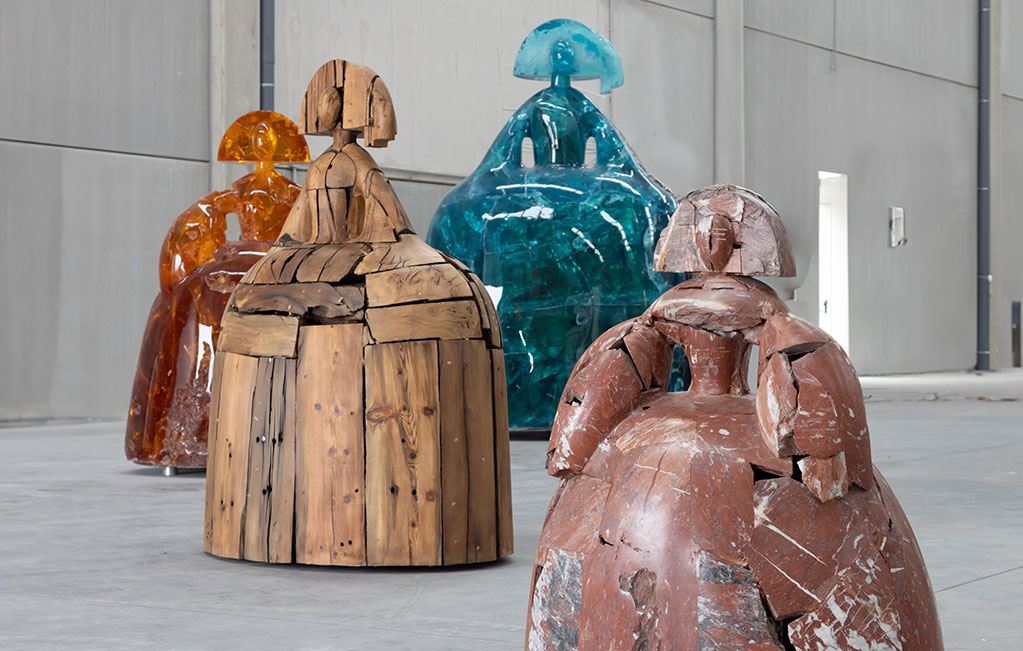
This second stage is a union of opposites: the pictorial blends with the sculptural, and the historical with the contemporary. It’s not just about quoting the past, but opening up new frontiers that may seem closed, inaccessible, or impossible, through a creation that simplifies and amplifies these forms.
The democratization of art: meninas take on the streets
Often, the final stage in the journey of Valdés’s meninas is their release into the real world, a decision that redefines the relationship between the artwork and the public. The artist does not limit his creations to museum spaces; instead, he installs them in plazas, avenues, and gardens in cities like New York, Paris, Madrid, Düsseldorf, Venice, or Santander, where they engage with the architecture, light, and urban flow. With their monumental presence, the silhouettes gain new dimension when outdoors, as silent presences that respect the dynamics of the landscape while simultaneously enhancing its beauty. Far from being confined to the past, they integrate into the contemporary rhythm.
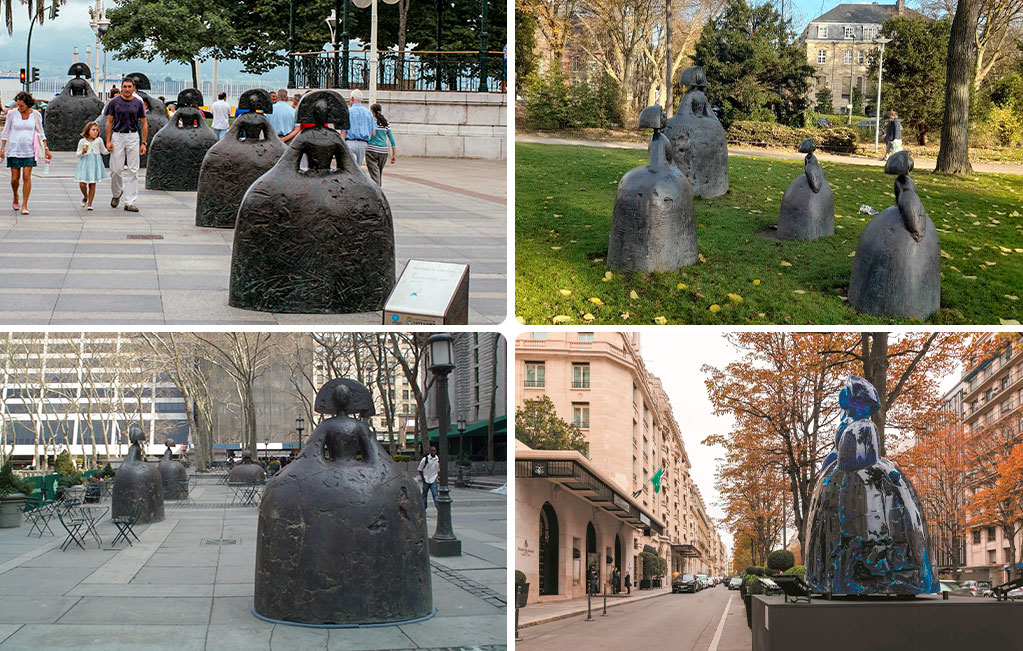
Left Sup.: Las Meninas through the streets of Santander.
Left Inf.: Las Meninas in Bryant Park, Manhattan, New York, 2007.
Right Sup: Las Meninas in Düsseldorf, Germany, 2007 (permanent collection).
Right Inf.: Las Meninas in Paris, 2021. © Opera Gallery.
With the same intention as ARTIKA’s artist books, this gesture by Valdés seeks to democratize art, liberating it from traditional boundaries like exhibition spaces and embedding it into the everyday narrative of cities and their people. These sculptures become living symbols of an art that is not only observed but inhabited.
Valdés not only finds these classical characters in new colors and materials but also decontextualizes them spatially, changing how people interact with them. A menina on the street is a powerful symbolic image that, beyond beautifying everyday public spaces, brings art closer to life than ever before. At the same time, Valdés’ work is understood as a conversation between eras where the artist asserts his voice without erasing the legacy of the great masters who came before him.
Damas y Caballeros: Manolo Valdés, the essence of art beyond the museum
– A numbered, limited edition of 998 copies, each signed individually by the artist.
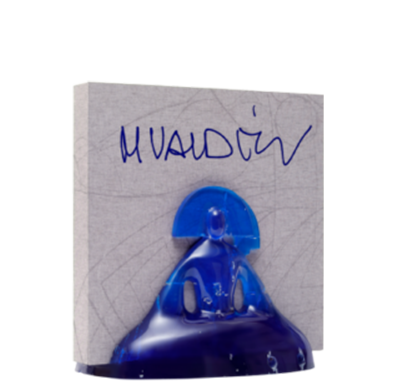
– The edition includes two volumes and a sculptural case, which is a work of art in itself. Featuring a Velázquez menina reinterpreted through artisanal craftsmanship, each piece is unique due to its cracks and imperfections.
– The Art Book includes 53 paintings, engravings, and collages from Valdés’ most iconic periods, personally selected by the artist and reproduced in the highest quality.
– The Study Book gathers insights from leading experts throughout four chapters, analyzing the artist’s career, work, and influences.