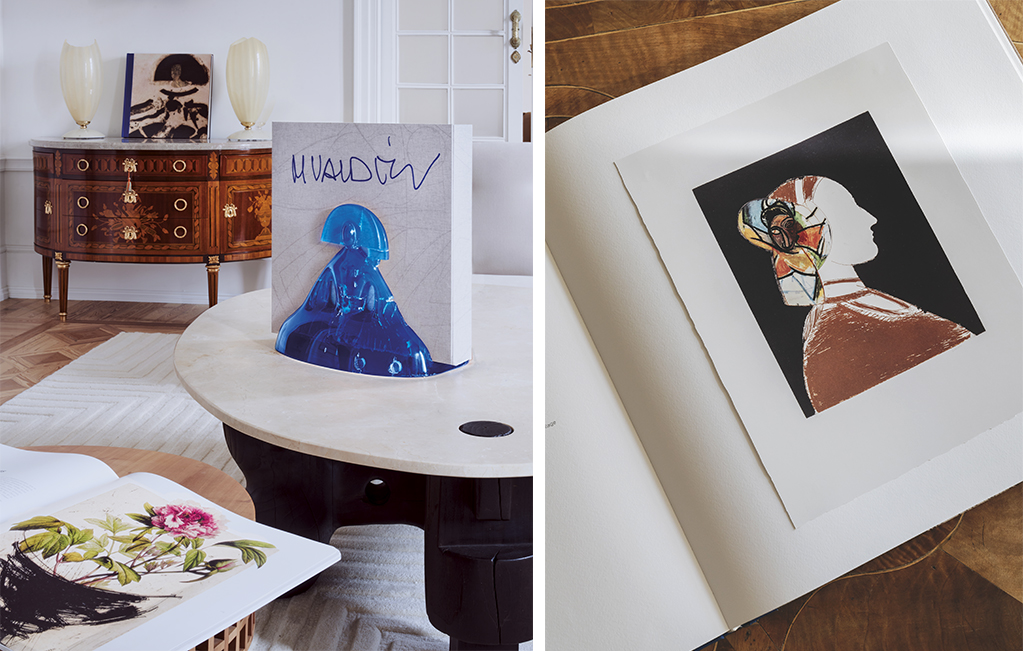


The reinterpretation of art through Manolo Valdés
Manolo Valdés’s talent is unquestionable. His work is characterized by reinterpreting classical masterpieces and endowing them with new meanings. Throughout his career, he has chosen iconic images and, in many cases, infused them with color, volume, and unmistakable modernity.
A constant pursuit of excellence has been the driving force that has enabled him to redefine the identity of great artistic icons. Valdés himself once said that he allowed himself to be guided by obsession. That intense dedication opened the door to experimentation, transformation, and reinvention—reshaping a figure until reaching, in his view, its most accomplished reimagined version.
Undoubtedly, one of his most internationally recognized works is his reinterpretation of Velázquez’s Las Meninas, to which he has given new life and volume, from paper to sculpture. Throughout his career, he has revisited many other works, granting them renewed identities.
Flower still lifes
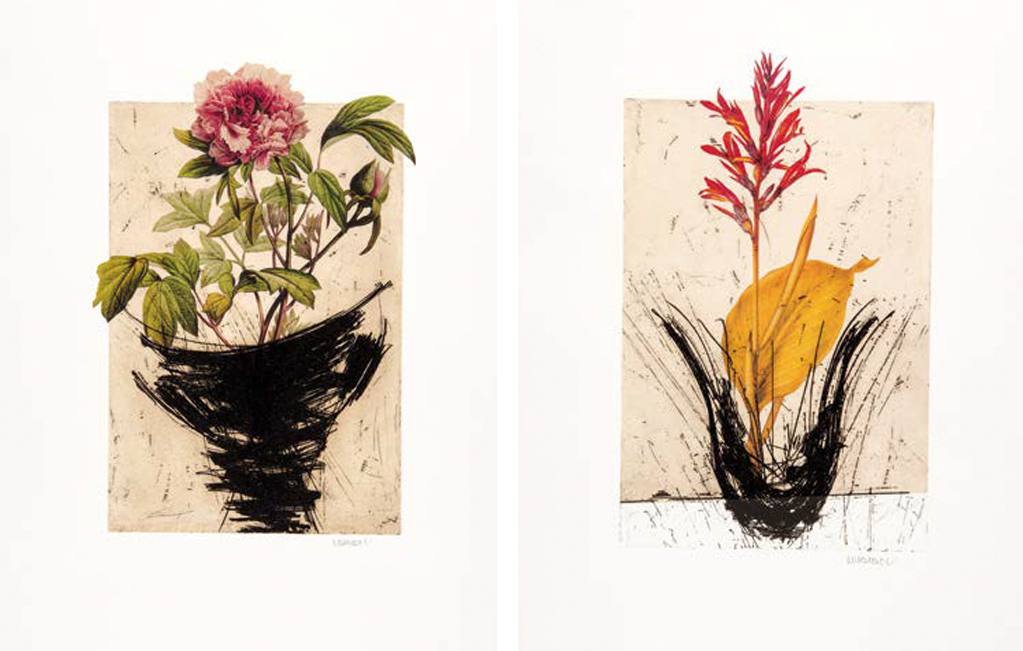
Valdés’s earliest experiments with collage can be found in the series known as Bouquet. These paintings have been key to understanding how his visual thinking operates, as he does not always begin with Art History; he also draws inspiration from elements of contemporary everyday life.
As art historian Kosme de Barañano explains in the Book of Studies: “Valdés’s still lifes can generally be read as a reinterpretation of those botanical books whose careful illustrations were entrusted to artists.”
The Dog
Francisco de Goya’s Half-Submerged Dog is characterized by deep pessimism and the use of a muted color palette. In contrast, Valdés’s reinterpretation transforms the scene into one of the most vibrant and colorful versions ever created.
Although he uses the same angle as in the original painting, he recreates the dog’s face in a style aligned with pop aesthetics and reconstructs the figure through collage, bringing life and dynamism to the work in the pure style of the Valencian artist.
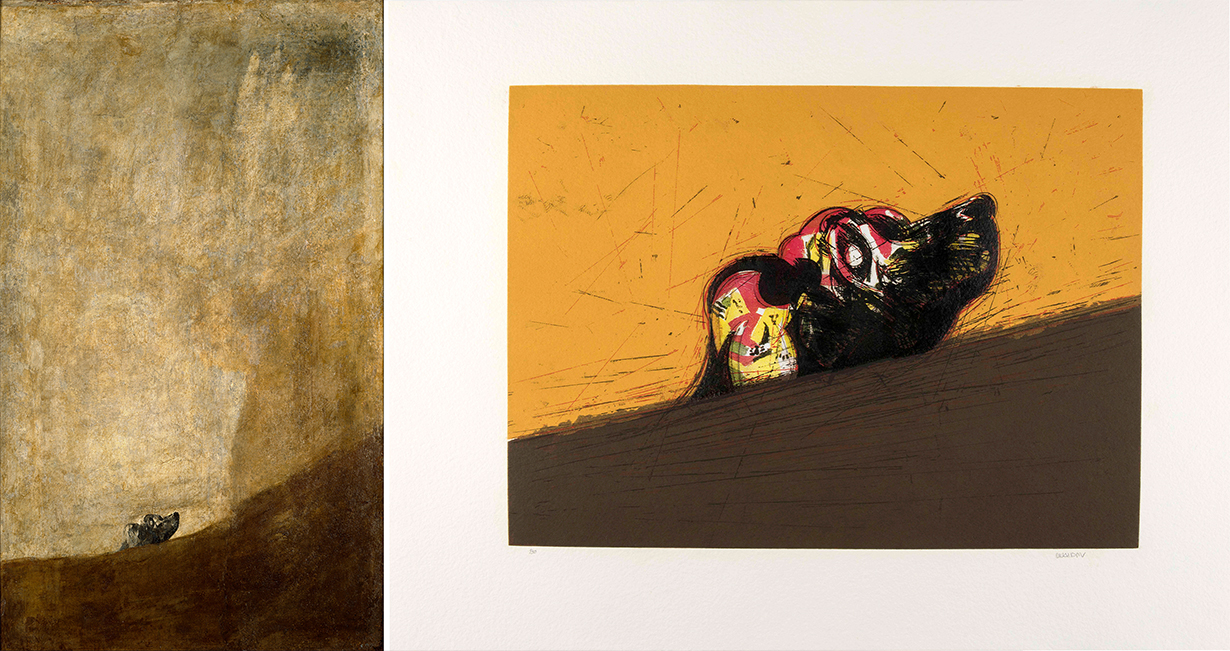
Left: Half-Submerged Dog, 1819, Francisco de Goya. Oil on plaster transferred to canvas, 131.5 × 79.3 cm.
Right: Dog V, 2008, Manolo Valdés. Etching and collage, 57 × 74 cm. Ed. 50. ARTIKA–Manolo Valdés co-edition © Manolo Valdés Studio, 2023
Helène
The woman who inspired works such as The Three Graces and The Judgment of Paris once again becomes the protagonist when Manolo Valdés decides to grant her a new visual identity. In 1988, the artist had already created a paraphrase of Helène, the wife of Peter Paul Rubens, in a more abstract and textural painting. From that piece, he later developed a series of collages exploring different variations of the same figure.
Valdés portrays Helène from multiple angles: some compositions are close-ups, others present her full figure. In all of them, he leaves the body barely outlined, without detail. In contrast, he introduces color, modernity, and an unmistakably pop signature by giving new life to the silhouette of her hair, imbuing the work with a contemporary and authentic presence.
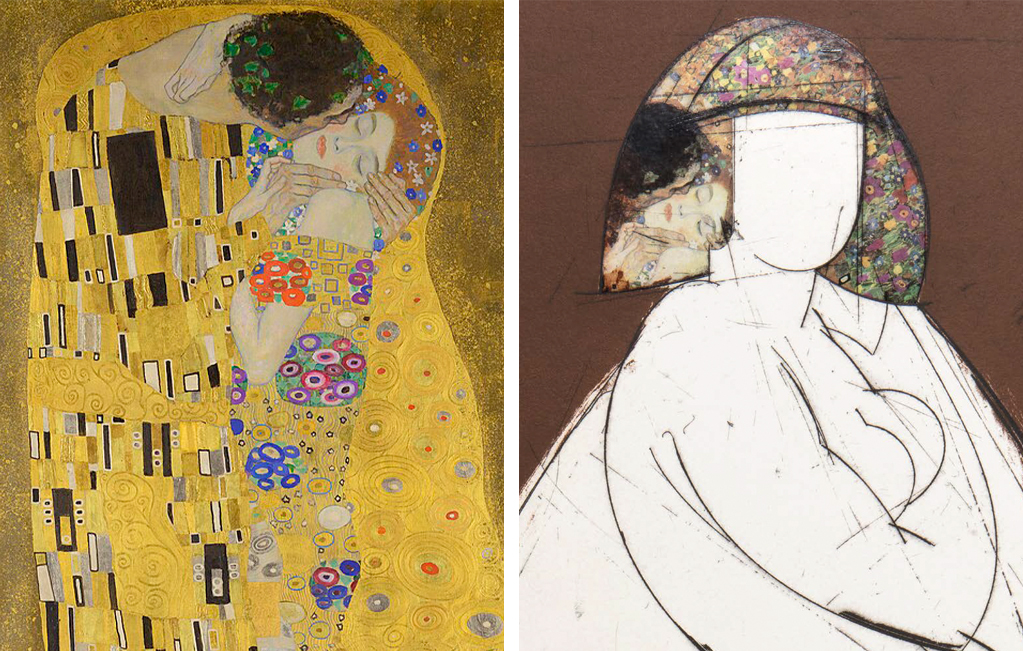
Right: Helène VI (detail), 2005. Etching and collage, 167 × 96 cm. Ed. 50. ARTIKA–Manolo Valdés co-edition © Manolo Valdés Studio, 2023
Cubism and Picasso
Another artist to whom Valdés pays tribute is Pablo Picasso, the Spanish artist who introduced Cubism to Spain. Picasso’s work serves as a starting point for Valdés to develop his own pictorial language.
In his artistic exploration, Valdés focuses on transforming the fragment into something monumental and elevating detail to a primary role. Precisely because of his interest in the unfinished and the fragmented, he directs his attention to the essential elements of images. From this exploration emerged the series Cubism as a Pretext, in which Valdés energizes composition and focuses on specific details of Cubist painting, incorporating features of pop art.
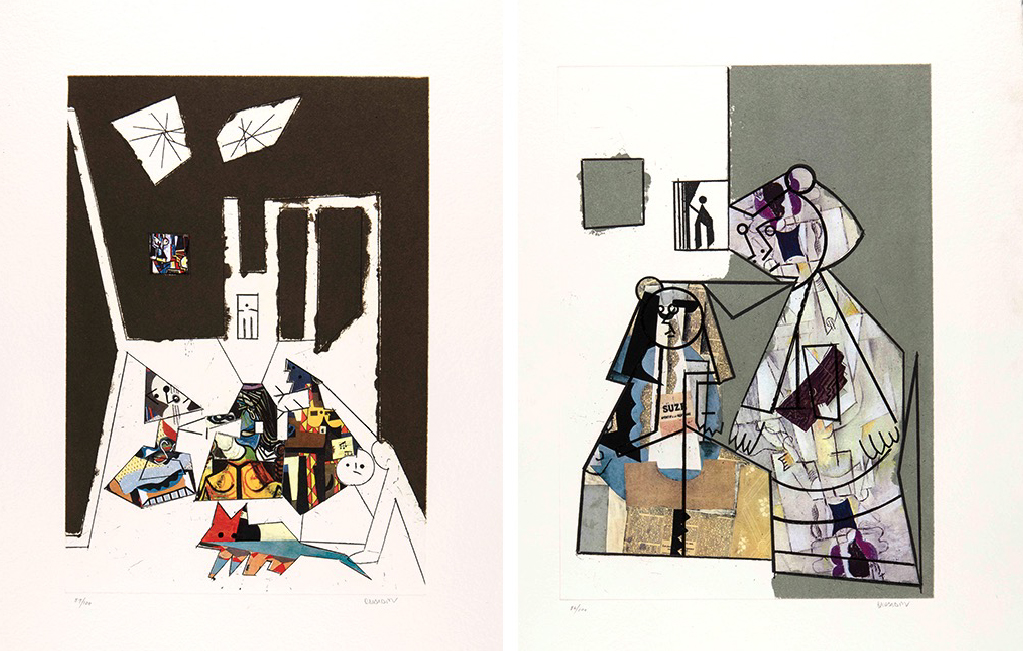
Left: Cubism as a Pretext 1, 2003. Etching and collage, 64 × 48 cm. Ed. 100. ARTIKA–Manolo Valdés co-edition © Manolo Valdés Studio, 2023
Right: Cubism as a Pretext 6, 2003. Etching and collage, 64 × 48 cm. Ed. 100. ARTIKA–Manolo Valdés co-edition © Manolo Valdés Studio, 2023
Gentlemen
Velázquez has been a constant source of inspiration for the Valencian painter. Since his time with Equipo Crónica, Valdés has repeatedly portrayed King Philip IV, turning him into one of the most recurring iconographies in his artistic career. In these reinterpretations, the artist gives singular prominence to the book the monarch holds in his right hand, transforming it into the symbolic and visual axis of his works.
Valdés deliberately flattens the clothing and reduces the hands to an elliptical stain to emphasize the authority of the figure. The book, recreated in collage, varies from one piece to another, adding a touch of color and linking the work directly to Art History. In this paraphrase of Velázquez, Valdés preserves the sobriety and elegance of black—whether in the clothing or the background—reinforcing the king’s impassive expression, which continues to convey intact power.
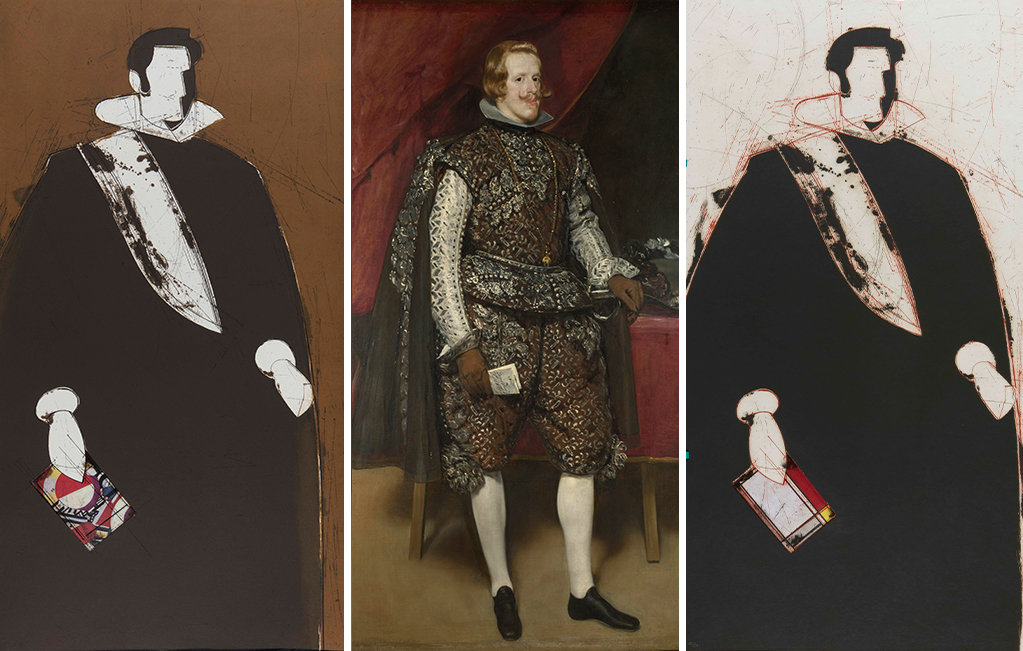
Left: Caballero V, 2003. Etching and collage, 167 × 96 cm. Ed. 50. ARTIKA–Manolo Valdés co-edition © Manolo Valdés Studio, 2023
Center: Philip IV in Brown and Silver, c. 1631, Diego Velázquez (1599–1660). Oil on canvas, 195 × 110 cm. National Gallery, London.
Right: Caballero VI, 2003. Etching and collage, 167 × 96 cm. Ed. 50. ARTIKA–Manolo Valdés co-edition © Manolo Valdés Studio, 2023
Damas y caballeros: Manolo Valdés’s vision of the great masters
– Numbered limited edition of 998 copies, signed by the artist.
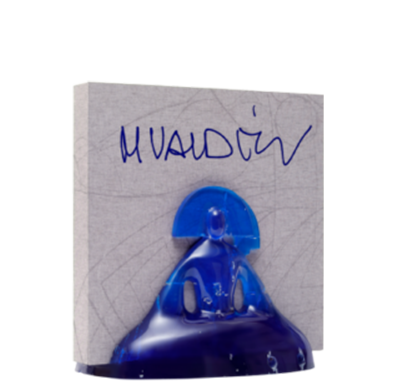
– The edition consists of two volumes and a figure created especially for this project. Centered on the reinterpretation of Velázquez’s Menina, it is the result of meticulous craftsmanship, where cracks and imperfections make each copy a unique work of art.
– The Art Book includes 53 paintings, prints, and collages from his most representative periods, personally selected by the artist and reproduced to the highest quality standards.
– The Study Book gathers reflections by leading experts in four chapters, analyzing the artist’s career, work, and influences.