

Life according to Plensa: a blend of questions, contradictions, and mistakes
This August, Jaume Plensa turns 70. And we want to celebrate with him by once again returning to his work and his both unique and admirable way of living through art. Along with ARTIKA, and especially in his edition Jaume Plensa 61, the sculptor delves into the motivation behind his work: the human life experience as a constant exercise in introspection and study. The writings provided by the artist himself to explain the meaning behind the images included in the Art Book, as well as his reflections, offer firsthand insight into the philosophy behind his creation.
Life as an in-between state
“The area of shadow my body projects melds into imagined architecture that both draws me near and distances me from today, yesterday and tomorrow.”
For Plensa, to be human is to dwell in a limbo, and this is reflected in his art, where massive sculptures and structures symbolize meditation rather than chaos; reflection and dialogue rather than spectacle or ostentation. Debate emerges from contrast, and debate is the path to knowledge and self-awareness. His work thus argues the need for opposites, for contradiction as a path toward coherence and existential fulfillment. Experience, individuality, and meaning exist, as he notes, between the large and the small, the simple and the complex, the particular and the general.
“A text is made up of words and in turn these words are letters, that, like small living cells, each quite distinct, keep creating relationships that go on to form more complex entities that relate to others, and that continue in like mode, expanding uninterruptedly.”
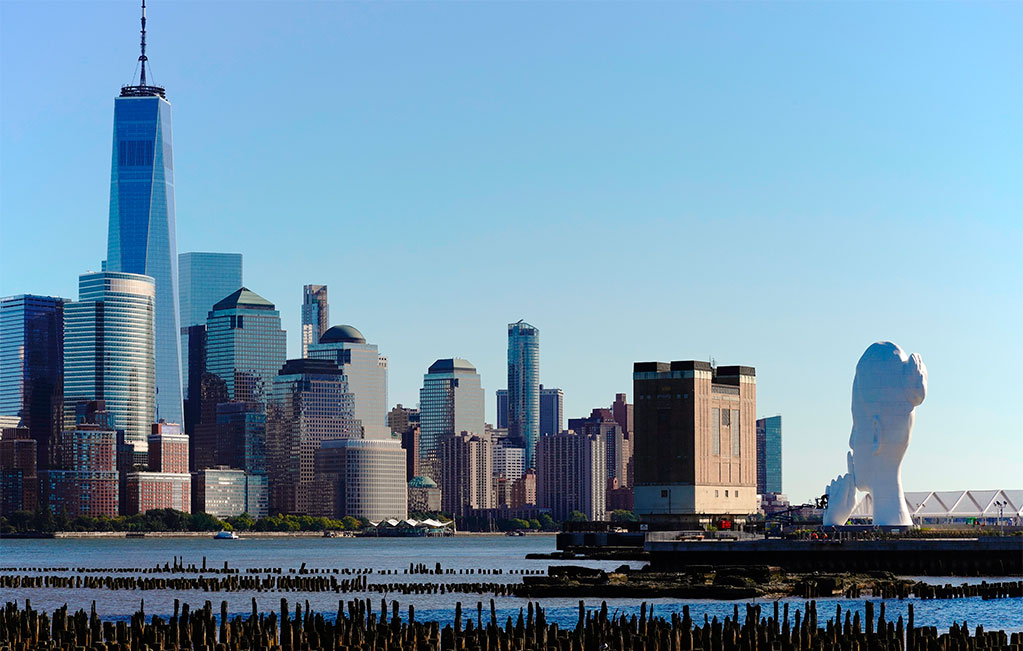
The soul of water, 2020. Newport, New Jersey, USA.
Perfection as the antithesis of experience
“Interest in the response gradually fades as a consequence of the powe of the questions. What are the fundamental questions? Who knows? I think the mere acto f asking a question is fascinating.”
The material is never the goal, nor are the spaces or the monumental scales that hold it; Plensa’s sculpture is not an answer to some existential question meant to be shaped into wooden molds or iron structures. The crucial thing in life is not knowing everything or finding the truth, but asking questions. That is what his sculptures are: large-scale, solid questions that people encounter face to face. Art never ends, because Plensa, like a philosopher disguised as a sculptor, seeks exchange —a glance, a silence, a conversation. He even goes further, claiming that error is the essential foundation of the work.
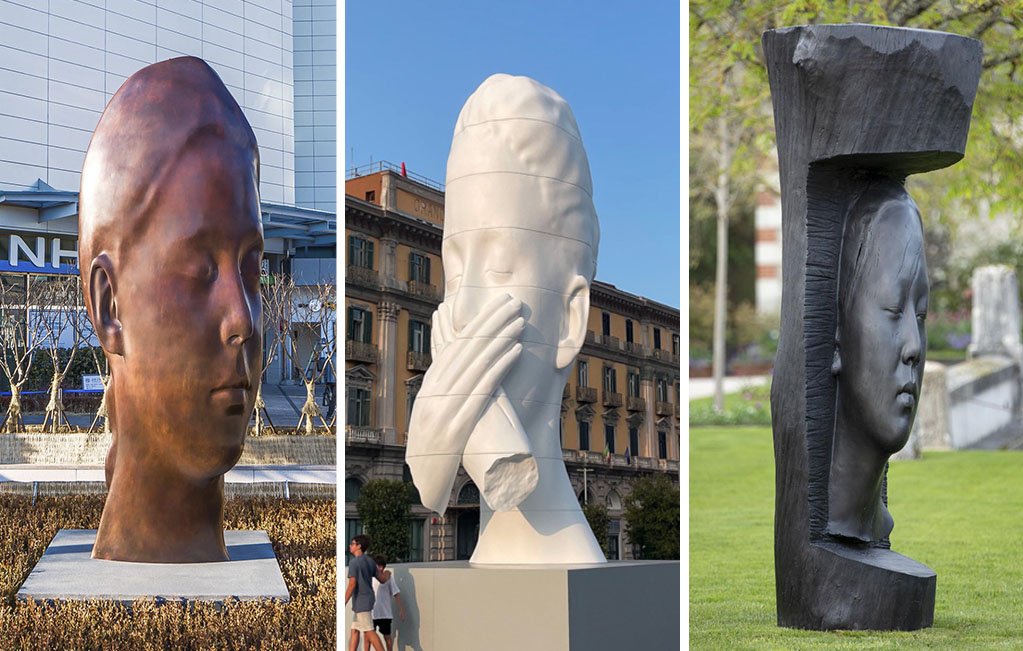
Left: Sanna, 2019, Bronze, Daejeon, South Korea. © Copyright 2025 Jaume Plensa
Centre: Silent Hortense, 2021, Polyester resin. Naples, Italy. © Copyright 2025 Jaume Plensa
Right: Jaume Plensa’s installation at the Domaine de Chaumont-sur-Loire, 2022 © E. Sander, courtesy Galerie Lelong & Co. Paris.
“Error is the only thing that makes us human and accessible. Error as experience, as a register, as the vehicle to reach closer. One more material to work with.”
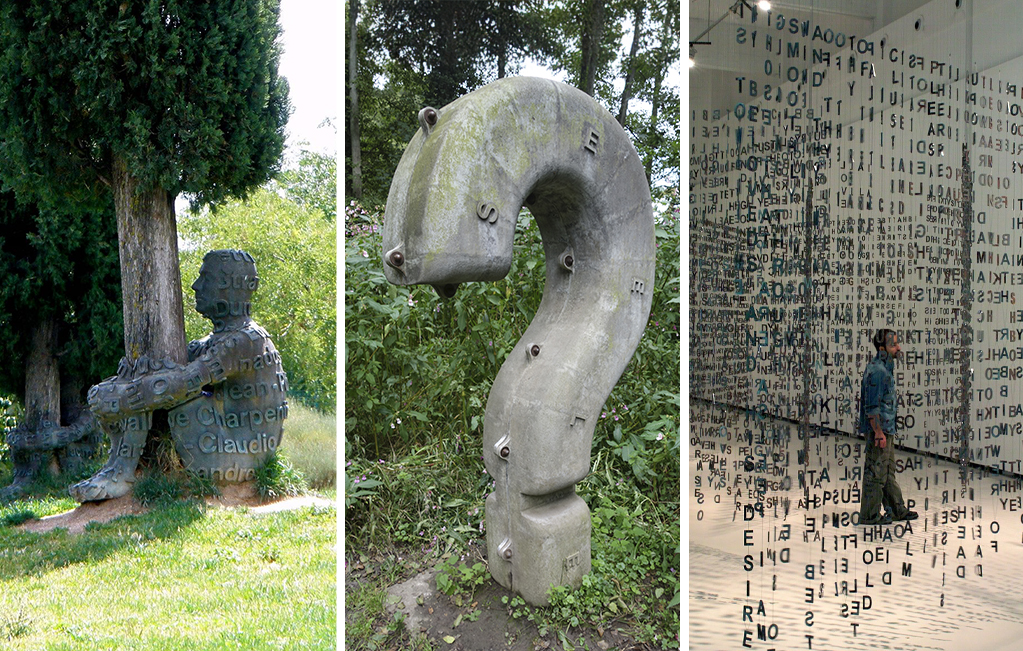
Left: The heart of the trees, 2007. Alcobendas, Madrid, Spain.
Centre: Soul, 2002, Erkrath, Neanderthal, Germany.
Right: Song of songs, 2005. Installation view at CAC-Centro de Arte Contemporáneo, Málaga, Spain.
Art as a way of living life
“I’m not worried about growing as a man, about shaping myself as a person. Art should be a consequence of life. Let’s not deceive oursleves, art is a reflection of the society in which we live.”
Plensa champions art not as a synonym for life, but as its consequence. It would be naïve to believe that artistic creation is a catalyst for space and time, rather than a way to understand the irrational and chaotic nature of human beings, whether alone or in society.
“‘One thought fills immensity is one of William Blake’s Proverbs of Hell, in my view, one of the best definitions of sculptures […].”
Art exists because there is life, while life can happen without art —though it then risks becoming confusing, empty, or unbearable. In the study of what we don’t understand or what surpasses our capacity as a species —whether because it’s too complex, too painful, or too foreign to the individual— lies the opportunity for experience: to exist is to be alive, but to live is to explore that existence with the utopian goal of someday understanding it, even knowing that everything eventually ends. Here, the artist becomes the translator who speaks the language of the world, organizing the most intimate and abstract aspects of being human into tangible forms, into a universal language that allows people to engage with life and begin an almost eternal dialogue.
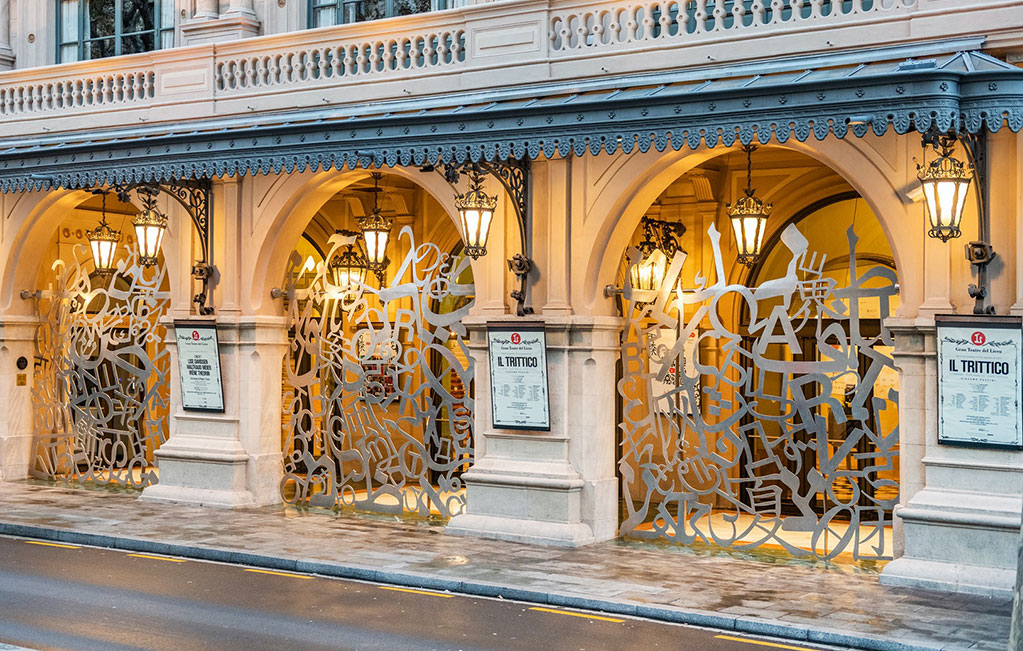
Constel.lacions (Constellations), 2022, Gran Teatre del Liceu, Barcelona, Spain.
The state of making and the dream state as the origin of everything
“The artist is not based, at least in my case, on the finished work, but on the process.”
In this way, Plensa sees the origin of life as an alchemy of questions, dialogue, and errors. Living, then, can be defined as an existence in doubt, in motion, and under constant construction. Jaume Plensa 61 is a demonstration of this —it is a “portrait of creative will” of art understood as a process rather than the final outcome.
“There is a marvelous landscape inside every individual, one I believe is only accessible when you close your eyes and look inward, which would be the dream world.”
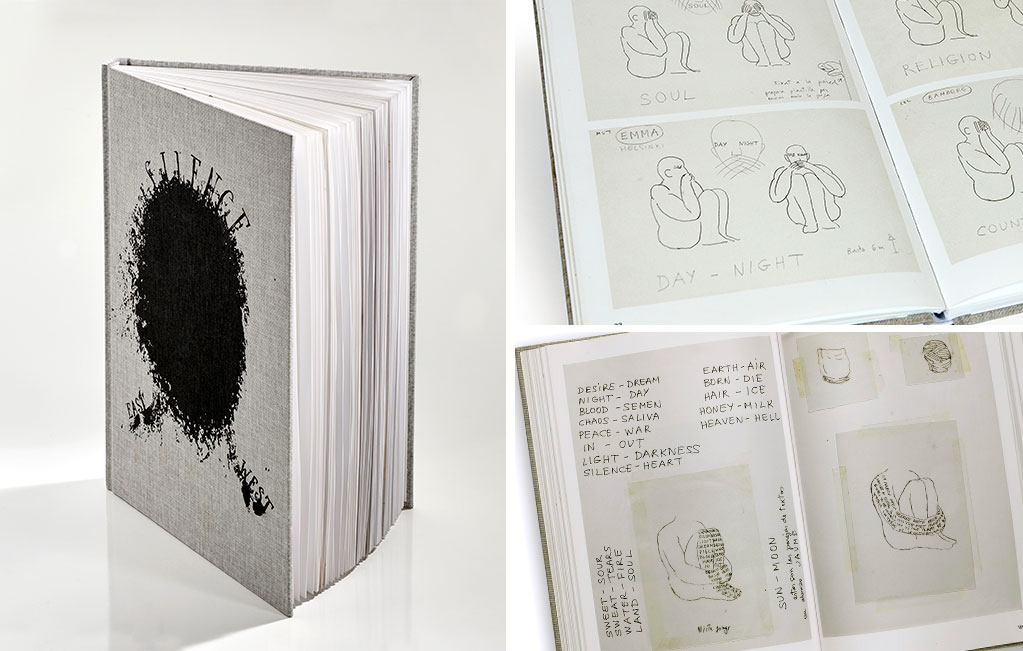
The interaction the artist seeks with each sculpture must always end within the individual —in the personal meditation and reflection that follows the energy and exchange of hidden meanings between people and their space, their time, and their society. This final part of the dialogue is marked by silence, by intimacy. Like any cycle, each introspective exercise is stored and protected within the individual until it finds its form in a new question, which sparks a new conversation.
JAUME PLENSA 61: life lies between dialogue and silence
– A numbered edition, signed by the artist and limited to 2.998 copies, now sold out.
– The piece includes two volumes that capture the essence of Plensa’s sculptural work: all the processes —in writing, drawings, and photographs— that shape his creations.
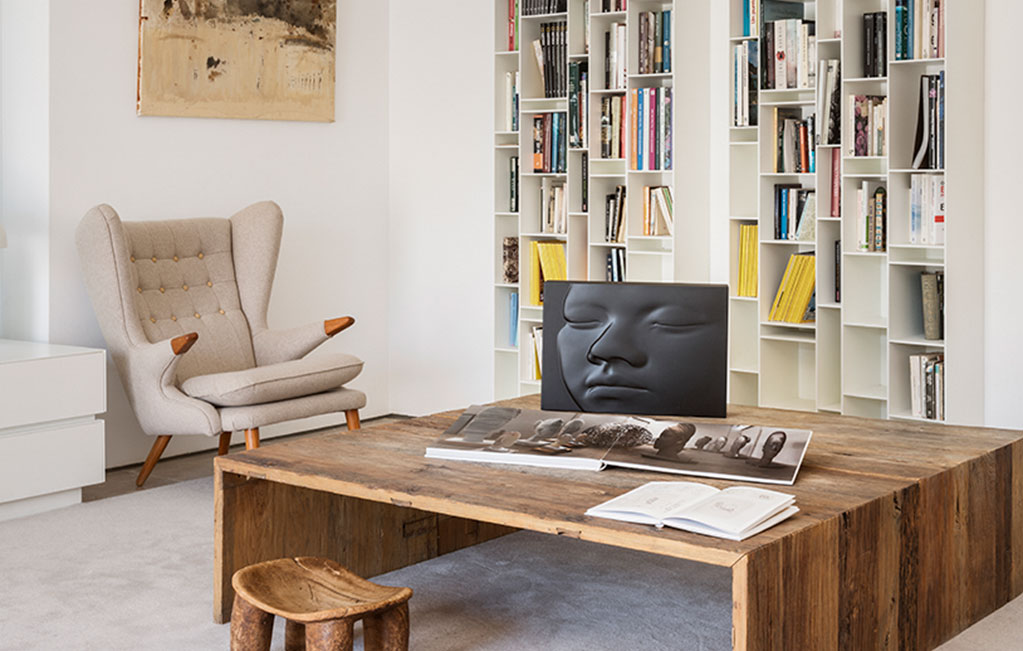
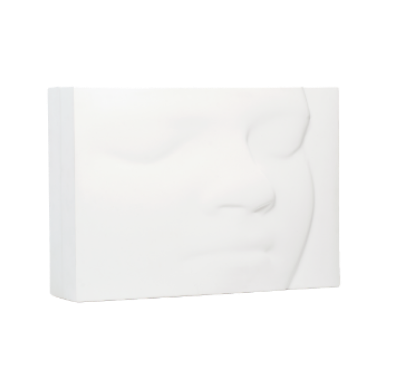
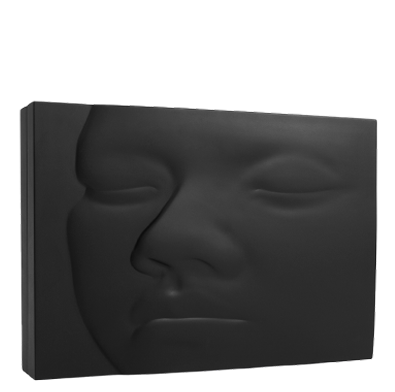
– The case is an original serialized sculpture created especially for this edition, featuring the most iconic face from Plensa’s artistic universe: a little girl called Anna.
– The Art Book is like an exclusive visit to the studio, showcasing never-before-seen images and reflections from the artist himself on his creative process.
– The Study Book, titled Notes and Annotations, is an intimate visual journey through the artist’s private notebooks, revealing his most personal side with sketches, lists, and spontaneous thoughts.