

Capturing Life in five of his photographs
From an early age, Steve McCurry showed a deep devotion to pausing and truly observing the world — watching people, their gestures, and the landscapes surrounding them. His gaze transcends borders; he understands that although we share the same planet, every life unfolds on a different stage. Every face holds a story, and every story is unrepeatable.
The photographic language of McCurry
As his sister Bonnie McCurry described it: “Steve’s photos tell stories and communicate truths about the human condition that defy conventional vocabulary.” McCurry possesses the gift of immortalizing those moments in which the essence of a country, a people, or a person is revealed. Without using words, his photographs become silent narratives that tell us stories and invite us to discover the human within the foreign. His images don’t just show the world — they immerse us in it, bring us closer to distant realities, and remind us of the universal beauty that lives within every gaze.
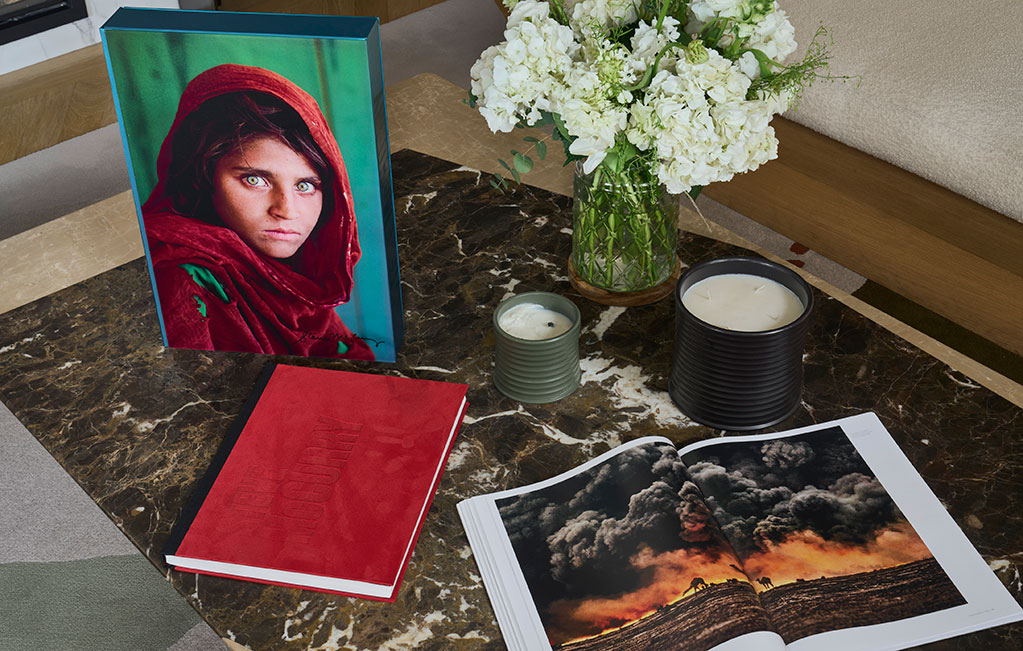
In Capturing Life, his second artist’s book with ARTIKA, Steve McCurry presents a carefully curated selection of 40 photographs taken in 25 countries across all continents. Each image becomes an open window to the world, offering a unique and profoundly human perspective on diversity, beauty, and the emotions that connect us beyond borders.
Five unique photographs
The photographs McCurry has captured over the decades form a journey through time and across the globe. His portraits immortalize the life and essence of every corner of the planet. For years, he has known how to seize the most fleeting moments and share them with us.
Suri children playing on a seesaw (Omo Valley, Ethiopia, 2013)
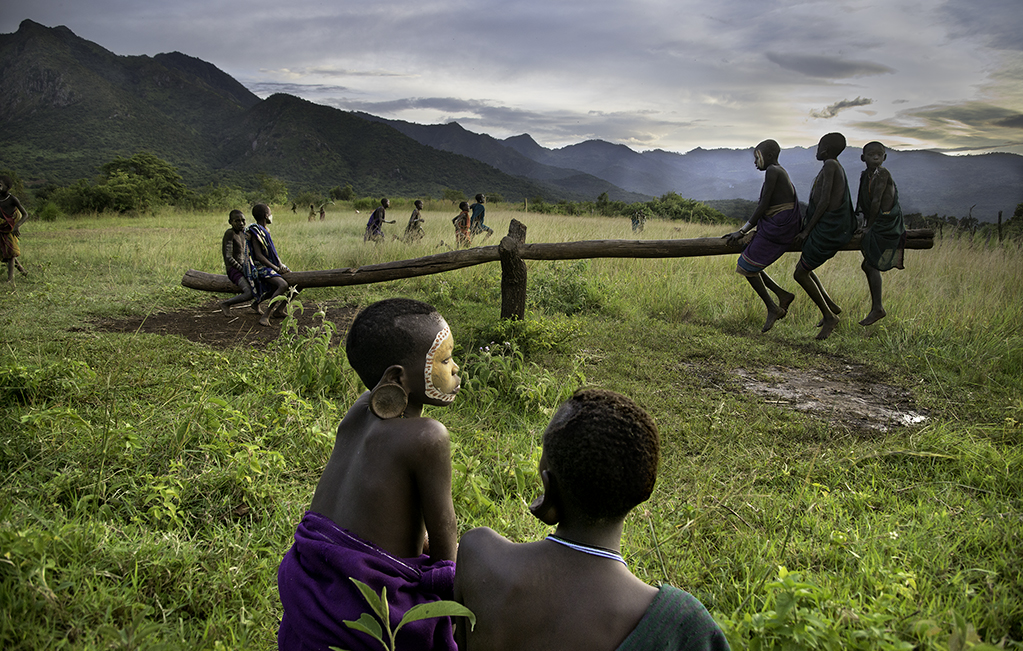
IG 01/15/2022: (48k likes) Children from the Suri Tribe play on a seesaw, Omo Valley, Ethiopia, 2013.
IG 12/01/2017: (64k likes) Children from the Suri Tribe play on a seesaw, Omo Valley, Ethiopia, 2013.
retouched_Kate Daigneault 8/25/13, Sam Wallander 09/19/2018, Emily Rogers, Ashley Crabill 02/23/2023
“Children play on a seesaw in the Omo Valley, Ethiopia. This image not only reflects the playful spirit of the children but also showcases their rich cultural heritage and the timeless traditions that persist in the heart of the Omo Valley”
This photograph invites us into the intimate world of the Suri people through their children. In the image, the simple act of playing on a seesaw becomes a window into a way of life where the essential outweighs the material. The scene radiates pure innocence; here, play doesn’t require sophisticated objects — only creativity, surroundings, and companionship. The vast, seemingly infinite landscape envelops the image, reinforcing the sense of freedom. McCurry captures the beauty of the everyday, revealing that the true wealth of life lies in our connection with the environment and our ability to find joy in simplicity.
Shaolin monks training (Zhengzhou, China, 2004)
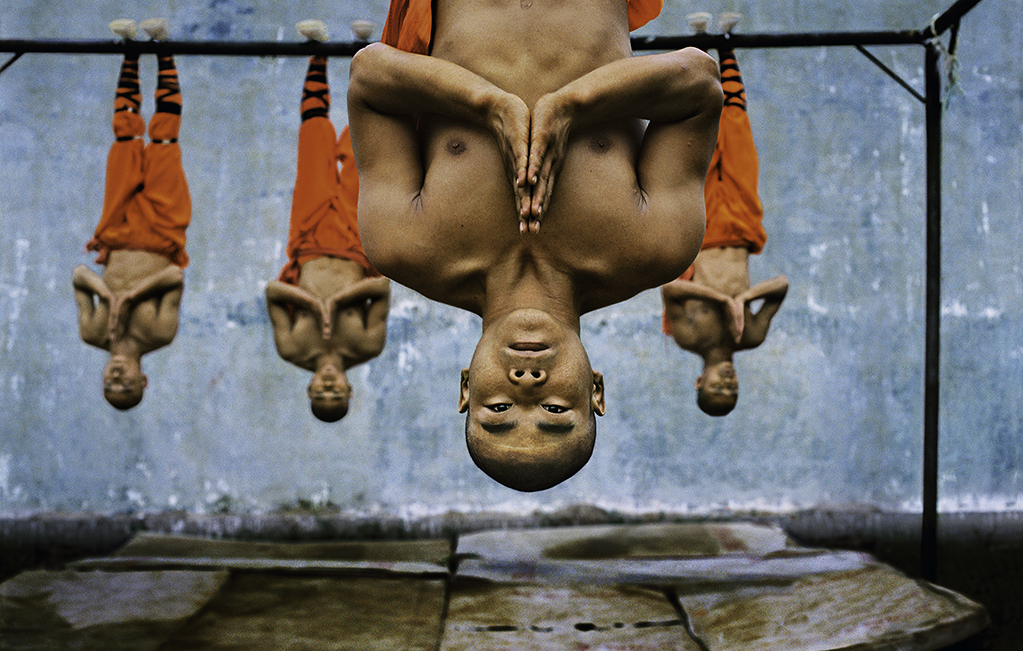
The world famous Shaolin Monastery is known to many in the West for its association with martial arts, specifically Shaolin Kung Fu. McCurry pictures the monks suspended from a metal beam. The physical strength and dexterity displayed by the monks is incredible, although they exude a deep serenity.
Iconic_Book
final print_UrbanArt’12
final print_MACRO’11
retouched_Sonny Fabbri 09/06/2013
“The Shaolin Monastery is recognized as the birthplace of Chan Buddhism and is known for its association with martial arts, specifically Shaolin Kung Fu. The physical strength and dexterity displayed by the monks is incredible, although they exude a deep serenity.”
McCurry’s portrait of the Shaolin monks during their training fascinates not only because of their astonishing physical and mental prowess, but also because it immerses us in the heart of an ancient tradition that has shaped China’s cultural identity. The scene conveys a sense of absolute precision, almost choreographic, born of years of dedication and discipline. With his sensitive and attentive eye, McCurry transforms this moment into a tribute to the ancestral. This photograph is, ultimately, a gesture of respect toward China and the cultural richness embodied in the Shaolin world. It invites us to value the old, to understand that traditions are not mere remnants of the past, but pillars that can guide us in the present and remind us of the importance of perseverance and serenity.
Woman and girl on a train (West Bengal, India, 1982)
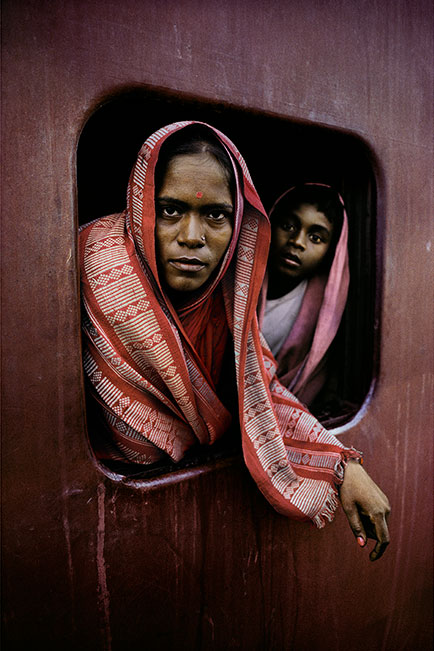
“Two village women lean out the window of the Howrah Mail train at a local station stop on its way to Calcutta (now Kolkata)”.
In a fleeting moment aboard a train, one of the defining elements of Steve McCurry’s visual legacy emerges with force: the power of the gaze. McCurry had an almost instinctive talent for stopping time just as a person’s eyes began to speak for themselves. His images do not merely show faces; they reveal stories, silences, wounds, and hopes. The gaze of the woman and the girl becomes the emotional axis of the photograph. It is not simply an exchange of looks but a silent conversation that directly engages the viewer. Observing them, we understand that the gaze is a profoundly human tool — through it, we tell what words leave unsaid. They say the eyes are the window to the soul, and this image confirms it.
Castellers preparing to build a human tower (Barcelona, Spain, 2018)
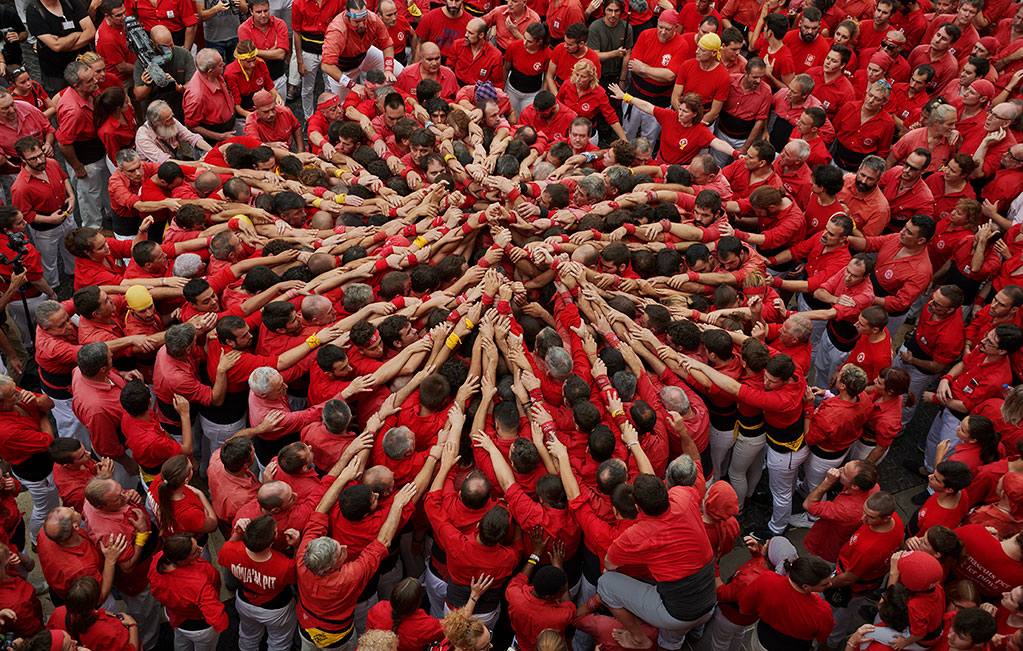
“Castellers prepare to make a human tower in Barcelona. Every year in Spain, a Catalan tradition of building castells –human towers up to ten stories high– takes place. Teams called colles compete to build the tallest and most complex tower made only of human beings standing atop one another”.
McCurry’s portrait of the castellers as they prepare to raise a human tower is much more than the documentation of a Catalan tradition: it is a vivid portrait of collective spirit and cultural pride. The image captures not only physical effort but also the emotion and motivation that drive the castellers to defy gravity. Building a human tower is an act of identity — a way of honoring a shared history and keeping alive a heritage that has transcended generations. McCurry turns this moment into a tribute to Catalonia’s cultural legacy, reminding us that the most authentic traditions are those built from the heart.
Pacifist meditating at the nazi extermination camp of Auschwitz-Birkenau (Auschwitz, Poland, 2005)
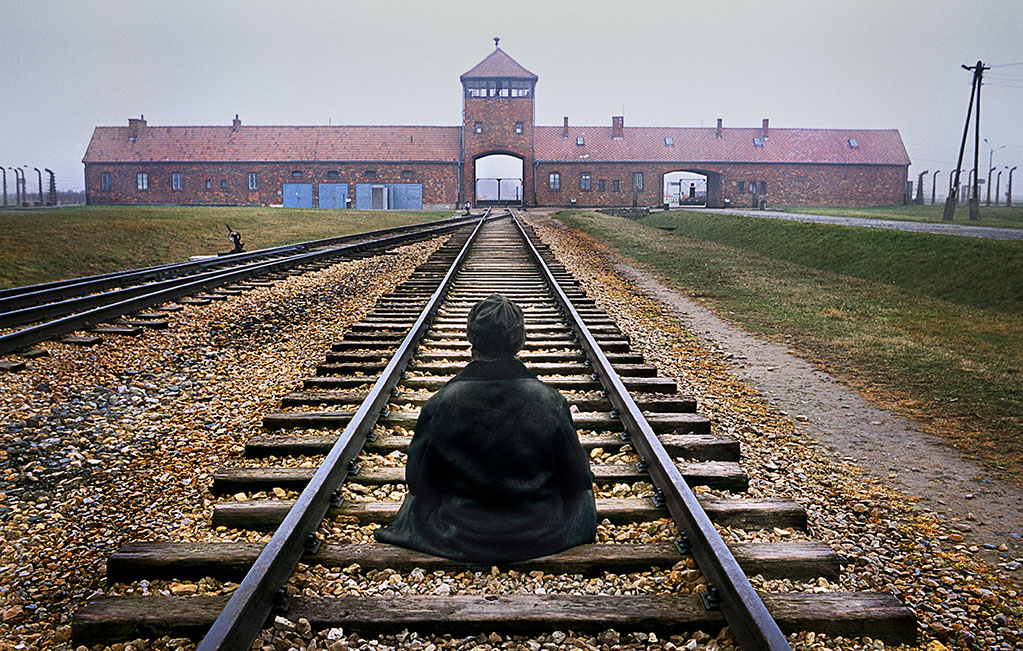
“Bearing witness to the Holocaust, Grover Gauntt meditates during an annual Buddhist-led retreat at the Auschwitz-Birkenau death camp, where an untold number of people, mostly Jews, were killed by the Nazis”.
McCurry succeeds in photographing silence itself — the silence that inhabits a place forever marked by barbarism and human suffering. This scene not only evokes the tragic history of 20th-century Europe but also serves as a quiet yet powerful warning about the fragility of human coexistence. It reminds us that what happened is neither distant or irrelevant: such atrocities can happen again if we forget, if we stop looking back with a conscious and critical eye.
A limited edition, numbered and signed by Steve McCurry
“Capturing Life is the definitive collection of my work — a piece that represents what I’d like to be remembered for.”
— Steve McCurry
That’s how McCurry describes his latest artist’s book. In this piece, he invites us on a journey through some of the world’s most remote and meaningful places, revealing not only landscapes and cultures but also the human dimension hidden in every gesture, every look, every story.
– The artist has been involved in every stage of the project’s creation — from the selection of the iconic images to the signing of each of the 2,998 copies.
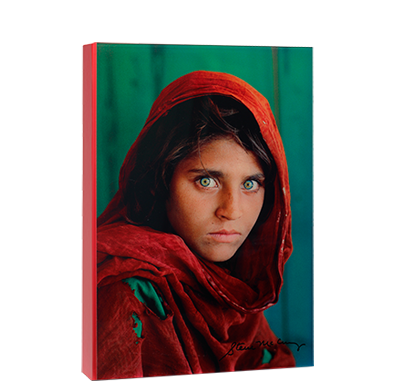
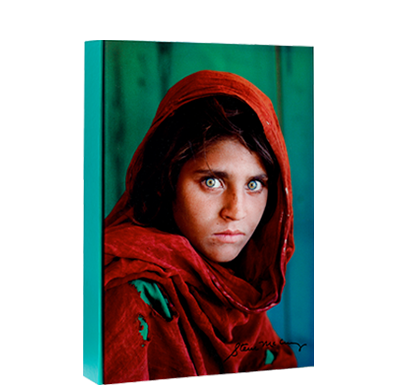
– The piece consists of two volumes and a spectacular case paying tribute to The Afghan Girl, the photograph that graced the cover of National Geographic in 1985.
– The Art Book presents 40 original photographs, reproduced with the highest quality and accompanied by McCurry’s own commentary.
– The Study Book explores the photographer’s artistic and personal journey through the insights of Pico Iyer and Mario Calabresi.